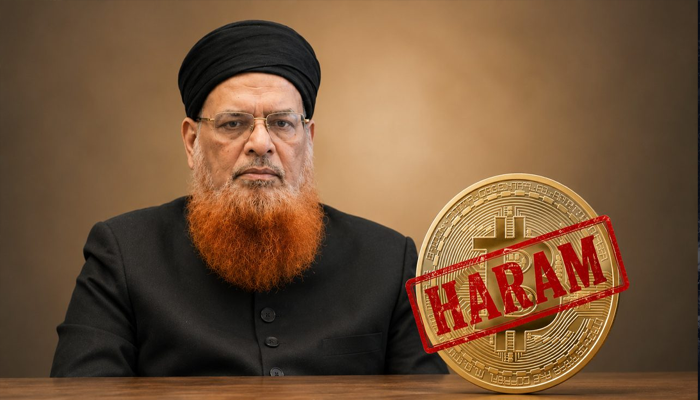
Pakistan's leading Islamic scholar, Mufti Muhammad Taqi Usmani, has issued a new religious ruling (fatwa) declaring cryptocurrency trading impermissible (haram) under Islamic law, a development that is expected to influence the views of many Muslim investors on digital assets.
The fatwa, issued in June 2026 and shared by scholars affiliated with Darul Uloom Karachi, states that cryptocurrencies, crypto tokens, and stablecoins do not meet the Islamic definition of wealth or property. Based on this assessment, the ruling concludes that buying and selling such digital assets is not permissible under Shariah.
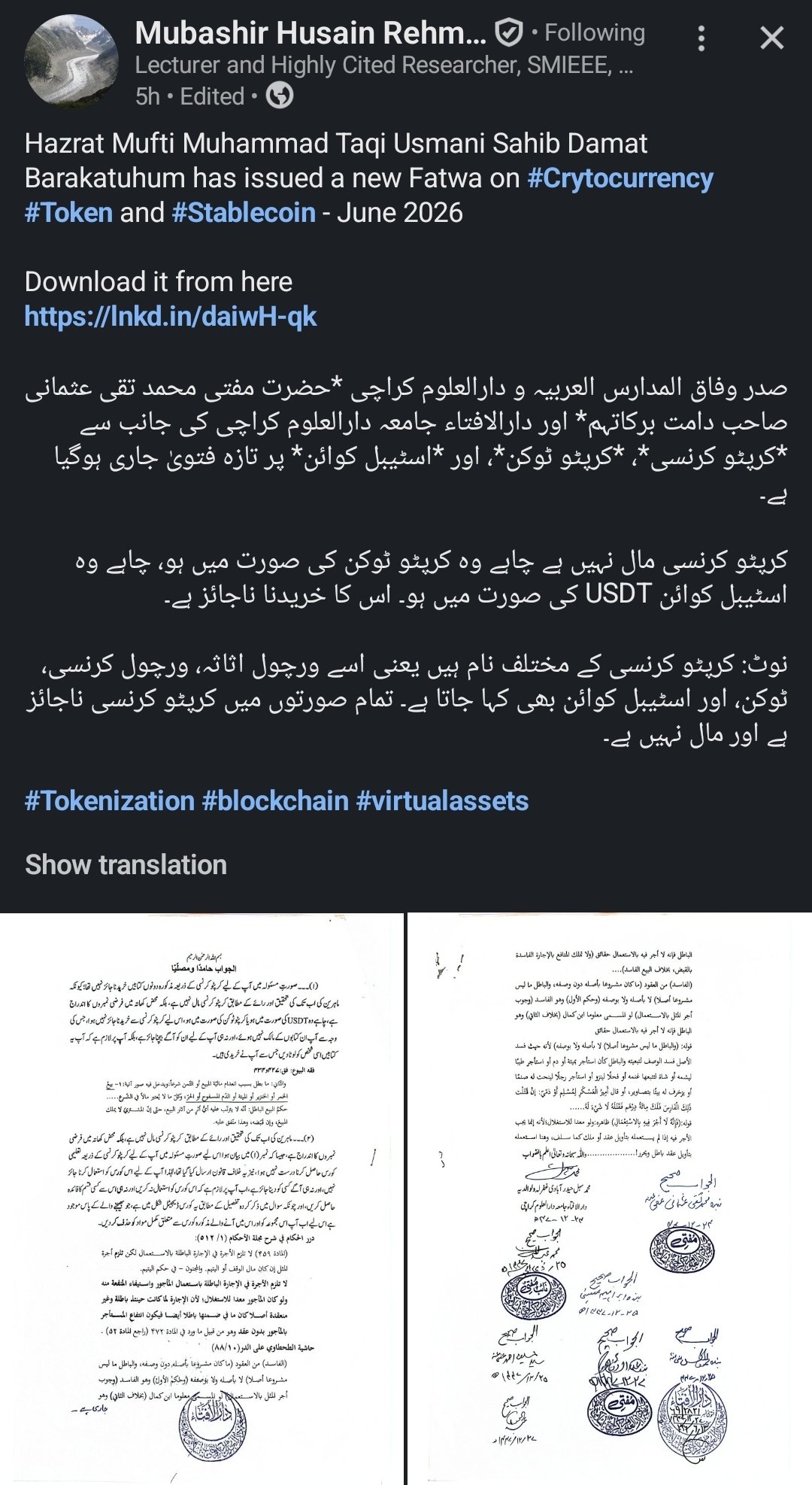
According to the announcement, the ruling applies to all forms of cryptocurrency regardless of their names or classifications. It specifically mentions cryptocurrencies, virtual currencies, blockchain-based tokens, and stablecoins such as USDT (Tether), stating that changing the terminology does not alter their religious status.
The fatwa states that cryptocurrency is not considered "wealth" in the Islamic legal sense. As a result, trading, purchasing, or selling these digital assets is deemed impermissible. The scholars emphasized that whether an asset is described as a cryptocurrency, virtual currency, token, or stablecoin, it falls within the same category for the purpose of the ruling.
The announcement also clarifies that the religious opinion extends beyond well-known cryptocurrencies like Bitcoin (BTC) and Ethereum (ETH) to include other blockchain-based digital assets and stablecoins commonly used in the crypto market.
The fatwa was issued under the supervision of Darul Uloom Karachi and carries endorsements from several Islamic scholars associated with the institution. While it represents a religious opinion rather than a legal or regulatory decision, it is likely to have a significant impact on how many Muslims approach cryptocurrency investment and trading.
The ruling comes at a time when cryptocurrencies continue to gain global attention despite ongoing debates over regulation, investor protection, and compliance with Islamic financial principles. Scholars and Islamic finance experts have long expressed differing opinions on whether digital assets satisfy the requirements of Shariah, with some permitting certain cryptocurrencies under specific conditions and others rejecting them due to concerns over speculation, uncertainty, and the absence of intrinsic value.
In Pakistan, discussions surrounding cryptocurrency regulation have intensified in recent years as authorities explore legal frameworks for digital assets while balancing financial innovation with consumer protection.
Mufti Taqi Usmani's latest fatwa is expected to play an important role in the ongoing debate over the compatibility of cryptocurrencies with Islamic finance, particularly among Muslim investors, financial institutions, and scholars seeking guidance on emerging digital technologies.