
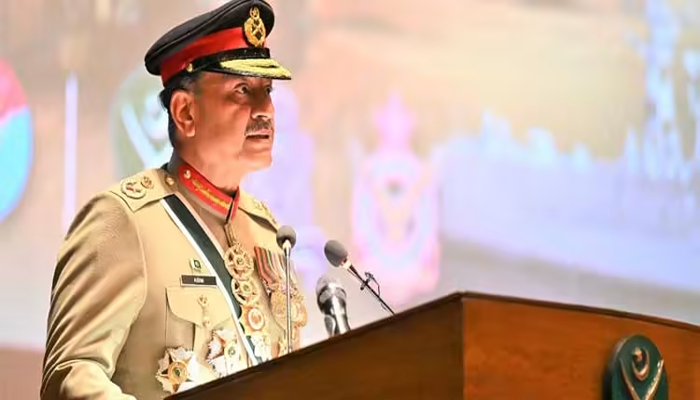
TEHRAN: Chief of Defence Forces (CDF) and Chief of Army Staff Field Marshal Asim Munir met Iranian Interior Minister Eskandar Momeni in Tehran on Monday as Pakistan stepped up diplomatic efforts to promote regional peace and help resolve the ongoing Middle East conflict.
CDF Munir, accompanied by Interior Minister Mohsin Naqvi, arrived in Tehran as part of an official delegation. Pakistan’s Inter-Services Public Relations (ISPR) said the visit was aimed at supporting efforts for regional peace and stability.
According to ISPR, Field Marshal Munir will focus during his visit on promoting a “peaceful, lasting and comprehensive resolution” to the conflict in the Middle East. The delegation is also expected to hold talks with senior Iranian officials on regional security and bilateral cooperation.
Iranian Foreign Ministry spokesperson Esmaeil Baqaei said the visit comes at a time when relations between Pakistan and Iran have reached one of their strongest stages. He also clarified that the Pakistani delegation’s visit was separate from the expected visit of Oman’s Foreign Minister Badr Albusaidi, although both engagements would address regional security issues.
Pakistan has been actively using diplomatic channels to support efforts aimed at ending hostilities between Iran and the United States. Islamabad previously played a role in facilitating a memorandum of understanding between the two sides in June, although broader peace negotiations have since faced difficulties.
The latest visit comes amid continued tensions over the Strait of Hormuz, a vital international energy route. The waterway has remained a major flashpoint in the conflict, with Iran linking its reopening to the lifting of US measures, including the naval blockade on Iranian ports, oil sanctions and restrictions on Iranian assets.
The conflict began after the United States and Israel launched major strikes against Iran on February 28, prompting Iranian retaliation across the region. An April 8 ceasefire brought an end to nearly 40 days of intense fighting, but disagreements over sanctions, maritime access and regional security have continued to complicate diplomatic efforts.
Washington has recently announced plans to significantly increase economic pressure on Tehran. US President Donald Trump has threatened tougher measures, while American officials have indicated that new sanctions could be among the most severe ever imposed on Iran.
The planned US sanctions have raised concerns about their potential impact on Iran’s economy, regional stability and global energy supplies. Pakistan, meanwhile, has continued to advocate dialogue and diplomatic engagement as a means of preventing further escalation.
Field Marshal Munir’s Tehran visit is therefore being viewed as part of Islamabad’s broader diplomatic initiative to encourage communication between regional and international stakeholders and support a peaceful resolution to the conflict.
The meetings in Tehran are expected to provide an opportunity for Pakistan and Iran to discuss bilateral relations, regional security and ongoing efforts to reduce tensions across the Middle East.