
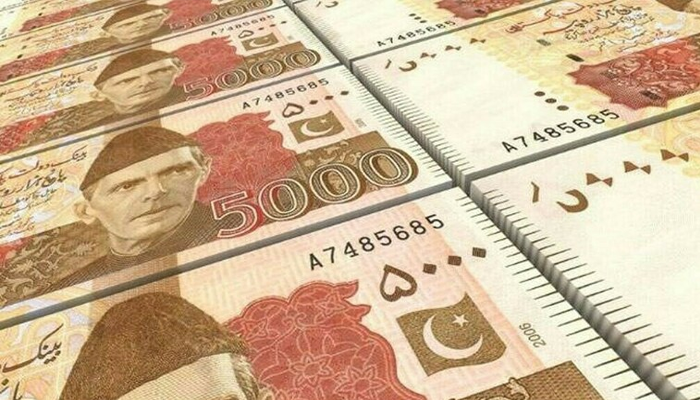
ISLAMABAD: Senate Standing Committee on Finance and Revenue Chairman Senator Saleem Mandviwalla has raised serious concerns over reports that bank ATMs are dispensing counterfeit Rs5,000 and Rs1,000 notes, warning that fake currency is causing financial losses to ordinary citizens.
Speaking at the committee meeting, Mandviwalla said counterfeit notes had become so sophisticated that even trained officials could struggle to identify them. He said fake Rs1,000 and Rs500 notes were also circulating widely in the market.
Mandviwalla highlighted the difficulties faced by daily-wage earners, including domestic workers and security guards, who may lose an entire day’s earnings if they unknowingly receive a counterfeit note.
He said many workers had become reluctant to accept higher-denomination notes because of concerns over fake currency.
“The biggest tragedy is that counterfeit notes are being dispensed by bank ATMs,” Mandviwalla said, questioning where customers should go if a fake note comes from a banking machine.
He also alleged that banks do not adequately replace counterfeit notes reportedly received through ATMs, leaving affected customers without a clear remedy.
Mandviwalla recalled that the committee had handed three Rs5,000 notes to the State Bank of Pakistan’s deputy governor for verification around a year ago. He said one of the notes was later found to be counterfeit, but claimed the SBP had neither submitted a report to the committee nor returned the notes.
The SBP deputy governor told the committee that work on new currency notes was underway. A ministerial committee headed by the finance minister has been overseeing the design process, and the designs have already been approved.
However, Mandviwalla questioned the appointment of consultants for designing and printing the new notes. He demanded complete details of the tendering process, saying the committee needed greater transparency.
Senator Agha Shahzaib Durrani also criticised the delay, noting that the SBP had been working on the new currency for two years.
The committee sought details of the tender and measures being adopted to prevent counterfeit currency from entering circulation through banking channels.