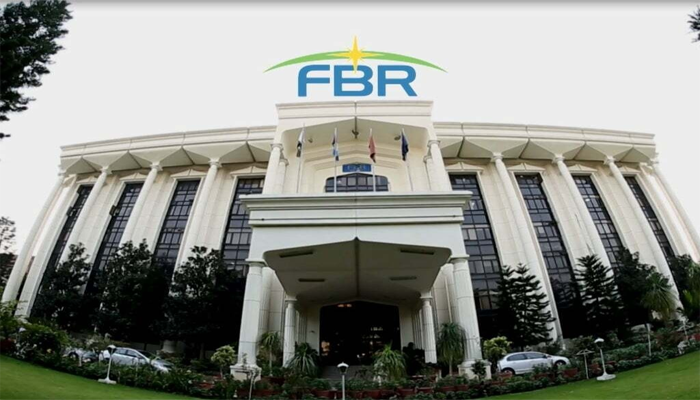

ISLAMABAD: The Federal Board of Revenue (FBR) has ordered 100 percent scanning of all containers moving under the Afghan Transit Trade (ATT) regime through the Non-Intrusive Inspection (NII) system, citing elevated security risks and the need to strengthen the integrity of the international supply chain.
In an official directive to customs field formations, the FBR also instructed that 30 percent of all import and export containers be selected for scanning at terminals under the NII facility. The newly approved NII protocol will be implemented in phases and will apply not only to containerised cargo but also to loose and non-containerised consignments.
The NII system uses X-ray or gamma-ray technology to inspect cargo without opening containers or disrupting their seals. The FBR added that even some green-channel consignments will undergo scanning to maintain deterrence.
According to the board, the objective is to create a transparent and internationally compliant Standard Operating Procedure (SOP) for scanner use across ports and terminals. Integrating NII images into the Customs Risk Management System (RMS) is expected to reduce dwell time, enhance revenue collection, and strengthen border security in line with the WCO SAFE Framework of Standards.
Given the heightened security threat associated with transit cargo, all ATT containers must undergo scanning at both the port of entry and exit points. Their images will be matched—preferably using AI-enabled systems—to detect any changes or pilferage en route. Terminal operators are required to maintain 98 percent operational uptime for scanning equipment and ensure machines meet penetration and image-quality benchmarks, including the ability to penetrate at least 340 mm of steel.
All NII images will be encrypted and transmitted in real time to the Customs Image Repository, preventing tampering or deletion. Cargo selection for scanning will be driven by RMS criteria and intelligence-based alerts, with scanned images checked against goods declarations to detect prohibited items such as arms, narcotics and radioactive material, and to prevent their introduction into domestic or transit routes.