
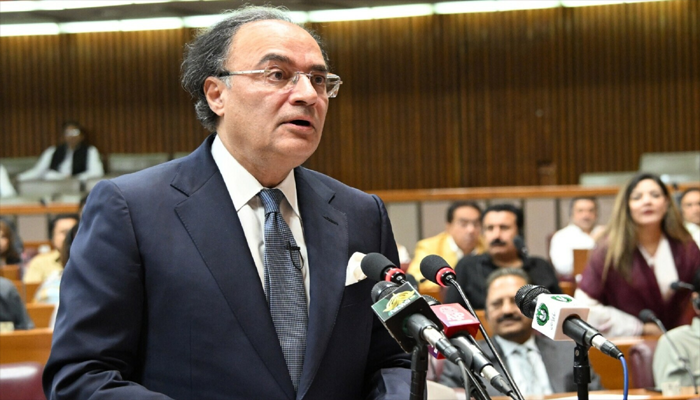
ISLAMABAD: Pakistan’s Finance Minister Muhammad Aurangzeb unveiled major relief measures for salaried individuals and the solar energy sector in his budget speech for fiscal year 2025–26, delivered in the Senate on Saturday.
Key Tax Concessions for Salaried Class
Aurangzeb announced that individuals earning between Rs 600,000 and Rs 1.2 million per year will now face only 1 percent income tax, down from the 2.5 percent originally proposed—and a significant cut from the prior 5 percent rate. Speaking in the Senate, he noted that this “practical and symbolic recognition” acknowledges the salaried class’s vulnerability to inflation and its key economic role.
Tax relief extends to other brackets as well: those earning up to Rs 2.2 million now enjoy an 11 percent rate (down from 15 percent), and those making up to Rs 3.2 million are now at 23 percent (down from 25 percent) . Additionally, government employees will see a 10 percent salary increase, while pensioners receive a 7 percent uplift.
Solar Sector Tax Corrections
A proposed 18 percent GST on imported solar panels was initially aimed at protecting local manufacturers. However, lawmakers voiced concerns that it would hinder solar adoption. Aurangzeb, responding to these criticisms, reduced the rate to 10 percent, applying it to only 46 percent of imported components. He warned against profiteering and hoarding, pledging legal action against offenders.
Fiscal Discipline & Broader Budget Goals
Despite these concessions, Aurangzeb emphasized that the federal spending increase is a modest 1.9 percent, upholding fiscal discipline. He also highlighted that this budget avoids a mini-budget and prioritizes tax compliance and trust in the system.
Reception & Implications
While many taxpayers have welcomed the reduced liability—from Rs 30,000 to Rs 6,000 annually for the lower bracket—the measures have prompted mixed reaction. Proponents see this as confidence-building for the middle class, while critics warn that revenue shortfalls may offset the impact. The solar sector, which recorded a boom in capacity over the past two years, considers the GST cut a welcome relief .
Overall, the FY26 budget seeks to balance economic growth, social equity, and fiscal responsibility, sending an optimistic signal to both wage earners and green energy investors.