French Prime Minister Sebastien Lecornu said around 1,200 people had been arrested and 150 police officers injured during the violence. He described the intensity of the unrest as extreme, adding that the death toll could have been much higher.
The violence erupted alongside nationwide demonstrations attended by hundreds of thousands of people. France’s interior ministry estimated that 550,000 people participated, while the CGT trade union put the figure at 800,000.
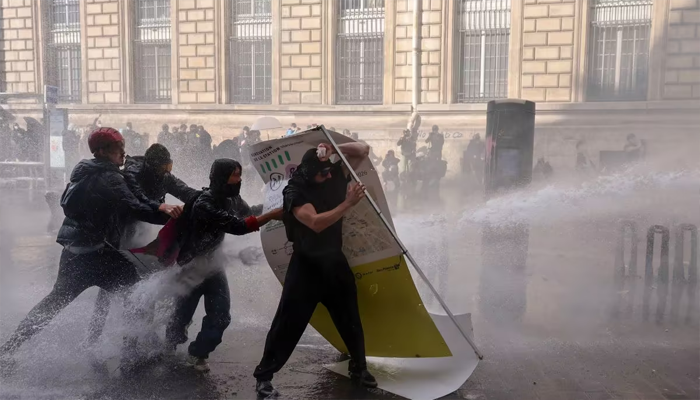
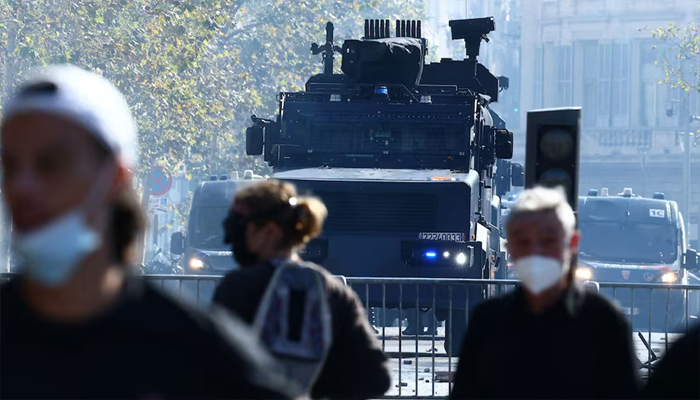
Police used tear gas and water cannon against demonstrators who threw projectiles and fireworks. In the southern city of Saint-Etienne, a 17-year-old boy reportedly lost his right hand after a crowd-control grenade exploded.
Mass looting and fires
Groups of masked youths reportedly attacked shops, set vehicles on fire and clashed with police after the demonstrations. Stores targeted included supermarkets, pharmacies, clothing retailers, luxury boutiques, electronics outlets and cosmetic shops.
Looting was reported in Paris, Marseille, Nice, Nantes, Bordeaux, Limoges, Lille, Toulouse and Strasbourg.
In Paris, groups of masked individuals allegedly disconnected security cameras before smashing shop windows and stealing merchandise.
Public buildings also came under attack. Limoges’ historic town hall, which is more than 140 years old, was largely destroyed by a fire after masked protesters reportedly broke into the building. Town halls in Marseille and Lille were also vandalised.
In Bordeaux, a police compound was damaged, while protesters set fire to a tourist office in Lyon.
The unrest attracted international attention. US Vice President JD Vance blamed immigration and integration policies for the violence in a post on social media, while French President Emmanuel Macron vowed that those responsible for vandalism, attacks and looting would face prosecution.
Political tensions ahead of elections
The demonstrations come amid growing political tensions ahead of France’s next presidential election, scheduled for 2027. Opposition politicians have used the unrest to criticise the government and promote their own political agendas.
Far-right leader Marine Le Pen condemned the rioters and accused the political movement associated with left-wing rival Jean-Luc Melenchon of legitimising violence. Melenchon, who supported the demonstrations, urged protesters to avoid looting, calling it contrary to their methods.
The protests were backed by supporters of the Yellow Vest movement, which organised major demonstrations against Macron’s government eight years ago over proposed fuel tax increases.
Rising living costs, higher rents and economic pressures were among the main grievances. Demonstrators also expressed frustration with political leadership, inequality and the growing concentration of wealth.
In Paris and other cities, protesters called for Macron’s resignation, while some invoked the French Revolution of 1789 during confrontations and marches.
Despite the peaceful intentions of many participants, the widespread violence and destruction have intensified pressure on French authorities to restore order and address public concerns over living costs and economic inequality.