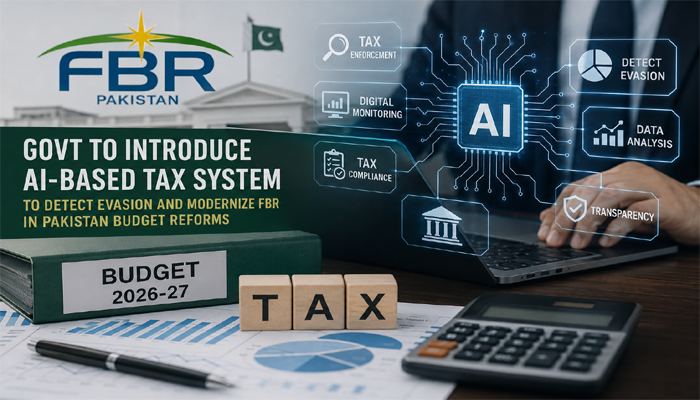
ISLAMABAD: The government of Pakistan is planning major tax reforms in the upcoming Finance Bill, including the introduction of artificial intelligence (AI) based tax enforcement and digital monitoring systems to improve revenue collection, reduce tax evasion, and modernize the Federal Board of Revenue (FBR). The initiative aims to strengthen transparency and create a business-friendly taxation environment.
According to an official statement, the proposals were discussed in a high-level meeting chaired by Federal Minister for Economic Affairs Ahad Cheema. The meeting included senior officials such as Federal Minister for Climate Change Musadik Malik, Adviser to the Prime Minister on Industries and Production Haroon Akhtar Khan, Minister of State for Finance Bilal Azhar Kayani, FBR Chairman Rashid Mahmood Langrial, and Attorney General Mansoor Usman Awan.
During the briefing, FBR officials presented key enforcement strategies targeting tax evasion in Pakistan, including underreporting, non-reporting, under-invoicing, and smuggling. A major focus of the reforms is the deployment of AI-powered tax systems capable of detecting false tax returns and identifying suspicious financial activity through digital monitoring tools.
The government also reviewed plans to introduce an e-auction system for confiscated goods by customs authorities. This digital solution is expected to improve transparency, reduce corruption risks, and streamline the disposal of seized items.
Officials emphasized that the use of AI in tax collection and automated enforcement mechanisms would help minimize human interaction, making the system more efficient and less prone to manipulation. The reforms are designed to support economic growth while ensuring compliance and expanding the tax base in Pakistan.
Federal Minister Ahad Cheema stated that the government is committed to strengthening fiscal stability through technology-driven solutions while ensuring that businesses are not burdened with unnecessary regulatory hurdles. He directed the FBR to refine the proposals further and ensure practical implementation of AI-based tax systems.
Authorities believe that digital transformation of Pakistan’s tax system will enhance transparency, improve documentation, and increase overall revenue collection. The reforms are expected to play a key role in modernizing tax administration and supporting long-term economic sustainability in Pakistan.