
RAWALPINDI: A division bench of the Lahore High Court’s Rawalpindi Bench, comprising Justice Jawad Hassan and Justice Muhammad Raza Qureshi, has dismissed the Federal Board of Revenue’s (FBR) objection to its jurisdiction in a landmark petition challenging 40 per cent taxes, levies, and customs duties on sanitary pads across Pakistan. The bench confirmed that the Lahore High Court has the authority to hear the petition, noting that millions of women reside in Punjab.
The court directed the federal government, FBR chairman, Ministry of Finance, and National Commission for Human Rights to submit clause-wise written replies within two weeks. The bench expressed dissatisfaction with the institutions for failing to submit timely responses. During the hearing, FBR counsel argued that the petition should have been filed before the Islamabad High Court, as the respondents include the Federation of Pakistan and FBR. The court, however, rejected this objection and instructed all respondents to file their written replies ahead of the next hearing.
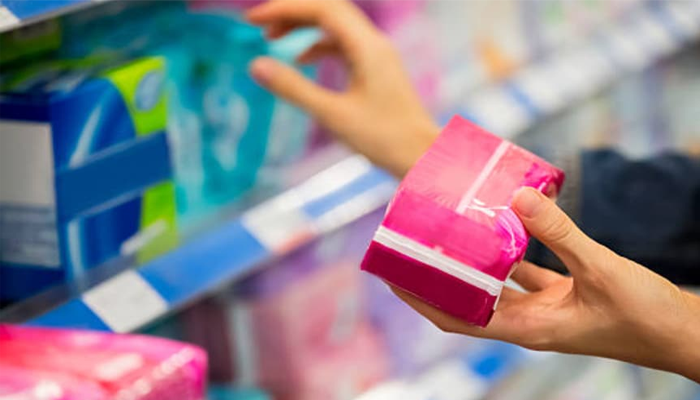
The petition was filed under Article 199 by 25-year-old lawyer Mah Noor Umar in public interest, highlighting the discriminatory taxation on sanitary products. The petitioner emphasized that Pakistan’s female population constitutes 48.51 per cent — approximately 151 million women — yet sanitary pads face cumulative taxes and duties up to 40 per cent, making them largely unaffordable.
Under the 1990 Sales Tax Act, domestically produced sanitary pads are taxed at 18 per cent, while imported pads and raw materials face 25 per cent customs duty. UNICEF Pakistan has estimated that these cumulative taxes increase the cost of a single sanitary pad by roughly 40 per cent. The petition argues that these taxes violate constitutional guarantees of equality, dignity, and social justice.
Highlighting socio-economic realities, the petitioner noted that a pack of 10 sanitary pads costs Rs450, while Pakistan’s average monthly income is about $120. Research by UNICEF and WaterAid (2024) indicates that only 12 per cent of Pakistani women use commercial sanitary pads, with the majority relying on cloth or unsafe alternatives.
The petition seeks the complete removal of taxes on sanitary pads, advocating for free distribution in schools to improve women’s health and societal attitudes toward menstruation. The petitioner’s counsel, Ahsan Jehangir Khan, emphasized that this case is about restoring women’s dignity, citing global examples from India, Nepal, and the UK, where period taxes have been eliminated. Making sanitary products affordable, he argued, will empower women, improve health outcomes, and ensure girls stay in school.