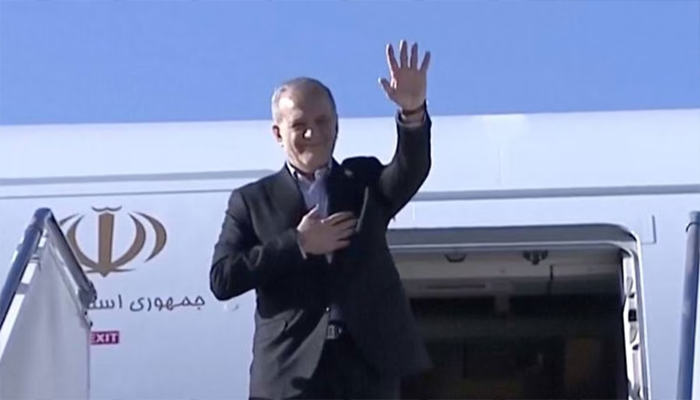
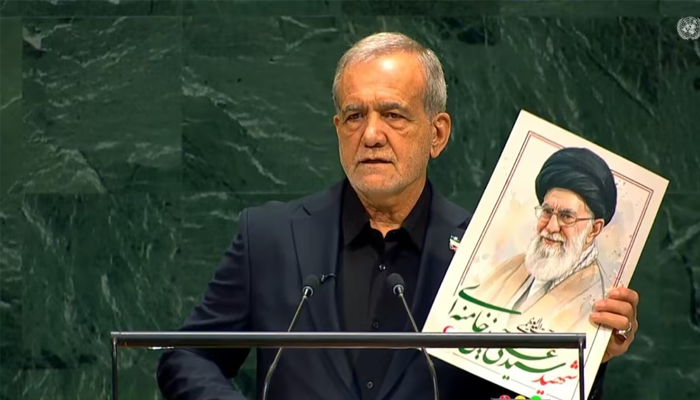
UNITED NATIONS: Iranian President Masoud Pezeshkian told the United Nations General Assembly on Wednesday that Iran would not surrender to US pressure but remained committed to diplomacy, despite escalating tensions between Tehran and Washington.
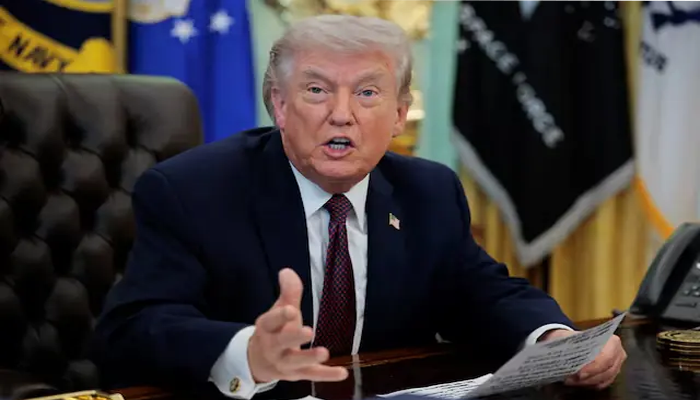
Pezeshkian’s remarks came a day after US President Donald Trump warned Iran of severe consequences, including a threat to “annihilate” the country. The contrasting speeches highlighted the deep divide between the two sides even as diplomatic contacts resumed on the sidelines of the UN General Assembly in New York.
The Iranian president defended Tehran’s military actions as defensive and reiterated that Iran does not seek to develop nuclear weapons. He also rejected negotiations conducted under what he described as coercion or the threat of force.
The diplomatic developments followed the first reported indirect US-Iran talks in months. Iranian Foreign Minister Abbas Araqchi communicated with US envoys Steve Witkoff and Jared Kushner through mediators, with Qatar playing a role in facilitating the discussions.
Trump later described the talks as “very productive” and said there was momentum toward a potential agreement. Iranian officials, however, said Tehran had presented conditions that included an end to the conflict and a halt to what it called US acts of aggression.
The contacts have faced opposition from Iranian hardliners. Iranian media linked to conservative factions criticized the diplomatic engagement, arguing that Tehran had already communicated its demands to Washington.
Tensions have also increased over US sanctions targeting Iranian civilian aviation. Washington has threatened secondary sanctions against countries that continue allowing Iranian flights, while Iranian officials have warned that Tehran could respond against neighboring countries that comply with the restrictions.
Meanwhile, uncertainty surrounding the conflict has continued to affect global energy markets. Oil prices remained near recent lows after earlier increases linked to security threats in the region and disruptions to shipping through the Strait of Hormuz.
The strategic waterway is a major route for global oil and liquefied natural gas shipments. Although maritime traffic has recently increased, security risks and higher shipping costs continue to affect energy supplies and global markets.
The latest diplomatic contacts suggest that channels between Iran and the United States remain open, but significant disagreements over sanctions, regional security, Iran’s nuclear programme and control of the Strait of Hormuz continue to complicate efforts toward a broader agreement.