
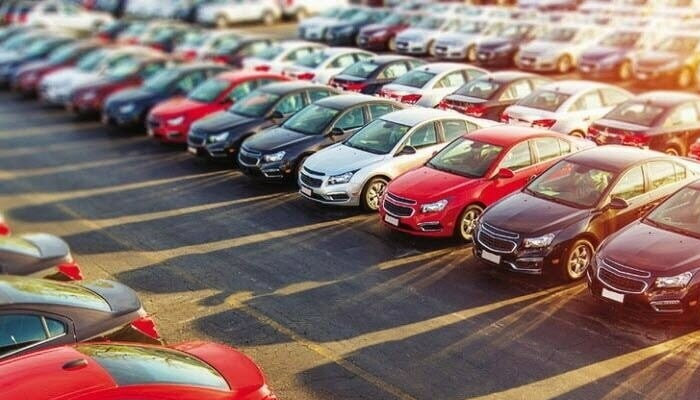
ISLAMABAD: The government has announced a 40% tariff on commercial imports of used cars and a complete ban on the import of accidental vehicles, aiming to protect the local auto industry amid pressure from the International Monetary Fund (IMF).
In a joint meeting of the Senate Standing Committees on Finance and Industry, Joint Secretary Trade Policy Mohammad Ashfaq said the new import regime will take effect from next month. The government also plans to phase out import duties over four years, starting with an immediate 22.3% reduction in average tariff protection from the next fiscal year (FY26).
Currently, commercial imports of cars are banned, with vehicles entering the country through schemes like transfer of residence, baggage, and gift – often misused. These imports reportedly meet 25% of local demand, as consumers seek affordable alternatives to expensive locally assembled cars.
Ashfaq confirmed that special import schemes are under review, with no final decision yet on whether they’ll continue post-liberalisation.
Local assemblers argue that prices are unlikely to fall despite liberalisation, due to heavy government taxation – ranging between 30% and 61% on locally produced cars.
Under IMF terms, Pakistan must reduce average import tariffs from 20.2% to 9.7% over five years. Duties on auto parts currently at 35% under the Auto Policy will begin phasing out from July 1, 2026.
The government also plans to eventually allow the import of six to eight-year-old vehicles, ensuring that safety and environmental standards are met.
Meanwhile, the Pakistan Automotive Manufacturers Association (PAMA) and Pakistan Association of Automotive Parts and Accessories Manufacturers (PAAPAM) have started lobbying against these changes, warning of negative impacts on local production.
Ashfaq noted that customs duties will drop to 11.2%, additional duties to 1.8%, and regulatory duties to 2.7% in the first year. By the end of the reform period, the top tariff rate will be capped at 15%, with just four duty slabs remaining