
By Tooba:
MBA M.Phil
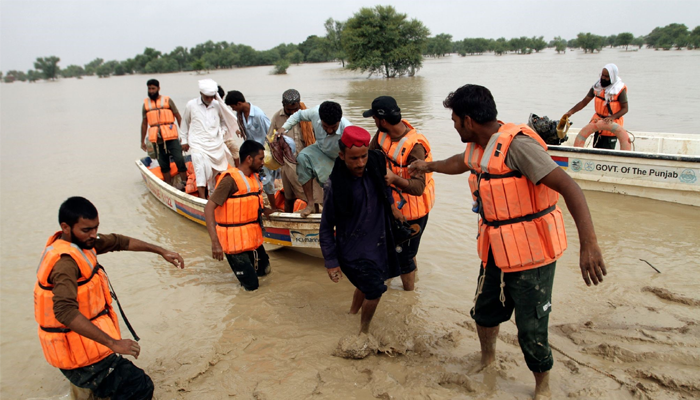
The heavy monsoon rains and dam overflow in 2025 are putting Pakistan in a challenging situation again. The homes, roads, and fields have been torn to pieces by the floods this year, and the actual crisis has just started. In the backdrop of shattered villages and lost agricultural land, there is an epidemic confronting us. Millions of humans are now exposed to deadly diseases like dengue, malaria and cholera. These diseases are rapidly spreading in the target regions, which makes life much more difficult, considering that the affected have already lost so much. Over 2.5 million persons have been displaced by the floods in Punjab, Sindh, Khyber Pakhtunkhwa, Gilgit-Baltistan and Azad Kashmir. A large number of them currently reside in transitional camps, schools, or destroyed houses. Due to floodwater that is dirty everywhere and broken sanitation systems, people have made life in such places very unsafe. The congestion of families in small shelters, the children playing around pools of stagnant water, and the lack of accessibility to clean drinking water are some of the shortcomings. All these are the conditions in which the ideal environment for the spread of mosquitoes and germs is created.
The impact is already felt in the hospitals. By mid-September 2025, 721 cases of dengue had been confirmed in Punjab alone, and about 200 of them were reported only in the previous month. Physicians are raising an alarm that the figures can further increase in the weeks to come. More than 398 cases of dengue have been reported since the floods in Khyber Pakhtunkhwa, and 82 cases were reported yesterday in the Charsadda district. Dengue has already been diagnosed in 73 individuals in Rawalpindi and Murree, and the number is increasing. Pakistan Meteorological Department has already chosen to issue a serious alert indicating that most major cities such as Karachi, Lahore, Islamabad and Multan are at a high risk of a serious dengue outbreak due to the fact that the current weather conditions and flood conditions are favouring the breeding of mosquitoes at an alarming rate.
Malaria is gaining momentum too, but stealthily so. Stagnant water in the fields, bursting drains and flooded streets have become ideal habitats of Anopheles mosquitoes. Having been messed with health services, several places are striving to supply mosquito nets, medicines, or even simple testing for malaria. The disease is more threatening when delayed, thus posing a danger to children and the elderly. Another significant threat is Cholera and other waterborne diseases. Clean drinking water is hardly available when wells, handpumps and pipelines are flooded. The families are compelled to consume unclean water, thereby breaking out diarrhoea, typhoid and cholera epidemics. Cholera is also very fatal, as it can take an individual just a few hours to die unless one receives treatment. The health specialists have already sounded alarms that the region affected by the flood is on the verge of an outbreak of cholera, particularly in Sindh and South Punjab, where the waterlogging is very pronounced.
The fact that the health system is already strained is one of the greatest problems. The floods damage many of the local hospitals, or they are too congested to manage the increasing number of patients. Nurse personnel are on round-the-clock shifts, and yet they lack beds, medications and diagnostic kits. There is also a lack of facilities in relief camps. Most of these camps lack clean toilets, clean water, and frequent medical examinations. Children, being the most vulnerable, are sickened by the large numbers. It is also more likely to affect pregnant women and the elderly, and without immediate treatment, a lot of lives might be lost. The health authorities and the government are attempting to react. In certain flood-affected locations, insecticides and fumigation are in progress by using spraying machines by the teams of control vectors. Health mobile units are going around the camp to screen cases of early dengue and malaria. Physicians are instructing individuals to use mosquito nets, cover water jerry cans, and maintain a clean environment. The television and radio are telling communities not to drink flood water unless it is first boiled, and should not cook or wash with the same. However, the magnitude of the calamity is so immense that these measures are failing to cover all people. The rural villages are still isolated by the roads, which are broken, and help comes slowly. International bodies are also extending assistance, although significantly more is required to contain the spread of diseases.
The 2025 floods are not merely a natural disaster, but they are also a lesson on the strong interconnection between climate, environment, and health. Pakistan monsoon rains are becoming more unpredictable and heavier because of climate change. The floods are becoming more devastating every year, and in every instance, the health risks are becoming more serious. Unless more powerful clean water, sanitation and health facilities are constructed, the same tragedy will be repeated several times in the country. The situation in Pakistan is at a crossroads. The urgent emphasis should be placed on life-saving measures to curb the spread of dengue, malaria, and cholera. In the greater perspective, however, the nation needs to make higher investments in better healthcare systems, improved drainage and sanitation, and disaster preparedness. Such crises can be prevented in future with the help of early warning systems, disease surveillance and public health campaigns. Communities should be sensitised and enabled to take simple measures that will ensure their safety in case of flooding.
Each flood leaves not just destroyed houses and harvests in ruins. It leaves behind a lurking threat that infiltrates into families, homes, and hospitals. The 2025 floods have proven that water is also a curse and a blessing. Unless something is done fast, the diseases that are gaining momentum behind it will kill more than the floods.
“We may not be able to stop the rains, but we can stop the diseases. The real test of resilience is not just surviving the flood, but defeating the invisible waves of illness that follow.”