
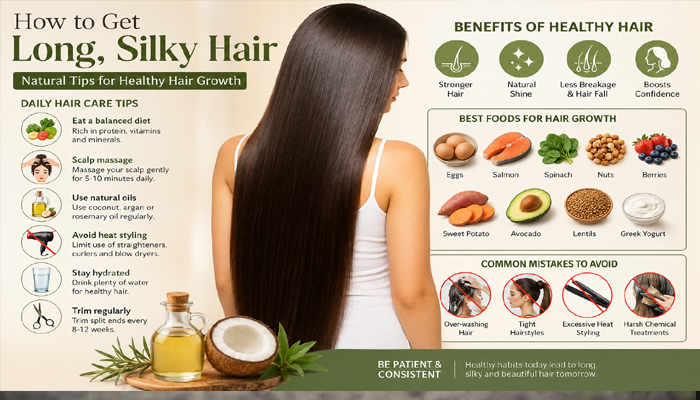
How to Get Long, Silky Hair Naturally
Long, silky, and healthy hair is a goal for many people. While genetics influence hair growth, your daily hair care routine, diet, and lifestyle play an equally important role. Healthy hair doesn't happen overnight—it requires consistency, proper nutrition, and protection from damage.
This guide explains the best ways to achieve long, shiny hair while discussing the advantages and disadvantages of different hair care practices.
Why Hair Health Matters
Healthy hair is a sign of overall well-being. Strong hair is less likely to break, split, or become dull. When the scalp is healthy, hair follicles can produce stronger strands that grow longer over time.
Most hair grows around 1 to 1.5 centimeters per month, although growth rates vary from person to person.
Top 10 Ways to Get Long, Silky, and Healthy Hair
1. Eat a Nutrient-Rich Diet
Hair is made primarily of protein, making nutrition essential.
Include foods rich in:
-
Eggs
-
Fish
-
Lean chicken
-
Lentils
-
Spinach
-
Almonds
-
Walnuts
-
Greek yogurt
-
Sweet potatoes
-
Citrus fruits
Important nutrients include:
-
Protein
-
Iron
-
Zinc
-
Vitamin D
-
Vitamin C
-
Biotin
-
Omega-3 fatty acids
2. Keep Your Scalp Clean
A healthy scalp supports healthy hair growth.
Wash your hair according to your hair type:
-
Oily hair: every 1–2 days
-
Normal hair: every 2–3 days
-
Dry or curly hair: every 3–5 days
Avoid using harsh shampoos that strip away natural oils.
3. Massage Your Scalp
A gentle scalp massage for 5–10 minutes daily may improve blood circulation and help reduce stress, both of which can support overall scalp health.
You can massage using fingertips or a small amount of lightweight oil.
4. Use Hair Oil Properly
Natural oils help reduce dryness and improve softness.
Popular choices include:
-
Coconut oil
-
Argan oil
-
Jojoba oil
-
Olive oil
-
Rosemary-infused carrier oil
Apply oil 1–2 hours before washing instead of leaving it on for several days.
5. Trim Split Ends
Although trimming does not make hair grow faster, it removes split ends that can travel upward and cause breakage.
Trim every 8–12 weeks.
6. Reduce Heat Styling
Frequent use of:
-
Hair straighteners
-
Curling irons
-
Blow dryers
can weaken hair proteins and increase breakage.
Always use a heat protectant if styling with heat.
7. Choose the Right Conditioner
Conditioner helps:
-
Reduce frizz
-
Increase shine
-
Improve softness
-
Prevent breakage
Focus conditioner on the mid-lengths and ends rather than the scalp.
8. Sleep on a Silk or Satin Pillowcase
Silk or satin pillowcases create less friction than cotton, which may help reduce tangling, frizz, and hair breakage.
9. Stay Hydrated
Water supports overall body function, including scalp health.
Aim to drink enough fluids throughout the day based on your activity level and climate.
10. Manage Stress
Chronic stress can contribute to increased hair shedding.
Helpful habits include:
-
Regular exercise
-
Meditation
-
Good sleep
-
Deep breathing
-
Spending time outdoors
Best Habits for Healthy Hair
Develop these daily habits:
-
Eat balanced meals.
-
Protect hair from excessive sunlight.
-
Use a wide-tooth comb on wet hair.
-
Avoid tight hairstyles every day.
-
Wash brushes regularly.
-
Avoid smoking if possible.
-
Get adequate sleep.
Foods That Promote Hair Growth
Some foods commonly associated with healthy hair include:
| Food | Key Nutrients |
|---|---|
| Eggs | Protein, Biotin |
| Salmon | Omega-3, Protein |
| Spinach | Iron, Vitamin A |
| Berries | Vitamin C |
| Nuts | Vitamin E |
| Sweet Potatoes | Beta-carotene |
| Beans | Zinc, Protein |
| Avocados | Healthy fats |
Advantages of Following a Healthy Hair Routine
A consistent hair care routine can provide several benefits:
-
Stronger hair with less breakage
-
Improved shine and softness
-
Reduced split ends
-
Better scalp health
-
Easier styling
-
Healthier-looking hair over time
-
Greater confidence in your appearance
-
Potentially longer hair due to reduced breakage
Disadvantages and Common Mistakes
Some practices marketed for hair growth can have downsides.
Excessive Oiling
Disadvantages:
-
Can clog the scalp in some people
-
May contribute to dandruff if not washed properly
-
Makes hair greasy
Daily Heat Styling
Disadvantages:
-
Dryness
-
Split ends
-
Hair breakage
-
Loss of shine
Chemical Treatments
Disadvantages:
-
Weaken hair
-
Cause dryness
-
Increase hair fall from breakage
Tight Hairstyles
Disadvantages:
-
Hairline damage
-
Traction alopecia (hair loss from repeated pulling)
-
Hair breakage
Frequent Coloring or Bleaching
Disadvantages:
-
Protein loss
-
Dryness
-
Increased split ends
Hair Care Myths
Myth: Cutting hair makes it grow faster.
Fact: Hair grows from the scalp, not the ends. Trimming simply removes damaged ends.
Myth: Brushing hair 100 times daily makes it healthier.
Fact: Excessive brushing can increase breakage.
Myth: Expensive products always work better.
Fact: Ingredients and consistency matter more than price.
Sample Weekly Hair Care Routine
Monday: Shampoo and conditioner
Tuesday: Gentle scalp massage
Wednesday: Leave hair heat-free
Thursday: Deep conditioning treatment
Friday: Light hair oil massage before washing
Saturday: Protective hairstyle
Sunday: Clean brushes and trim split ends if needed
When to See a Doctor
Consult a healthcare professional or dermatologist if you experience:
-
Sudden or severe hair loss
-
Bald patches
-
Persistent scalp itching or pain
-
Excessive dandruff that doesn't improve
-
Hair breakage despite good care
These symptoms may be related to nutritional deficiencies, hormonal changes, or scalp conditions that require treatment.
Conclusion
Growing long, silky hair naturally is a combination of good nutrition, consistent hair care, and protecting your hair from unnecessary damage. Focus on nourishing your body, maintaining a healthy scalp, minimizing heat and chemical exposure, and using gentle hair care practices. While there is no instant solution for rapid hair growth, these evidence-based habits can help your hair become stronger, shinier, and healthier over time. Patience and consistency are the keys to achieving beautiful, long-lasting results.