"A constitution is not merely a document; it is a promise between the state and its people.”
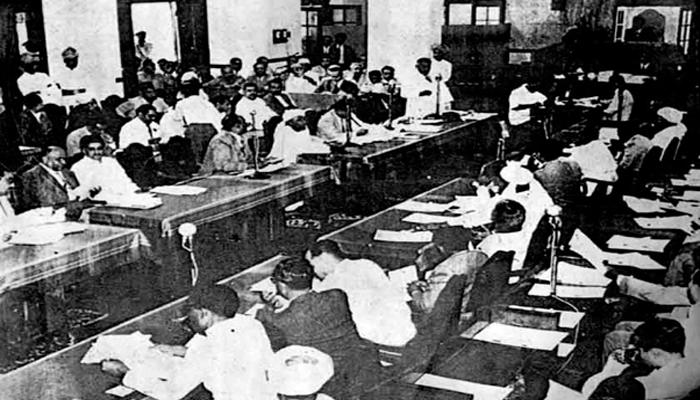
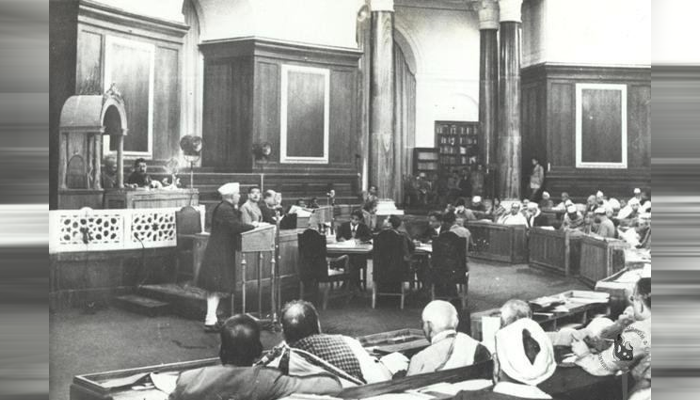
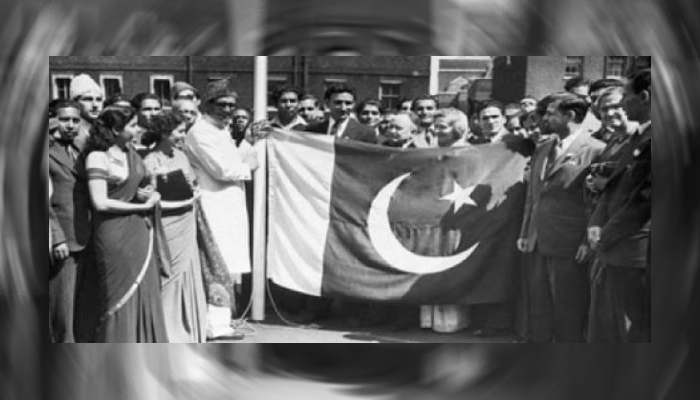
1956 was a pivotal year in Pakistan's constitutional history. Ten years after the attainment of independence, Pakistan finally got its first Constitution. On 29 February 1956, the Constituent Assembly adopted the Constitution, and on 23 March 1956, the Constitution took effect.
This Constitution declared Pakistan as an Islamic Republic of Pakistan. This was a significant development as the nation had no permanent constitution since independence in 1947. The new Constitution was an effort to establish the state's organisation, the Government's powers, the rights of people and the nature of the federation-province relationship.
The process of getting to the Constitution had been a difficult one. Pakistan's first Constituent Assembly had been dissolved by the then Governor General Ghulam Muhammad in 1954, which had led to a constitutional crisis. In May 1955, a second Constituent Assembly was then established. It was a challenge to assemble the different political, regional and ideological interests. The issue of East Pakistan and West Pakistan was one of the main problems. East Pakistan was more populous than West Pakistan, which was made up of various provinces and territories. The political leadership tried to create a system of parity between the two wings. In 1956, the Constitution adopted a parliamentary style of government. The head of state was the President, and the head of government was the Prime Minister. The Parliament was unicameral, that is, there was only one Chamber, the National Assembly. The total membership of the National Assembly was 300, which included five seats from East and five seats from West Pakistan reserved for women, a total of 310 members. This was a compromise that was made at the time.
It was one of the most significant provisions of the Constitution that Pakistan would be called the Islamic Republic of Pakistan. An important ideological ground for the making of the constitution had already been laid in the Objectives Resolution of 1949. In 1956, the Constitution was drafted so as to blend Islamic values with parliamentary democracy, rights and representative government. It also acknowledged the Federal nature of Pakistan and established the provision of Provincial Governments. The Constitution also had significance beyond the fact that it was the first-ever permanent constitutional document of Pakistan; it was also an effort to resolve the key issues that had been bothering Pakistan since its independence. In what kind of government should it be? So what would be the role of Parliament? What would be the relationship between the centre and the provinces? What would be the Islamization of the state if Islam was the core of Pakistan? In the new Constitution, these questions were answered.
The Constitution also guaranteed basic rights to the citizens. It gave a definition of equality, freedom and protection under the law. This was particularly important for a country that contained different languages, cultures, regions and religious communities. The Constitution tried to provide a general political structure to the people. Adoption of the Constitution gave rise to a sense of accomplishment. Pakistan had now taken a step from a temporary constitutional setup to a permanent constitutional system. It was particularly significant to date as 23 March was also linked with the Pakistan Resolution of 1940. Hence, the day came to mean much to the Pakistan Movement and Pakistan's Constitutional Development.
Allama Iqbal's poetry provides a beautiful way to think about the importance of national character and collective purpose:
“افراد کے ہاتھوں میں ہے اقوام کی تقدیر
ہر فرد ہے ملت کے مقدر کا ستارہ”
(Allama Muhammad Iqbal)
The simple answer is that the future of a nation lies in the hands of its people, and each person plays a part in the future of their country. Unfortunately, the Constitution of 1956 lasted but a short time. Political turmoil persisted, and there was a lack of consensus amongst political leaders. Parliamentary government failed to generate stable government. Political instability continued to be a concern, as were the first general elections under the Constitution early in 1959, according to the National Assembly records.
But before these elections could be held, Pakistan faced yet another political crisis. On 7 October 1958, President Iskander Mirza suspended the Constitution, called off the National and Provincial Assemblies and declared martial law. Therefore, the first Constitution only lasted approximately two and a half years. Although the 1956 Constitution failed to last long, its significance is not to be overlooked. It not only introduced the name Islamic Republic of Pakistan but also was the first meaningful step towards establishing a parliamentary constitutional system in the country. It was also a milestone event in the long constitutional history of Pakistan.
One lesson from 1956 is that the task of drafting a Constitution is just the start; the task of safeguarding the Constitution is just as critical. Political leaders and institutions need to observe the rules laid down by the Constitution if a democracy is to be successful. 1956 is thus a year of hope. Pakistan had finally provided itself with a constitutional identity, but the hard task of establishing constitutional democracy had just started.