"Unity is strength… when there is teamwork and collaboration, wonderful things can be achieved.” (Mattie Stepanek)
Allama Iqbal expressed the importance of collective strength in his famous verse:
“فرد قائم ربطِ ملت سے ہے، تنہا کچھ نہیں
موج ہے دریا میں اور بیرونِ دریا کچھ نہیں”
The individual becomes strong through connection with the community; a wave has meaning as part of the ocean.
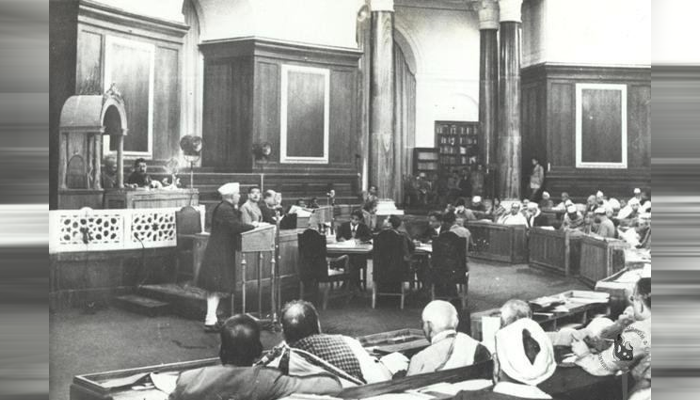
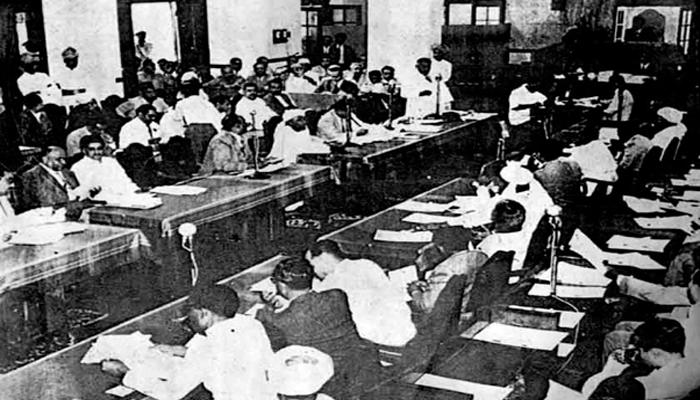
Another major effort to address Pakistan's challenging political challenges was the One Unit Scheme, which was launched in 1955. The Pakistan at that time was divided into two wings: East Pakistan and West Pakistan. There were more provinces and administrative units in West Pakistan and more people in East Pakistan. The government wished to rectify the situation of political inequality, or parity, between the two wings. The answer was unification of West Pakistan's provinces and big administrative areas into one province 'West Pakistan'. According to the National Assembly records, the second Constituent Assembly introduced the concept of One Unit for establishing parity between East and West Pakistan.
The scheme became a reality in October 1955. The supporters felt that it would ease administration and save expenses and will provide political balance between the two wings. There would be only one bigger province of West Pakistan facing East Pakistan as an equal political unit, rather than having several separate provinces in the western wing. The One Unit Scheme, however, was vehemently criticized in many parts of Pakistan in the west. Leaders and political parties in Sindh, Balochistan and the North-West Frontier Province were apprehensive about losing their individual identity and provincial autonomy. The scheme thus generated new political tensions while the government was addressing the existing issues.
It is one of the most fascinating lessons in the early history of the State of Pakistan. The Government sought to further unite the nation, some felt united at the expense of regional identity. The issue was particularly significant in Sindh, Balochistan and in the Pashtun dominated regions where people had a deep historical and cultural identity. Thus, the One Unit policy was a significant topic in provincial politics.
The second Constituent Assembly that adopted the One Unit set-up also carried on the process of constitution making. Finally it was adopted by Pakistan's first Constitution on 29 February 1956, and the Constitution entered into force on 23 March 1956. The One Unit Scheme continued to exist for some time but was finally discontinued in 1970 when the provinces of West Pakistan were restored.
Looking back, the One Unit experience provides an important lesson:
UNITY DOES NOT NECESSARILY MEAN UNIFORMITY.
(A country can be united while allowing different provinces, languages and cultures to maintain their identities).
The One Unit Scheme was an effort to establish a more robust political framework but the lessons of history are clear that national unity should be built on consultation, equality and respect for regional identities.