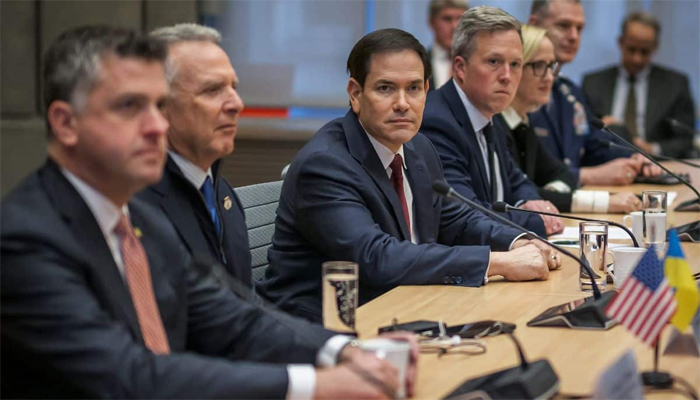
BERLIN: Germany is set to host high-level diplomatic talks this weekend involving delegations from the United States and Ukraine, as international efforts to explore a possible ceasefire in the Russia-Ukraine war gain renewed momentum. The discussions will take place ahead of a major summit in Berlin on Monday, where European leaders are expected to meet Ukrainian President Volodymyr Zelenskiy in a strong show of political support for Kyiv.
According to German officials, foreign policy advisers from the US, Ukraine and European countries will gather in Berlin to assess the prospects for a ceasefire after nearly four years of conflict following Russia’s full-scale invasion in 2022. A US official confirmed that President Donald Trump’s special envoy Steve Witkoff, along with his son-in-law Jared Kushner, is travelling to Germany for the talks. Witkoff has previously played a central role in negotiations with both Ukraine and Russia on a US-backed peace proposal.
The decision to send Witkoff is being seen by observers as a signal that Washington believes there may be room for progress. Earlier this week, the White House indicated that Trump would only dispatch a senior representative if there were realistic chances of advancing talks. The Berlin meetings are therefore being closely watched by diplomats and analysts alike.
On Monday, German Chancellor Friedrich Merz will host President Zelenskiy and several European leaders in Berlin. The summit comes as Ukraine faces growing pressure from Washington to consider a peace framework that initially reflected key Russian demands. Britain, France and Germany have spent recent weeks attempting to revise and soften elements of the US draft proposal, which previously suggested that Ukraine cede additional territory, abandon its bid to join NATO and accept restrictions on its military capabilities.
Speaking at a party congress in Munich on Saturday, Merz said Europe must prepare for a significant shift in its relationship with the United States while confronting what he described as a growing threat from Russia. He warned that the era of unquestioned US security guarantees in Europe was coming to an end and urged European nations to pursue their own strategic interests more assertively.
Meanwhile, the European Union has continued efforts to strengthen Ukraine’s position by exploring ways to use frozen Russian central bank assets to fund Kyiv’s military needs and civilian budget. On the ground, Ukraine remains under intense pressure as Russian forces push forward in some areas and carry out frequent missile and drone attacks on infrastructure.
On Saturday, Ukraine’s southern port city of Odesa and nearby regions experienced widespread blackouts after a major Russian strike on the electricity grid. Officials said more than one million households were left without power, underscoring Ukraine’s vulnerability as winter approaches.
Regional diplomacy has also intensified. Turkish President Tayyip Erdogan said after meeting Russian President Vladimir Putin that peace was “not far away” and expressed hope of discussing a peace plan with Trump. Erdogan suggested that a limited ceasefire focused on energy facilities and ports could help reduce tensions, warning that turning the Black Sea into a battleground would harm both Russia and Ukraine.
Despite these diplomatic signals, fighting continues. Russian attacks on Ukrainian ports on Friday damaged three Turkish-owned vessels, including one carrying food supplies, highlighting the fragile security situation even as ceasefire discussions begin.