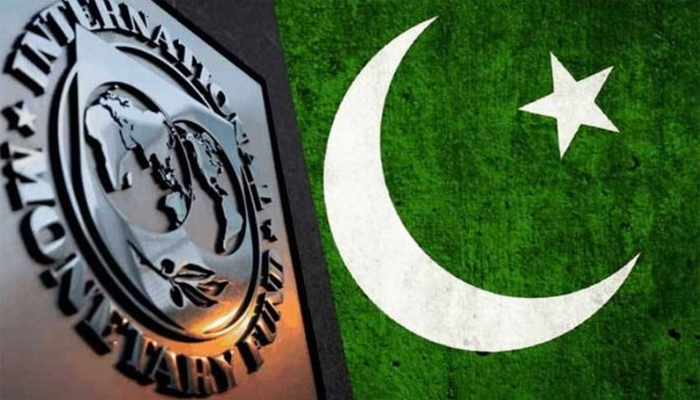
KARACHI: The International Monetary Fund (IMF) has said that Pakistan could boost its gross domestic product (GDP) by between 5% and 6.5% over the next five years if it addresses entrenched corruption and longstanding governance failures. The assessment comes from a newly released diagnostic report, jointly prepared by the IMF and World Bank, and uploaded by Pakistan’s finance ministry as part of benchmarks linked to the country’s ongoing $7 billion IMF programme.
The report offers one of the most detailed evaluations in years of how weak regulation, political influence, opaque fiscal practices, and fragmented oversight continue to undermine investment and suppress revenue generation. It emphasises that reforms to taxation, procurement systems, and oversight mechanisms — particularly within the Federal Board of Revenue (FBR) — are critical to reversing these trends.
While Pakistan is targeting 4.2% growth this fiscal year under the IMF programme, the diagnostic warns that the existing tax regime remains highly complex and distortionary. It highlights excessive exemptions, widespread statutory regulatory orders, weak internal controls within the FBR, and broad autonomy granted to field offices without adequate oversight. The report also flags vulnerabilities within the FBR’s IT systems and governance.
To unlock higher growth, the IMF recommends a broad restructuring of the FBR, simplifying tax policy, strengthening audit systems, and reducing Pakistan’s heavy reliance on supplementary grants that bypass parliamentary approval. The fund also underscores the need to improve transparency and limit political interference in state-owned enterprises, which collectively hold assets equal to nearly half of the country’s nominal GDP. These firms are labelled governance risks due to opaque procurement practices and ineffective oversight.
The diagnostic further notes persistent challenges in tackling corruption-linked money laundering. Despite progress since Pakistan’s removal from the FATF “grey list” in 2022, the IMF says convictions remain rare, with judicial delays, inconsistent rulings, and a large case backlog undermining contract enforcement.
The report also calls for greater transparency surrounding the Special Investment Facilitation Council (SIFC), established in 2023 as a “single-window” investment platform. The observation comes as Pakistan implements politically sensitive reforms amid constitutional changes, including the 27th amendment, which introduced a new chief of defence forces and reduced judicial oversight.