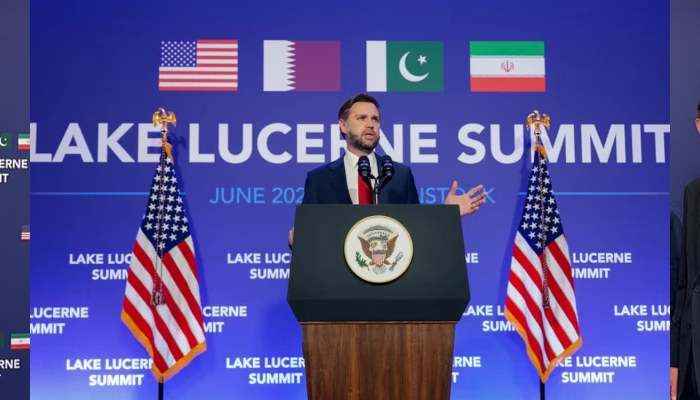
BÜRGENSTOCK: US Vice President JD Vance on Monday announced significant progress in ongoing negotiations between the United States and Iran, revealing that Tehran has agreed to allow nuclear inspectors to return and establish mechanisms for managing frozen assets, maintaining regional ceasefires, and ensuring maritime security in the Strait of Hormuz.
Speaking to reporters after high-level talks in Bürgenstock, Switzerland, Vance said discussions had produced encouraging results despite moments of tension during the negotiations. He noted that technical teams from both countries remained engaged and would continue working in the coming days and weeks.
Alhamdulillah, the First High-Level Committee Meeting under the framework of the Islamabad Memorandum of Understanding has concluded successfully in Bürgenstock, Switzerland.
— Shehbaz Sharif (@CMShehbaz) June 22, 2026
The discussions were held in a positive and constructive atmosphere and yielded encouraging progress,… pic.twitter.com/uvA0SBKfvf
According to Vance, Iran agreed in principle to permit international nuclear inspectors to verify compliance with a preliminary understanding reached during the talks. He said discussions with the International Atomic Energy Agency (IAEA) could begin as early as this week.
“Our hope is that we get to the final deal and a permanent settlement. Right now, we’ve made great progress,” Vance said, adding that he had personally attempted to contact UN nuclear inspectors at 2am to brief them on developments.
The US vice president also disclosed that negotiators had discussed a framework for handling Iran’s frozen assets. Under a proposed arrangement involving Qatar, any future release of Iranian funds would be closely monitored to ensure they are used for humanitarian and economic purposes rather than activities linked to regional instability.
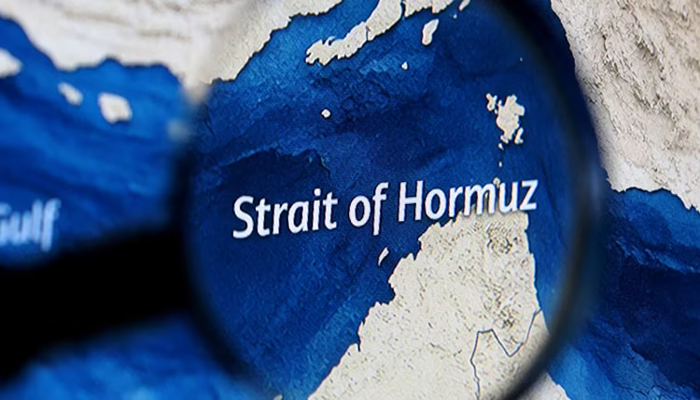
Vance said the talks also addressed freedom of navigation in the Strait of Hormuz, a critical global energy corridor. Both sides agreed to establish mechanisms aimed at keeping the strategic waterway open and secure for international shipping.
Despite reports suggesting the Iranian delegation considered leaving the talks, Vance downplayed the incident, saying negotiations continued until after 1am and produced meaningful progress.
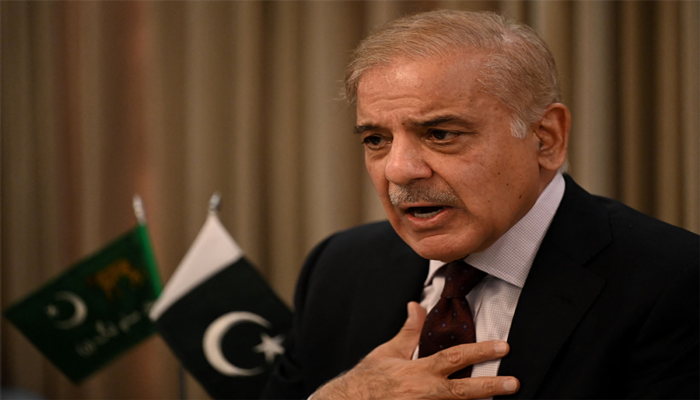
Meanwhile, Prime Minister Shehbaz Sharif welcomed the outcome of the talks, describing the discussions as “positive and constructive.” He confirmed that participants had agreed on a roadmap aimed at reaching a final agreement within 60 days and announced the formation of a High-Level Committee to oversee the process.
🔊PR No: 1️⃣5️⃣1️⃣/2️⃣0️⃣2️⃣6️⃣
— Ministry of Foreign Affairs - Pakistan (@ForeignOfficePk) June 22, 2026
Joint Statement by the State of Qatar and the Islamic Republic of Pakistan Regarding the Conclusion of Lake Lucerne Summit, First High-Level Committee Meeting with Participation of the United States of America and the Islamic Republic of Iran pic.twitter.com/2G3PAf7LVY
Sharif praised the leadership of both Washington and Tehran for their commitment to diplomacy and thanked Qatar and Switzerland for facilitating the negotiations. He also commended Field Marshal Asim Munir, Deputy Prime Minister Ishaq Dar, and Interior Minister Mohsin Naqvi for their contributions to advancing the diplomatic initiative.
Iran also expressed cautious optimism. Foreign Ministry spokesman Esmaeil Baghaei said “important steps” had been agreed upon to pave the way for future negotiations, including technical discussions on maritime security, frozen assets, and regional de-escalation mechanisms.
The latest developments have raised hopes for a broader agreement that could reduce tensions in the Middle East, revive diplomatic engagement, and promote long-term regional stability.