
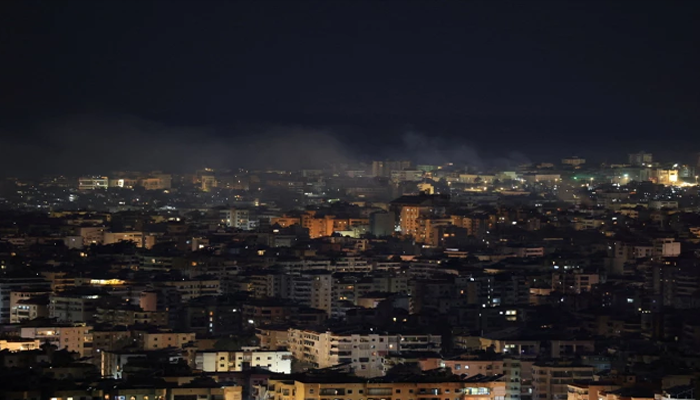
BEIRUT: The escalating Middle East war entered its seventh day on Friday as Israel launched fresh airstrikes on the southern suburbs of Beirut, expanding the conflict that initially began with attacks on Iran.
Before the strikes, the Israeli military issued an urgent evacuation warning to residents in the targeted areas, urging them to immediately leave their homes to save their lives. The warning triggered widespread panic, forcing thousands of people to flee the suburbs while heavy traffic built up on surrounding roads as residents rushed to escape.
The war has now spread far beyond the original battlefield. In the Indian Ocean, a US submarine reportedly sank an Iranian naval vessel near the coast of Sri Lanka. Meanwhile, Azerbaijan warned of retaliation after a drone strike targeted an airport within its territory.
On the political front, US President Donald Trump rejected the possibility of Mojtaba Khamenei succeeding his father, the late Iranian Supreme Leader Ali Khamenei. Trump dismissed Mojtaba as unsuitable for leadership and said the United States would need to be involved in determining Iran’s future leadership.
The US president also suggested Washington is seeking a leader who could bring stability and peace to Iran, warning that further conflict could follow if an acceptable alternative is not found.
Lebanon became directly involved in the widening war earlier this week when the Iran-backed militant group Hezbollah launched attacks on Israel following the killing of Ali Khamenei. Israel responded with airstrikes and ground operations in several Lebanese border villages before expanding its campaign to Beirut’s southern districts, which it described as Hezbollah strongholds.
The evacuation warning ahead of the Beirut strikes caused chaotic scenes as residents rushed to leave the area. Families gathered on beaches and public spaces after fleeing their homes, uncertain about where to go next.
According to Lebanese authorities, at least 123 people have been killed since the conflict expanded into Lebanon, while more than 680 others have been injured and around 90,000 residents displaced.
Regional tensions have also intensified along Iran’s borders. Azerbaijani President Ilham Aliyev accused Tehran of carrying out a drone strike on an airport and described the incident as terrorism, although Iran denied responsibility and blamed Israel.
Fresh airstrikes were also reported in Tehran, where damaged vehicles and destroyed buildings were seen following recent attacks. Iranian officials claim the death toll from US and Israeli strikes has risen to more than 1,200 people, though the figure has not been independently verified.
Iranian Foreign Minister Abbas Araghchi said Tehran is not seeking a ceasefire and warned that any ground invasion would lead to serious consequences for invading forces.
Meanwhile, Israel said it has destroyed a large portion of Iran’s missile launchers and air defence systems. Israeli military chief Eyal Zamir announced that the campaign had entered a “new phase,” hinting that additional military actions are expected.
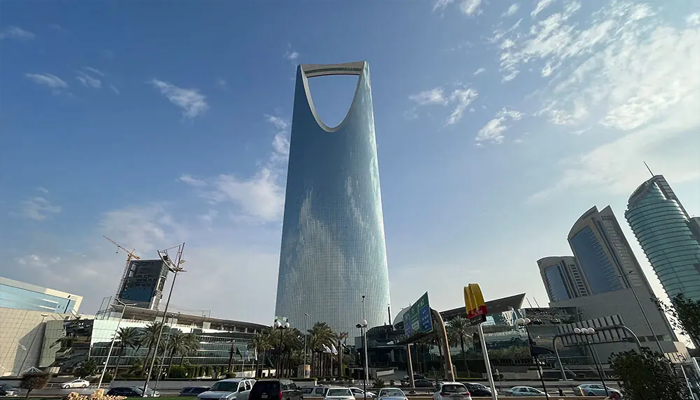
The conflict has also spread across Gulf states. Iran has launched strikes toward several regional targets, with casualties reported in countries including Kuwait. Air defence systems in Saudi Arabia and Qatar intercepted incoming missiles, while falling drone debris injured civilians in Abu Dhabi.
With attacks now affecting multiple countries across the Middle East and beyond, fears are growing that the conflict could escalate into a wider regional war.