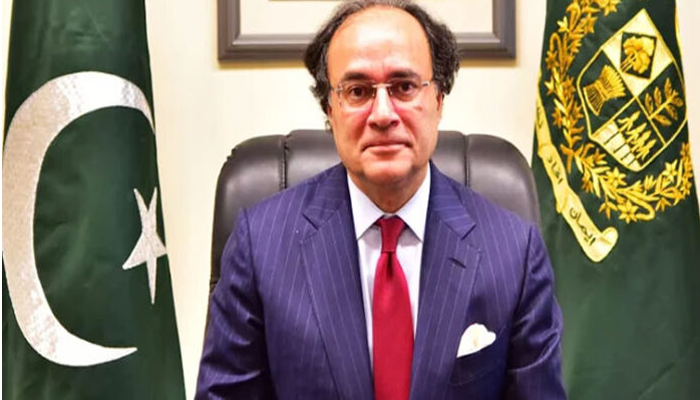
ISLAMABAD: Finance Minister Muhammad Aurangzeb said on Monday that Pakistan’s economy has entered a phase of stabilisation, as the government advances broad-based structural reforms in taxation, energy, privatisation, and digitalisation to achieve sustainable and inclusive growth.
Addressing a joint press conference with key cabinet members, Aurangzeb highlighted recent credit rating upgrades by three global agencies and a staff-level agreement with the International Monetary Fund (IMF) as confirmation of improving macroeconomic indicators. “These are signs that Pakistan is moving in the right direction,” he said, adding that the government’s goal was now to convert stability into growth through trade and investment inflows.
The event, also attended by Power Minister Awais Ahmad Khan Leghari, IT Minister Shaza Fatima Khawaja, and Privatisation Adviser Muhammad Ali, reviewed progress under the government’s economic reform agenda across key sectors. Aurangzeb acknowledged that while the trade deficit had widened by 9%, strong remittance inflows — expected to reach $41–42 billion by year-end — were cushioning the impact. The current account deficit, he noted, remained manageable at $0.5 billion.
Taxation Reforms
Federal Board of Revenue (FBR) Chairman Rashid Mehmood Langrial reported that Pakistan’s tax-to-GDP ratio rose by 1.49% over the past year and is targeted to reach 18% by 2028. He said individual tax filers had grown from 4.9 million to 5.8 million, marking an 18% increase. Despite a Rs275 billion shortfall in tax collection during July–October 2025-26, the government would avoid contingency measures, Langrial assured.
Energy Sector Overhaul
Minister Leghari said the government aimed to lower electricity costs and operationalise the Competitive Trading Bilateral Contract Market (CTBCM) by early 2026 — a move that would allow private players to directly trade electricity. He added that Pakistan’s energy cost, at Rs9.97 per unit, was regionally competitive, but high capacity payments remained a challenge. “For the first time, a plan is in place to eliminate Rs1.2 trillion in circular debt over six years,” he said. The power sector will also undergo a complete metering automation within three years.
Privatisation Drive
Adviser Muhammad Ali reaffirmed the government’s commitment to privatisation, citing the recent sale of First Women Bank Limited to the UAE-based International Holding Company for Rs5 billion — a 60% premium. On Pakistan International Airlines (PIA), he said the restructured transaction had attracted strong investor interest from local groups including Arif Habib, FFC, Air Blue, and Lucky Group, with bidding expected by end-2025.
Ali added that the government was in talks for the sale of House Building Finance Corporation (HBFC) and distribution companies (DISCOs) but had no plans to privatise airports. “Our goal is to build a market-based economy,” he said.
Rightsizing and Fiscal Management
Coordinator Salman Ahmed reported that 54,000 vacant posts had been abolished, saving Rs56 billion, while 20 ministries completed the rightsizing process. Finance Secretary Imdad Ullah Bosal added that the government had repurchased Rs2.6 trillion in debt over two years, saving Rs120 billion in interest payments, and planned to issue Panda bonds soon.