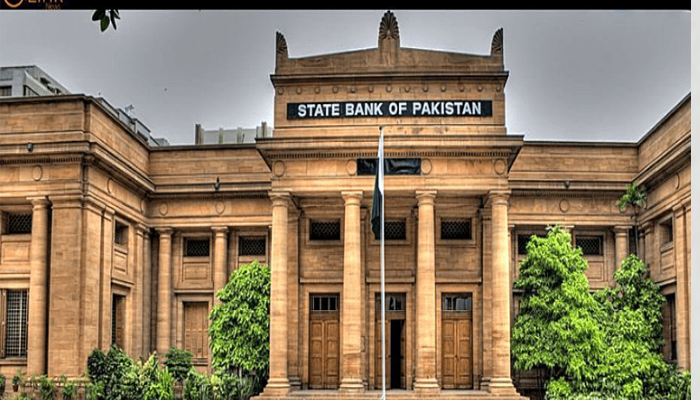
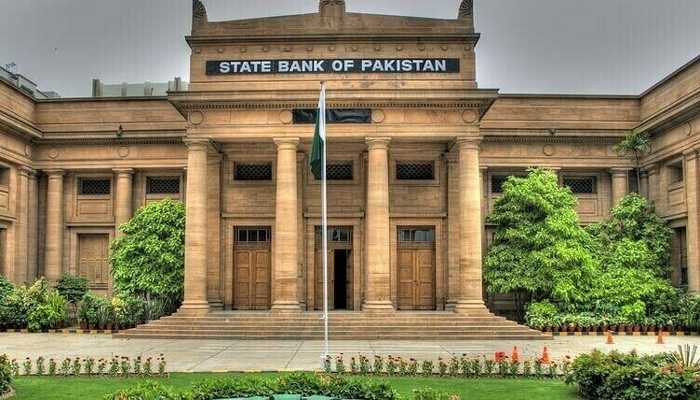
ISLAMABAD: The Monetary Policy Committee (MPC) of the State Bank of Pakistan (SBP) on Monday decided to keep the policy rate unchanged at 11%, in line with market expectations.
“The MPC decided to keep the policy rate unchanged at 11% in its meeting today,” the central bank said in a statement.
The committee noted that headline inflation rose significantly to 5.6% in September, while core inflation remained steady at 7.3%. Despite recent floods, the MPC observed that the economic impact was lower than anticipated, with crop losses contained and minimal supply disruptions. High-frequency economic indicators also reflected momentum in economic activity, prompting the committee to revise the overall macroeconomic outlook upward.
However, uncertainties persist due to volatile global commodity prices, challenging export prospects amid changing tariff dynamics, and potential domestic food supply issues.
The MPC highlighted key developments since its last meeting. Real GDP growth for FY25 was revised to 3% from 2.7%, while initial estimates for major Kharif crops remained close to last year’s levels despite flood conditions. SBP’s foreign exchange reserves continued to rise even after the $500 million Eurobond repayment. Additionally, Pakistan reached a staff-level agreement with the International Monetary Fund (IMF) on the Extended Fund Facility (EFF) and the Resilience and Sustainability Facility (RSF) reviews. Inflation expectations among consumers and businesses eased in SBP-IBA sentiment surveys, although global commodity prices, particularly oil, remained volatile.
The MPC emphasized that the real policy rate remains adequately positive to stabilize inflation within the medium-term target range of 5–7%. While September’s headline inflation jumped from 3% in August, the increase largely reflected flood-induced food price rises, higher energy costs, and persistent core inflation. Recent data suggest the surge in food prices has been milder than initially expected, with price increases for major items like wheat, sugar, and perishables slowing.
The committee expects inflation to temporarily exceed the upper bound of the target range in H2-FY26 but projects a return to the target by FY27.
Market analysts widely anticipated the central bank’s decision. Arif Habib Limited (AHL) noted that while economic momentum is gaining, with large-scale manufacturing growth at 9% YoY in July, SBP may defer easing to allow stability to nurture recovery in the real sector. Topline Securities highlighted rising non-oil imports despite high interest rates, suggesting a continuation of the status quo. Similarly, a Reuters poll indicated flood-driven food inflation and low-base effects as reasons for maintaining the policy rate.
Governor SBP Jameel Ahmad earlier remarked that the trajectory of future policy cuts would depend on the economic fallout from the recent floods.
Other key indicators show the rupee appreciating by 0.2% and petrol prices declining by 0.6%. Pakistan’s current account posted a $110 million surplus in September, reversing last year’s $52 million deficit. Weekly foreign exchange reserves rose by $14 million to $14.45 billion, with total liquid reserves at $19.85 billion and net reserves at $5.40 billion in commercial banks.
The MPC’s decision reflects a cautious approach to balancing economic recovery with inflationary pressures, keeping Pakistan on a measured monetary policy path amid global and domestic uncertainties.