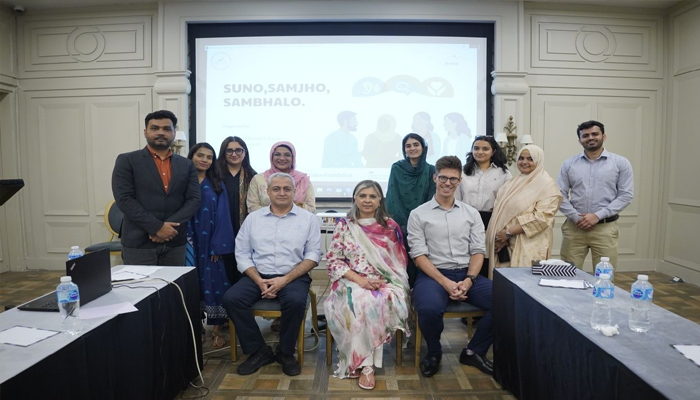
KARACHI: The Critical Care Research Group (CCRG) at Ziauddin University, in collaboration with the Pakistan Kidney and Liver Institute and Research Centre (PKLI), organised a Patient and Public Involvement and Engagement (PPIE) awareness session on severe brain infections, titled "Suno, Samjho, Sambhalo,”.
The session was held under the Coordinated Action for Surveillance, Characterisation, and Data-driven Evaluation of Infectious Acute Encephalitis Syndrome (CASCADE-iAES) programme, led by Prof. Dr. Madiha Hashmi, Chair of the Department of Critical Care Medicine at Ziauddin University.
The session brought together patients, caregivers, and healthcare professionals to exchange experiences and contribute to shaping future research on brain infections. Discussions highlighted the fear and uncertainty associated with severe brain infections, challenges in early symptom recognition, and communication gaps that can delay diagnosis and treatment, underscoring the need for greater awareness and more patient-centered approaches to healthcare and research.
Underscoring the importance of locally driven research and evidence-based healthcare solutions, Prof. Dr. Madiha Hashmi remarked, “We are working closely with our own patients and within our own healthcare system to generate meaningful evidence that can guide clinical decision-making. By developing strategies rooted in local realities, we aim to improve patient outcomes and ensure that our interventions truly benefit the communities we serve.”
Advocating for greater family engagement in healthcare decision-making, Dr. Aun Raza, Infectious Diseases Consultant at Shaukat Khanum Memorial Cancer Hospital and Research Centre, stated, “Effective communication begins with understanding family dynamics. By identifying key decision-makers, engaging them in meaningful conversations, and listening carefully to their concerns, healthcare providers can build trust and facilitate informed decisions that ultimately benefit the patient.”
Stressing the importance of clear and compassionate communication between doctors and patients, Dr. Qudsum Yousaf, Consultant Neurologist at PKLI&RC & Assistant Professor. Department of Neurology, Punjab Institute of Neurosciences, stated, “We need to communicate with patients in a way that helps them understand why certain tests, investigations, or diagnostic procedures are necessary. Clear and compassionate communication can help patients feel more informed, involved, and confident in their care.”
Reflecting on the value of understanding patients’ lived experiences, Dr. Ramsha Zaheer, Fellow, Department of Neurology, University of Child Health Sciences, remarked, “Bringing doctors and patients together in this way is truly refreshing and eye-opening. It helps us understand the difficulties patients face, including the challenges of travelling long distances for care, and allows us to empathize more deeply with their experiences and concerns.”
By placing patients and caregivers at the center, this landmark awareness session signaled a cultural shift in healthcare and research in Pakistan. It reflects Ziauddin University and Dr. Ziauddin Hospital’s commitment to listening, learning, and co-creating solutions with patients and families, while laying the groundwork for global collaborations through the CASCADE-iAES programme.
The research programme is being undertaken by Ziauddin University in collaboration with ISARIC and is supported by funding from the Wellcome Trust, the Bill & Melinda Gates Foundation, and the UK Foreign, Commonwealth & Development Office (FCDO).