
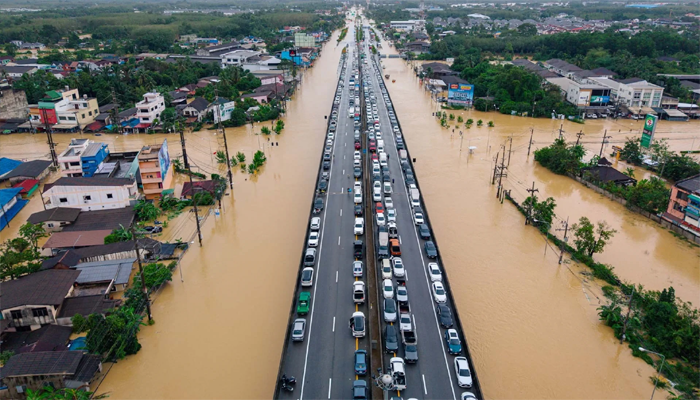
Colombo/Jakarta: The death toll from catastrophic flooding and landslides across Asia has surged past 1,100, as Sri Lanka and Indonesia intensify rescue and relief operations with large-scale military deployments. The extreme weather, fuelled by extended monsoon rains and amplified by climate change, has devastated major parts of Sri Lanka, Indonesia’s Sumatra region, southern Thailand and northern Malaysia, leaving communities overwhelmed and cut off from critical assistance.
Authorities reported that relentless rainfall submerged entire villages, forcing residents onto rooftops as they awaited rescue by boats and helicopters. Severe flooding along Sri Lanka’s Kelani River and multiple districts in Indonesia’s North Sumatra and Aceh provinces have resulted in widespread destruction of homes, roads and farmlands.
Indonesian President Prabowo Subianto, visiting North Sumatra on Monday, said the “worst has passed, hopefully”, emphasizing that the government’s priority is the immediate delivery of emergency aid to isolated regions. Indonesia is facing at least 593 confirmed deaths with nearly 470 people still missing, prompting public calls for a national emergency declaration. The disaster is now the deadliest in Indonesia since the 2018 Sulawesi earthquake and tsunami that killed more than 2,000 people.
Indonesia has deployed three warships loaded with humanitarian supplies and two hospital ships to heavily impacted zones. Survivors described harrowing attempts to escape rising waters, with some returning to find their homes completely submerged and personal belongings washed away.
In Sri Lanka, the government has appealed internationally for urgent assistance as Cyclone Ditwah triggered widespread flooding and landslides across the island. Military helicopters, including support from Pakistan Navy aircraft, are airlifting stranded residents from inundated neighbourhoods. Officials confirmed at least 355 deaths with 366 people missing, marking one of the country’s most severe natural disasters since the 2004 tsunami.
Floodwaters peaked in Colombo overnight, and with rains subsiding, authorities hope water levels will begin to fall. However, damage assessments are only just beginning as relief workers clear blocked roads and reach communities buried under mudslides. President Anura Kumara Dissanayake described the disaster as the “largest and most challenging natural catastrophe in our history”, noting that the scale of destruction in Sri Lanka’s central region is unprecedented.