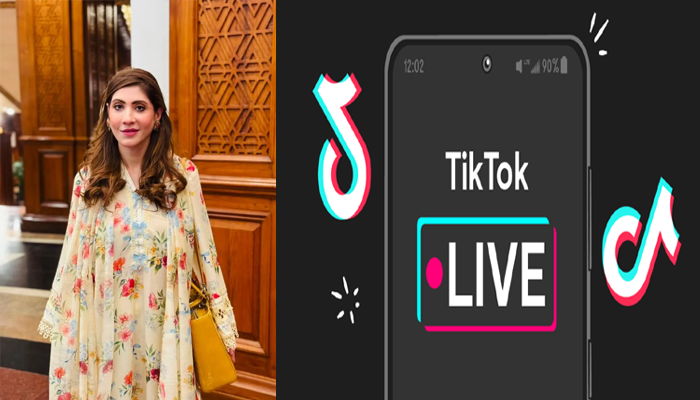
A fresh debate over the impact of social media on Pakistan’s younger generation has erupted after Punjab Assembly member Hina Parvez Butt strongly criticised TikTok Live streamers, accusing them of promoting unhealthy values and influencing young people to pursue quick wealth instead of education and skills.
The controversy began after a post on X went viral featuring screenshots from a street interview with a young woman who claimed she had earned enough money through TikTok Live broadcasts to purchase a Rs5 million Honda Civic. According to the interview, the content creator said she had around 80,000 TikTok subscribers and generated significant income through live streaming on the platform.
The woman also described her lifestyle, saying she owned expensive clothing, a luxury handbag, and millions of rupees in her bank account. She remarked that her most valuable possession was her bank card, suggesting her financial success had been driven largely by her online activities.
The post quickly gained traction on social media, with many users debating whether digital content creation now offers better financial opportunities than traditional careers. The caption accompanying the post compared the success of TikTok creators with the advice of well-known Pakistani motivational speakers and entrepreneurship mentors, arguing that many young people now see livestreaming as a faster route to financial independence than acquiring professional skills or higher education.
Reacting to the viral post, Pakistan Muslim League-Nawaz (PML-N) lawmaker Hina Parvez Butt expressed concern over what she described as the growing culture surrounding TikTok Live. In a post on X, she claimed that the platform rewards inappropriate content and encourages creators to prioritise popularity over positive values.
“The more shamelessness you spread on TikTok Live, the more money you make,” Butt wrote, adding that the content produced by some livestreamers was harmful to society. She argued that many young Pakistanis now look up to social media influencers as role models, creating unrealistic expectations about achieving wealth quickly.
According to Butt, this trend is encouraging a shortcut mentality among the younger generation, with many believing they can become financially successful overnight without investing in education, professional training or long-term career development.
While acknowledging that social media has created new economic opportunities for millions worldwide, she stressed that its negative consequences should not be ignored. Butt particularly criticised family vloggers and TikTok Live streamers, claiming they are among the most influential groups shaping youth behaviour online.
The remarks sparked mixed reactions across social media. Supporters agreed that online platforms should promote responsible content and discourage harmful trends. Critics, however, argued that digital content creation has become a legitimate source of income, particularly in a challenging economic environment where employment opportunities remain limited.
The discussion highlights Pakistan’s evolving digital economy, where platforms such as TikTok have created new career paths while also raising questions about online ethics, youth aspirations, and the broader social impact of influencer culture.