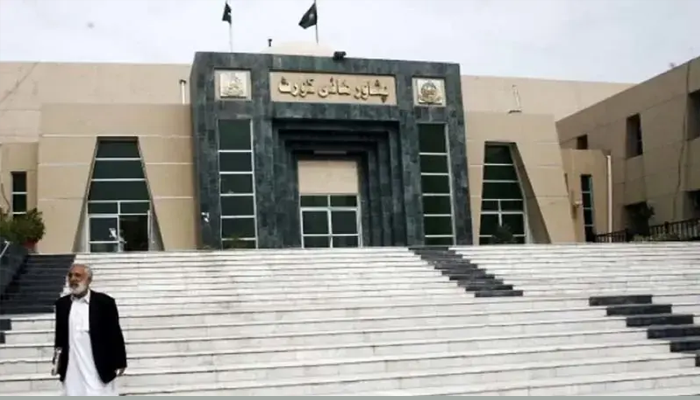

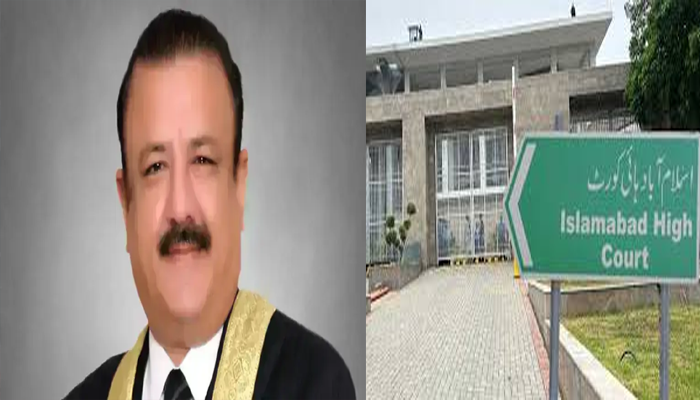
ISLAMABAD: The Islamabad High Court (IHC) on Tuesday declared a petition challenging the legitimacy of Justice Tariq Mehmood Jahangiri’s law degree as maintainable and directed the judge to submit a reply within three days. The decision marks a significant development in a case that has sparked debate within legal circles about judicial eligibility, accountability and the constitutional forums responsible for examining such matters.
The petition was filed by lawyer Mian Daud, who questioned whether Justice Jahangiri lawfully holds office as a high court judge, citing concerns over the authenticity of his LLB degree. The controversy emerged last year when a letter attributed to the University of Karachi’s controller of examinations began circulating on social media, raising doubts about the judge’s academic credentials. The court had reserved its verdict on the maintainability of the plea in July 2023.
A two-member IHC bench comprising Chief Justice Sardar Muhammad Sarfraz Dogar and Justice Muhammad Azam Khan issued the ruling after hearing detailed arguments. During the proceedings, District Bar Association’s counsel Ahmed Hassan Shah argued that the matter should be referred to the Islamabad Bar Council (IBC), the authority responsible for issuing legal licences. He maintained that allegations against judges fall under Article 209 of the Constitution, which mandates that such matters be addressed by the Supreme Judicial Council (SJC).
However, Chief Justice Dogar clarified that the case dealt not with judicial misconduct but with the fundamental question of eligibility to hold office. He reiterated that the court was empowered to examine whether a judge meets the legal requirements for the position. Shah insisted that invoking Article 199 — under which the petition was filed — was inappropriate when Article 209 could apply, arguing that judges should not adjudicate cases involving one another.
Representing the IBC, Aleem Abbasi contended that although Article 209 covers misconduct, the issue at hand related to the judge’s qualifications, and therefore required scrutiny. He also noted that Justice Jahangiri held three licences and referenced an ongoing intra-court appeal involving several IHC judges, hinting at broader institutional concerns.
Amicus curiae Barrister Zafarullah Khan also raised questions about the maintainability of the petition, pointing out that Article 199 contains specific exclusions related to courts and the armed forces. He reminded the bench that the Supreme Court had previously examined aspects of the matter.
During the hearing, Advocate General Ayaz Shaukat presented a report from the University of Karachi. The Higher Education Commission had earlier confirmed KU’s findings that Justice Jahangiri’s law degree was obtained through unfair means, noting major discrepancies in his academic record. According to the report, the judge had been debarred from taking an exam for three years in 1988 but still managed to appear using another name.
Although Abbasi stressed that the Sindh High Court had suspended KU’s notice cancelling the degree, CJ Dogar observed that the degree had not been restored. The bench then declared the plea maintainable and issued notices to all respondents, ordering them to submit their replies within three days as the case proceeds toward further judicial scrutiny.