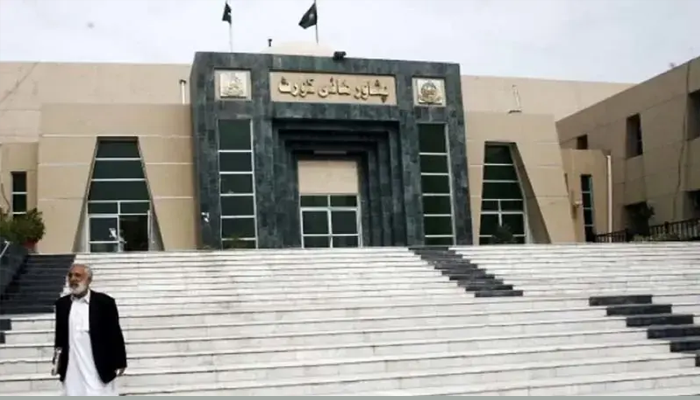

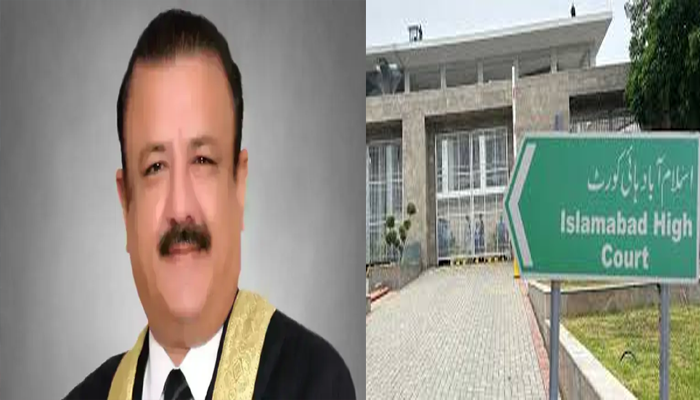
ISLAMABAD: The Islamabad High Court on Thursday disqualified one of its own judges, Justice Tariq Mehmood Jahangiri, in a landmark ruling in the fake law degree case, marking a significant development in Pakistan’s judicial history.
According to details, a division bench of the Islamabad High Court, headed by Chief Justice Sardar Muhammad Sarfraz Dogar and comprising Justice Muhammad Azam Khan, announced a short verdict shortly after reserving its decision earlier in the day. The court ruled that Justice Jahangiri was not eligible to hold the office of a high court judge as he possessed an invalid law degree at the time of his appointment.
In its judgment, the IHC declared Justice Jahangiri’s law degree to be fake and dismissed all petitions filed by him challenging the proceedings. The court directed the Ministry of Law and Justice to immediately de-notify him as a judge and ordered Justice Jahangiri to cease holding office with immediate effect.
The verdict brings to an end months of legal controversy surrounding Justice Jahangiri’s educational credentials. The case attracted widespread attention due to its implications for judicial accountability and the integrity of the legal system.
During the proceedings, Justice Jahangiri had filed multiple petitions before the Islamabad High Court and the Federal Constitutional Court, seeking the formation of a full court and requesting adjournment of the case until the outcome of a related matter pending before the Sindh High Court. He also raised objections to the division bench hearing the case, arguing that it lacked jurisdiction.
Earlier, Justice Jahangiri publicly accused IHC Chief Justice Sardar Muhammad Sarfraz Dogar of alleged misconduct and claimed that he was being pressured to resign. He further filed a formal complaint against the chief justice before the Supreme Judicial Council, alleging violations of the Code of Conduct for Judges of the Supreme Court and High Courts.
In his petition, Justice Jahangiri contended that Chief Justice Dogar should not hear or supervise the case, as he had allegedly discussed the matter with him while it was sub judice. Justice Jahangiri claimed that such conduct compromised judicial impartiality and fairness.
Despite these objections, the division bench proceeded with the case and ultimately rejected all arguments presented by Justice Jahangiri. The court concluded that the evidence on record clearly established that his law degree was invalid, rendering his appointment unconstitutional and unlawful.
Legal experts say the ruling underscores the importance of transparency and credibility within the judiciary. They believe the decision reinforces the principle that no individual, regardless of position, is above the law.
The judgment is expected to have far-reaching implications, particularly in strengthening scrutiny over judicial appointments and academic credentials of public office holders. It also sends a strong message about accountability within the higher judiciary at a time when public trust in institutions remains a critical concern.
Further details of the verdict are expected once the detailed judgment is released by the court.