
BEIJING: Pakistan secured a major diplomatic victory at the recent Shanghai Cooperation Organization (SCO) summit, as member states rejected India’s attempts to link Pakistan to the Pahalgam incident. In a joint statement issued after the meeting of defence ministers, the SCO instead condemned terrorism in Balochistan—an outcome that left India diplomatically isolated and embarrassed. India subsequently refused to sign the declaration.
Sources revealed that India persistently lobbied to include language condemning Pakistan in the joint communiqué. However, member states refused to endorse this narrative. The final statement's mention of Balochistan was widely seen as a diplomatic win for Islamabad.
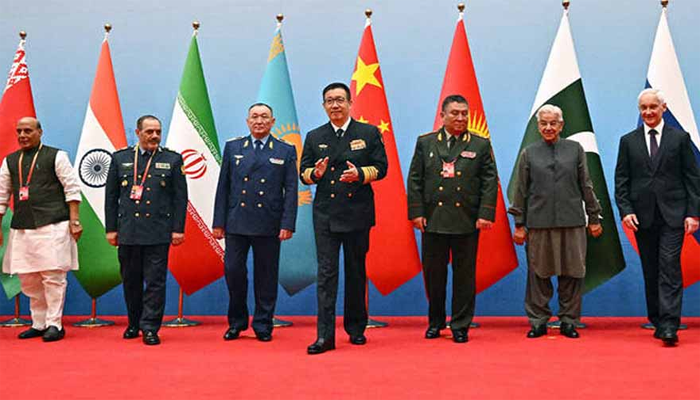
The high-level SCO meeting was hosted by China in the strategic coastal city of Qingdao, a key Chinese naval base. Defence ministers from member countries, including Iran, Russia, Pakistan, and Belarus, participated in the session. Pakistan was represented by Defence Minister Khawaja Asif, while Indian Defence Minister Rajnath Singh was also present, though no bilateral meeting took place between the two.
The summit occurred amid global geopolitical tensions, including a delicate ceasefire between Israel and Iran, and came just one day after a NATO summit in The Hague where members pledged increased defence spending under pressure from U.S. President Donald Trump.
Chinese Defence Minister Dong Jun welcomed the participants and emphasized the importance of multilateralism and peaceful development. He criticized protectionism, unilateral actions, and hegemonic policies for destabilizing global peace. Dong urged collective efforts to uphold a balanced and stable international environment.
Russian Defence Minister Andrei Belousov reaffirmed strong strategic ties with China during a meeting with Dong, calling the relationship historically significant and expanding in all spheres.
Indian media outlets reported dissatisfaction over the SCO’s failure to mention the Pahalgam incident. Instead, the joint statement’s focus on Balochistan was viewed as an implicit accusation against India, further escalating diplomatic tensions.