
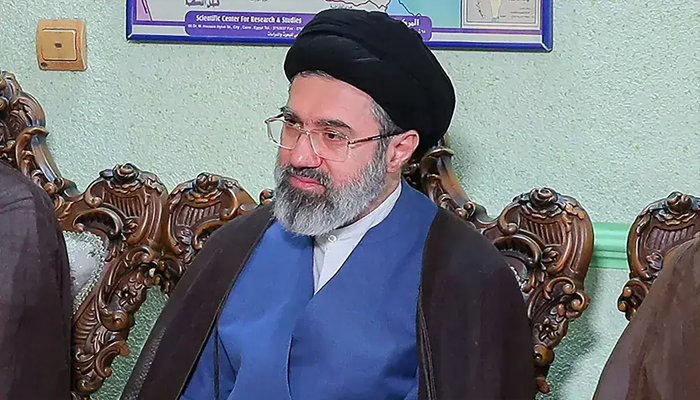
DUBAI: Iran’s newly appointed Supreme Leader Mojtaba Khamenei is reportedly recovering from severe injuries sustained in an airstrike that killed his father, Ali Khamenei, at the start of the ongoing conflict. According to sources cited by Reuters, Mojtaba Khamenei suffered significant facial disfigurement and leg injuries during the attack on a compound in Tehran.
Despite the severity of his injuries, the 56-year-old leader is said to be mentally alert and actively participating in state affairs. Sources close to his inner circle revealed that he is engaging in high-level meetings through audio conferencing and is involved in key decisions, including matters related to the war and ongoing diplomacy with the United States.
Khamenei’s health has become a critical concern as Iran faces one of its most challenging periods in decades, with tensions escalating and high-level negotiations underway in Islamabad. However, there has been no official confirmation from Iranian authorities regarding the extent of his injuries, and no public images or videos of him have been released since the attack.
The airstrike that injured Mojtaba Khamenei occurred on February 28, marking the beginning of a major conflict involving the United States and Israel. The strike not only killed Ali Khamenei but also several members of the family, intensifying uncertainty around Iran’s leadership structure.
US officials, including Defense Secretary Pete Hegseth, have previously indicated that Khamenei was likely seriously wounded. Intelligence assessments have also suggested that he may have lost a leg, though such claims remain unverified.
Experts, including analysts from the Middle East Institute, believe that Mojtaba Khamenei may face challenges in consolidating power, especially given his limited public profile compared to his father. The Islamic Revolutionary Guard Corps is believed to be playing a dominant role in strategic decision-making during this period.
Meanwhile, speculation about Khamenei’s condition continues to spread across social media, with many questioning his ability to lead effectively. Analysts suggest that his public absence could impact both domestic confidence and international negotiations.