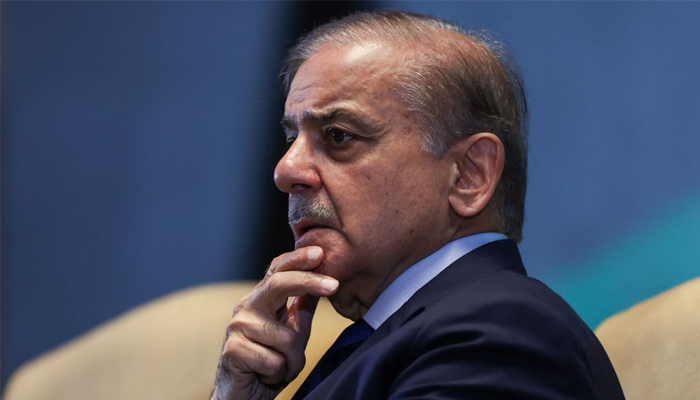
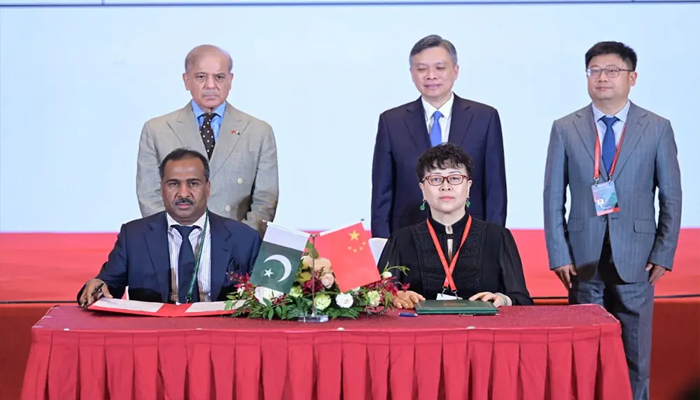
ISLAMABAD: Shehbaz Sharif has announced that Pakistani and Chinese companies signed trade agreements and memorandums of understanding worth more than $7 billion during the Pakistan-China B2B Investment Conference held in Hangzhou, China. The agreements aim to strengthen bilateral cooperation in information technology, telecommunications, agriculture, renewable energy, battery energy storage systems, and manufacturing sectors.
Addressing the conference, the prime minister invited Chinese companies to relocate industries and manufacturing units to Pakistan and establish joint ventures with Pakistani firms. He described the initiative as a “win-win model” that would benefit both countries and further deepen economic ties between Pakistan and China.
PM Shehbaz Sharif said rising labor costs in China had created an opportunity for industries to shift operations to Pakistan, where production costs remain competitive. He suggested that Chinese firms could bring plant and machinery to Pakistan, manufacture goods jointly with local companies, and export products to international markets.
The premier highlighted sectors including textiles, leather, mining, minerals, agriculture, information technology, and artificial intelligence as key areas for future cooperation. He also invited Chinese investors to visit Karachi’s export and special economic zones, where Pakistan plans to offer modern infrastructure, one-window business facilities, and long-term land leases on attractive conditions.
During his speech, PM Shehbaz said Pakistan was not seeking loans or financial aid, but rather investment, expertise, technology transfer, and business partnerships that could help strengthen the country’s economy and generate employment opportunities.
Referring to Pakistan’s agricultural sector, the prime minister said the country had strong potential to increase exports to China. He noted that China imports agricultural products worth nearly $100 billion annually, while Pakistan’s share remains very small. He expressed confidence that bilateral agricultural trade could increase by $10 billion within the next five to seven years if both countries worked together closely.
The prime minister also praised China’s progress in digitalization, artificial intelligence, and industrial growth under the leadership of Xi Jinping. He stated that Pakistan’s young population could play a major role in technology and IT development through training and international certification programs introduced by the government.
Several senior Pakistani and Chinese officials attended the investment conference, including Deputy Prime Minister Ishaq Dar, IT Minister Shaza Fatima Khawaja, Information Minister Attaullah Tarar, and representatives from major Chinese corporations.
Later, PM Shehbaz witnessed the signing ceremony of various agreements between Pakistani and Chinese companies. Officials confirmed that around 30 percent of previously signed memorandums had already been converted into formal agreements involving billions of dollars in investment.
During his China visit, the prime minister also met executives of leading Chinese companies including CATL, StarCharge, and Xiuzheng Pharmaceutical Group. Discussions focused on renewable energy, electric vehicle charging infrastructure, advanced battery technology, pharmaceutical manufacturing, and clean energy cooperation.
The meetings also explored establishing manufacturing facilities and expanding industrial operations in Pakistan. PM Shehbaz emphasized that stronger business-to-business cooperation between Pakistani and Chinese companies would further strengthen the long-standing friendship between the two countries and open new opportunities for trade, investment, and economic growth.