
ISLAMABAD: Pakistan and India on Thursday exchanged updated lists of their nuclear installations, continuing a long-standing confidence-building measure aimed at reducing risks and maintaining transparency between the two nuclear-armed neighbours. The exchange took place under a bilateral agreement signed more than three decades ago, reaffirming a rare area of sustained cooperation despite broader tensions in relations.
Foreign Office spokesperson Tahir Hussain Andrabi confirmed that the exchange was carried out in accordance with the Agreement on the Prohibition of Attacks against Nuclear Installations and Facilities. The agreement was signed on December 31, 1988, came into force on January 27, 1991, and has been implemented regularly since 1992. Under its provisions, both countries are required to share details of their nuclear installations and facilities on the first day of every year.
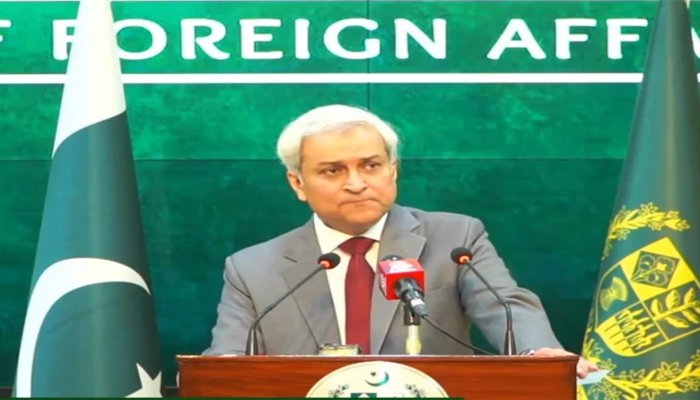
Speaking at a weekly news briefing, Andrabi said that Pakistan officially handed over its list to a representative of the Indian High Commission in Islamabad. He added that India was also sharing its list of nuclear installations with the Pakistani High Commission in New Delhi on the same day, continuing the annual tradition.
Alongside the nuclear lists, Pakistan and India also exchanged lists of prisoners held in each other’s custody. Andrabi said this exchange was carried out under the Agreement on Consular Access, signed in 2008, which obliges both sides to share such information twice a year, on January 1 and July 1. The lists include details of civilian prisoners and fishermen, a step meant to facilitate consular access and humanitarian relief.
During the briefing, Andrabi also addressed concerns over India’s reported plans to construct new hydroelectric projects on the Chenab River. He referred specifically to media reports about the approval of the 260-megawatt Dulhasti Stage-II hydropower project in the Kishtwar district of Indian Illegally Occupied Jammu and Kashmir. He said Pakistan had not received any prior information or formal notification, which he stressed was required under the Indus Waters Treaty.
The Indus Waters Treaty, signed in 1960 with World Bank mediation, allocates the eastern rivers to India and the western rivers to Pakistan, while allowing India limited use of the western rivers under strict conditions. Andrabi said Pakistan’s Indus Water Commissioner had formally sought clarification from India on the technical details of the reported project and whether it constituted a new or modified scheme.
Beyond South Asia, Andrabi reiterated Pakistan’s support for China’s One-China principle, including its stance on Taiwan. He also updated the media on the safe return of Pakistani nationals stranded in Afghanistan and reaffirmed Pakistan’s positions on regional issues, including Yemen, Somalia, and broader diplomatic engagements.
The continued exchange of nuclear and prisoner lists highlights the importance of institutional agreements in maintaining a minimum level of dialogue and predictability between Pakistan and India, even during periods of strained relations.