
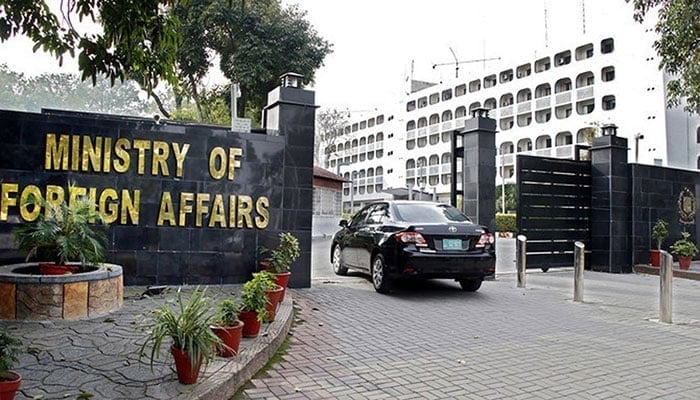
ISLAMABAD: Pakistan on Wednesday categorically rejected statements made by Indian leaders regarding the Pahalgam attack and the recent military standoff, calling them a distortion of facts intended to justify aggression and inflame domestic sentiment.
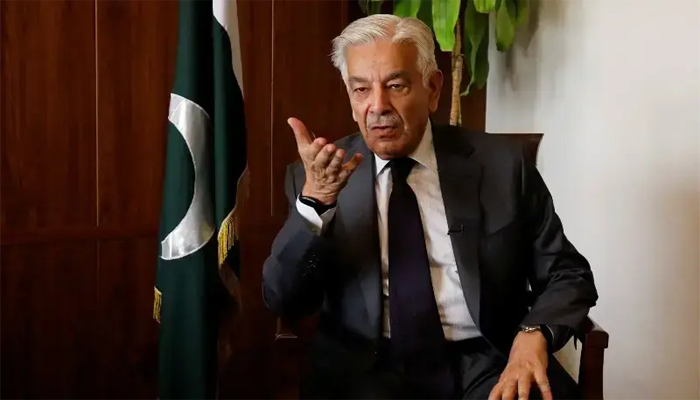
Foreign Office spokesperson Shafqat Ali Khan said the “provocative and baseless claims” made during India’s Lok Sabha debate on the so-called ‘Operation Sindoor’ were unacceptable. He specifically referred to Indian Home Minister Amit Shah’s remarks, where Shah claimed that security forces recovered Pakistani ID cards and chocolates from three men allegedly involved in the Pahalgam incident. These men were reportedly killed in Indian-occupied Jammu and Kashmir.
Prime Minister Narendra Modi, during the same session, denied any international intervention—particularly from U.S. President Donald Trump—in bringing about the recent ceasefire, contradicting earlier statements by Trump.
Shafqat stressed that India carried out strikes on Pakistani soil without presenting any credible evidence or conducting a proper investigation into the Pahalgam incident. He said innocent civilians were martyred in the attacks carried out during the night of May 6–7, 2025. Pakistan’s response, he added, successfully neutralised Indian military targets and proved its defense capabilities.
He urged Indian leaders to acknowledge their military losses and the role third parties played in facilitating the ceasefire. He criticised New Delhi for refusing Pakistan’s offer of an independent probe into the Pahalgam attack and condemned India’s unilateral aggression.
He dismissed the so-called "Operation Mahadev" as meaningless and accused the Indian government of manipulating facts for political gain. He also questioned the timing of the deaths of the alleged attackers, noting it coincided with the start of the Lok Sabha debate.
Pakistan reiterated its rejection of India’s idea of establishing a "new normal" in bilateral relations, warning that future aggression would be met with a strong response.
Shafqat further rejected India’s nuclear blackmail narrative, calling it a smokescreen to divert attention from its own aggressive actions. He also criticised India’s suspension of the Indus Waters Treaty, labelling it a violation of international law.
Pakistan, he concluded, remains committed to peace, regional stability, and dialogue—especially on Jammu and Kashmir.