“With faith, discipline and selfless devotion to duty, there is nothing worthwhile that you cannot achieve.” (Muhammad Ali Jinnah)
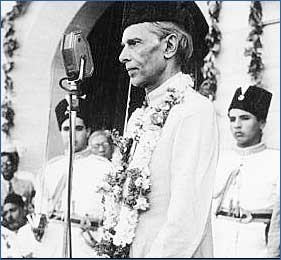
The year 1947 is the most significant of the history of Pakistan since it was the year Pakistan came into being as an independent nation. After a long political struggle, sacrifices and negotiations, British rule in the Indian subcontinent came to an end. The Indian Independence Act, 1947, established two separate dominions, India and Pakistan.
Pakistan was established on 14th August 1947. The first session of the Constituent Assembly of Pakistan was held on 10 August 1947 at Sindh Assembly Building in Karachi, Pakistan.
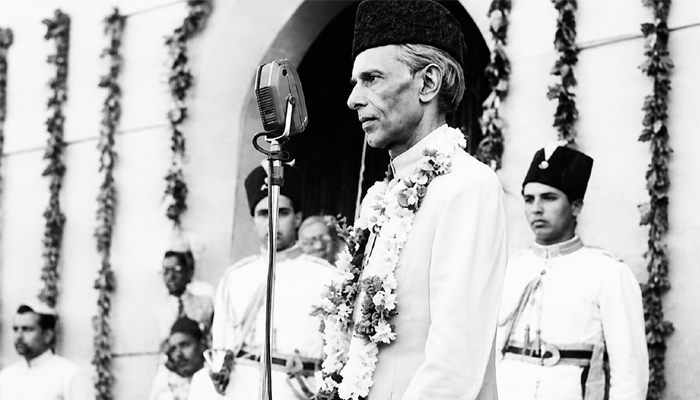
The national flag was approved, and Quaid-e-Azam Muhammad Ali Jinnah was unanimously elected President of the Constituent Assembly on 11 August. The transfer of power was completed on 14 August, and on 15 August 1947, Jinnah was sworn in as the first Governor-General of Pakistan.
The establishment of Pakistan was not an easy job. Millions of Muslims had a dream to have a homeland where they could live according to their political, cultural and religious values. The All-India Muslim League and Quaid-e-Azam Muhammad Ali Jinnah were the leaders of the Pakistan Movement.
On 23 March 1940, the Lahore Resolution laid a solid political basis for the demand of separate Muslim majority states. The dream was realised in August 1947 at the end of seven years of intensive political battle.
Independence, however, brought great challenges as well. Pakistan was born financially weak with few trained officials and weak administrative institutions. The new regime was faced with the task of forming departments, structuring the armed forces, controlling finances and establishing diplomatic relations with other states. Simultaneously, the largest migration in history was underway.
Millions of Muslims left India for Pakistan, and many Hindus and Sikhs left Pakistan for India. The migration was followed by horrific communal violence, loss of life and families. The government was faced with the responsibility of supplying food, shelter, jobs and medical aid to refugee camps that were established in a number of cities, including Karachi and Lahore.
Karachi was the first capital of Pakistan, and the new state started its journey with great hopes and uncertainties as well. Jinnah knew that a stand-alone India was just the first step. It was now the time for Pakistan to establish a formidable state and a nation united under one banner. His famous words,
“UNITY, FAITH AND DISCIPLINE,”
The new country's motto was in its wake. He further told the people that their efforts and unity were needed for their future. The minutes of the National Assembly reveal that the Constituent Assembly was entrusted with the important task of drafting a constitution; and at the outset, the nation remained under the rule of the adapted Government of India Act 1935.
Independence sentiments were wonderfully presented in Urdu poetry.
Faiz Ahmed Faiz wrote,
“Yeh daagh daagh ujala,
yeh shab-gazida sahar”,
Capturing the complex emotions of a people who felt free, but had also experienced great suffering. Pakistan's birth was then a joyous occasion and a challenge. The people had a homeland, but they needed to create it. The ideas had been planted, and the job of constructing a nation had fallen on the shoulders of the people, as Jinnah had said in his famous speech.
The independence of Pakistan did not just mark the end of British rule; it was the start of a new tale of a nation. The issues that the first generation Pakistanis were dealing with could have busted Pakistan in its infancy, but the Pakhtuns did not give up. They helped the young country survive the hard months with their determination.
1947 is an important reminder that independence is not only winning freedom; it's also taking on the responsibility to preserve and advance it.