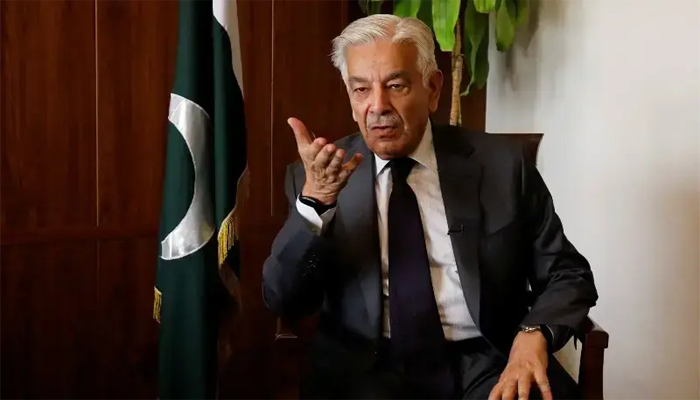

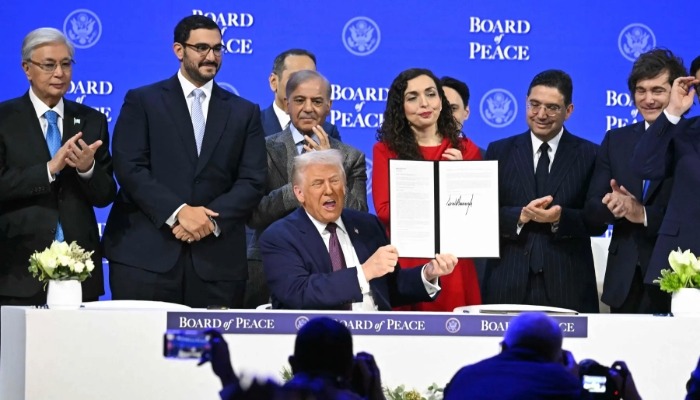
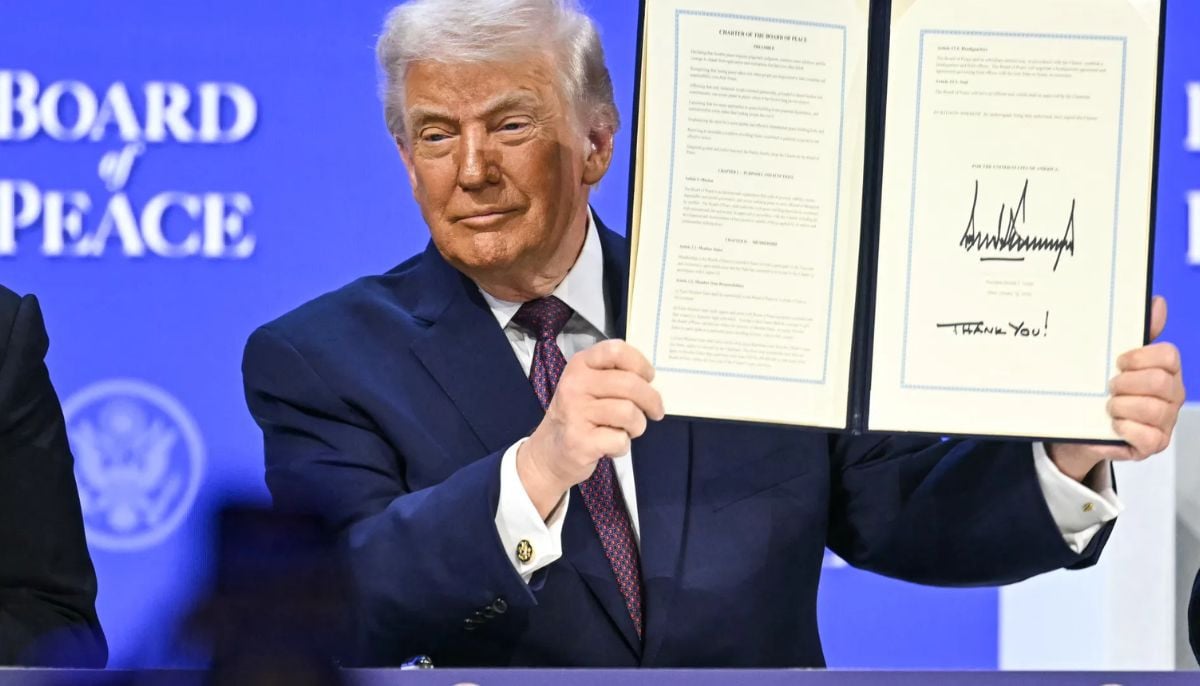
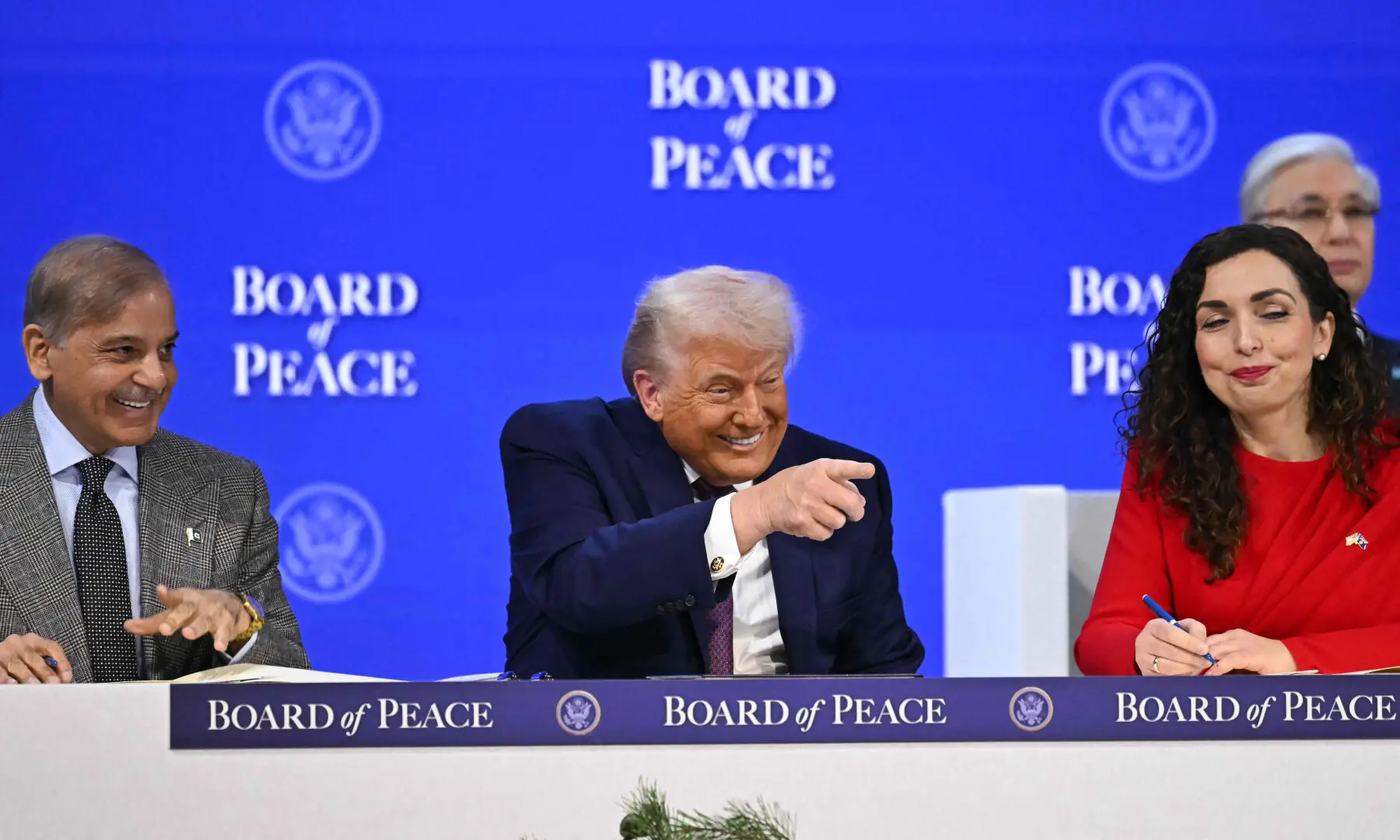
DAVOS: Prime Minister Shehbaz Sharif on Thursday joined several world leaders in signing the founding charter of the Board of Peace, an international initiative led by United States President Donald Trump, during the World Economic Forum annual meeting in Davos, Switzerland. The new body has been presented by Trump as a global platform aimed at resolving major international conflicts, with an initial focus on Gaza.
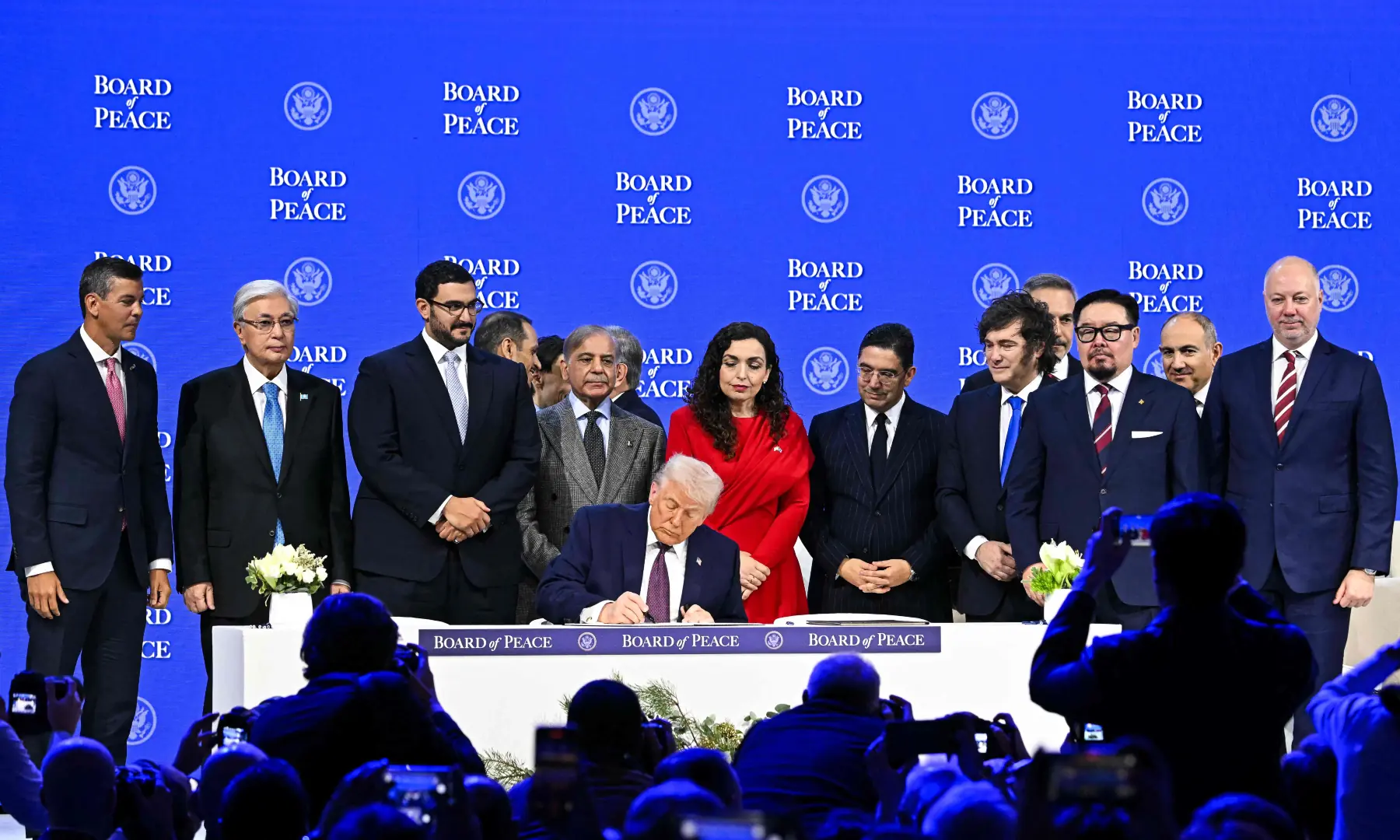
The signing ceremony brought together leaders and senior officials from 19 countries, including Pakistan, who gathered on stage with President Trump to formalise the charter. The Board of Peace was initially conceived to oversee post-war stability in Gaza following Israel’s prolonged conflict with the Palestinian enclave, but its mandate has now been expanded to address wider global disputes.
Trump Declares Board of Peace an Official International Body
Addressing the gathering, President Trump announced that the signing marked the formal establishment of the Board of Peace as an official international organisation. White House Press Secretary Karoline Leavitt confirmed that the charter had come into full force, describing the moment as a milestone in international diplomacy.
Trump, who will serve as chairman of the Board of Peace, praised the participating leaders, calling them influential figures capable of shaping global outcomes. He said many more countries had expressed interest in joining the board, adding that invitations were sent out just days before the Davos meeting.
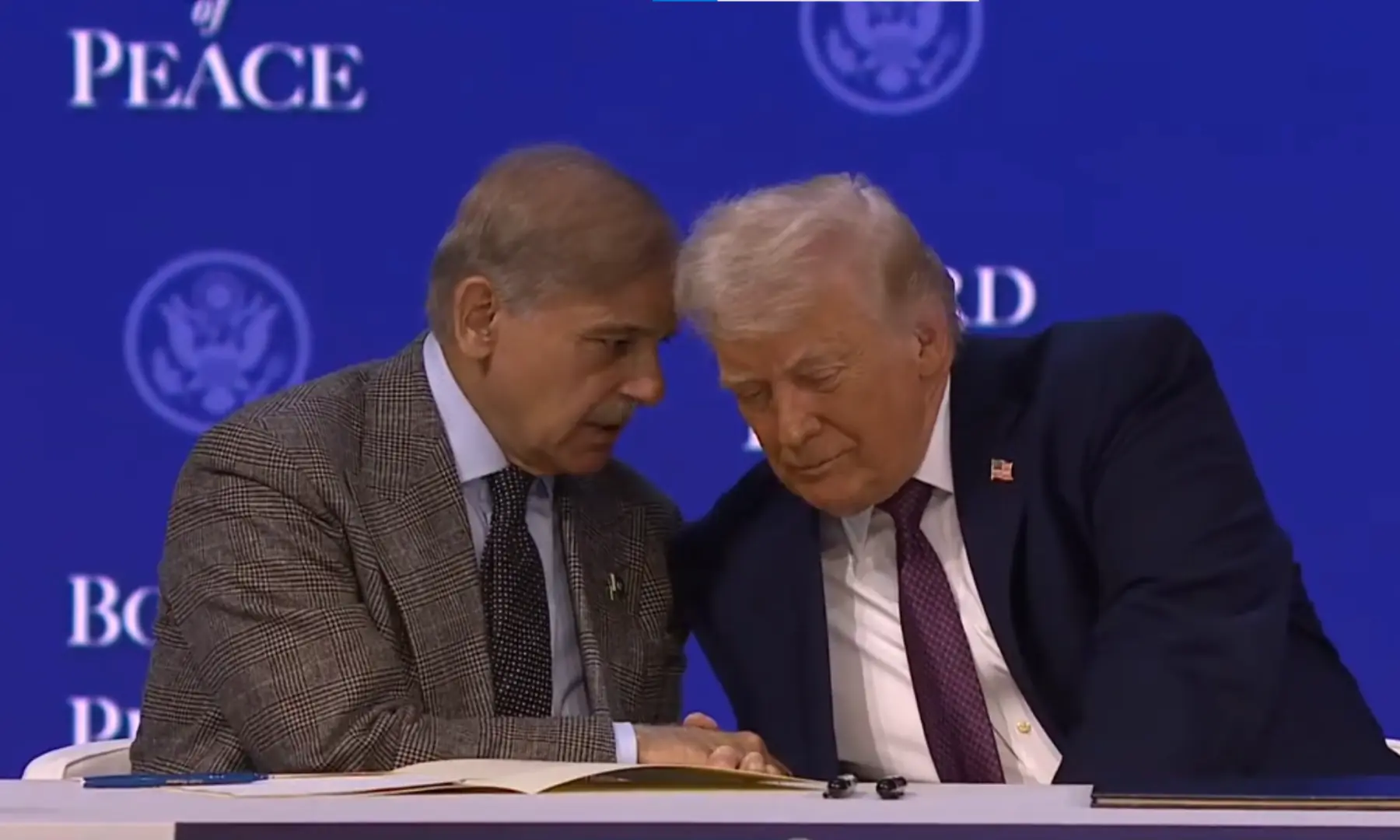
Pakistan formally accepted Trump’s invitation to join the Board of Peace a day earlier, and Prime Minister Shehbaz Sharif was present during the ceremony as leaders took turns signing the charter. Permanent members of the board are required to contribute $1 billion, a provision that has already sparked criticism from observers who view it as a “pay to play” model of global governance.
Concerns Over UN Role and Global Power Dynamics
The creation of the Board of Peace has raised questions about its relationship with the United Nations. Critics fear it could undermine or rival the UN Security Council, particularly as none of the other permanent UNSC members have yet committed to joining. France has declined participation, Britain has said it is not joining for now, and China has not announced a decision.
Trump sought to address these concerns by stating that the board would work in conjunction with the United Nations rather than against it. He argued that cooperation between the two bodies could create a unique framework for maintaining international peace and security.
The list of signatories includes officials from Argentina, Armenia, Azerbaijan, Bahrain, Bulgaria, Hungary, Indonesia, Jordan, Kazakhstan, Kosovo, Mongolia, Morocco, Paraguay, Qatar, Saudi Arabia, Turkiye, the United Arab Emirates and Uzbekistan.
Gaza, Hamas and the “New Gaza” Vision
A significant portion of the ceremony focused on Gaza and the future of the territory. Trump warned that Hamas must disarm under the existing ceasefire agreement or face what he described as the “end” of the movement. He reiterated Washington’s commitment to a demilitarised and rebuilt Gaza, suggesting that success there could pave the way for resolving other global conflicts.
Trump’s son-in-law Jared Kushner presented a reconstruction vision branded as “New Gaza,” showcasing slides of proposed settlements, infrastructure projects and seafront developments. Kushner said the next phase would focus on funding reconstruction and ensuring Hamas disarmament, calling it a critical condition for long-term stability.
International Reactions and Human Rights Criticism
Human rights groups reacted sharply to the launch of the Board of Peace. Amnesty International described the initiative as a disregard for international law and human rights, arguing that it threatens established global governance mechanisms and international justice institutions.
Amnesty warned that ad hoc arrangements driven by political and economic interests could weaken universal norms and accountability, particularly at a time when adherence to international law is crucial.
Rafah Crossing to Reopen Under Gaza Truce Plan
During the event, Palestinian official Ali Shaath announced that the Rafah border crossing between Egypt and Gaza would reopen in both directions next week. The move is part of the Gaza truce plan unveiled by Trump in October and is seen as a key step toward easing humanitarian conditions in the enclave.
Shaath, appointed to oversee Gaza’s day-to-day administration under the US-backed plan, said reopening Rafah symbolised renewed access to the outside world and a pathway to recovery for Palestinians.
The signing of the Board of Peace charter marks a significant and controversial development in global diplomacy, placing Pakistan and other participating nations at the center of a Trump-led effort to reshape international conflict resolution.