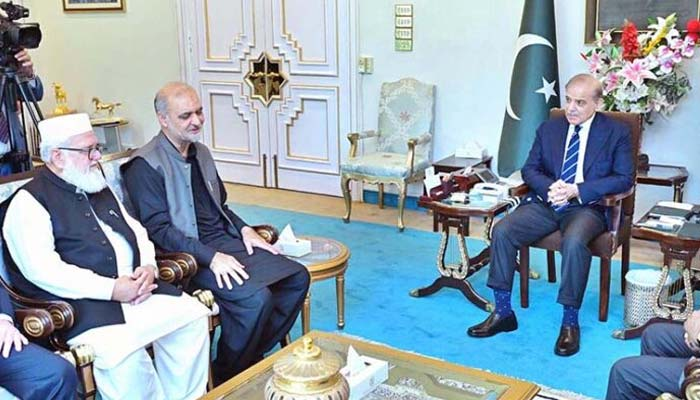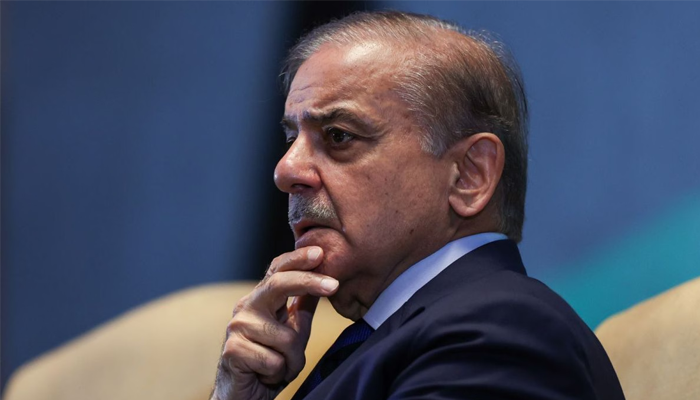

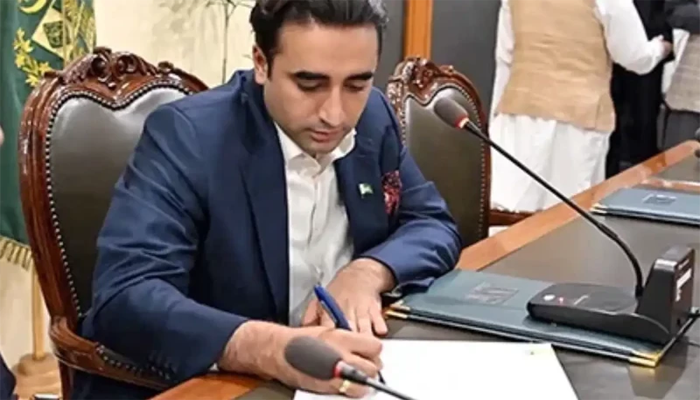
KARACHI: Pakistan Peoples Party (PPP) Chairperson Bilawal Bhutto-Zardari revealed today that a Pakistan Muslim League-Nawaz (PML-N) delegation, led by Prime Minister Shehbaz Sharif, had met him and President Asif Ali Zardari to seek PPP’s support for the passage of the 27th Constitutional Amendment.
In a statement issued by the PPP, Bilawal said the proposed amendment covered several key issues, including the establishment of constitutional courts, restoration of executive magistrates, and transfer of judges. He added that it also sought to end protection for provincial shares under the National Finance Commission (NFC) and amend Article 243 of the Constitution, which relates to the command of the armed forces.
The amendment reportedly includes provisions to return the subjects of education and population planning to the federal domain and to resolve the longstanding deadlock over appointments to the Election Commission of Pakistan (ECP).
Bilawal announced that a meeting of the PPP’s Central Executive Committee (CEC) would be convened on November 6 at Bilawal House in Karachi, following President Zardari’s return from Doha, to decide the party’s position on the proposed amendment. The CEC is also expected to review the broader political situation in the country.
Meanwhile, Minister of State for Law and Justice Barrister Aqeel Malik confirmed during an interview with Geo News that discussions over the proposed amendment were ongoing but that work on the draft had not yet formally begun.
Malik elaborated on the government’s rationale, describing constitutional courts as an “unfinished agenda” and stressing that restoring executive magistrates could reduce the judiciary’s burden. He also called for a “federal approach” to address population growth and education disparities, citing the need for a uniform national curriculum to curb extremism and improve educational standards.
Discussing amendments to Article 243, Malik said recent developments — including the elevation of Chief of Army Staff Asim Munir to the rank of Field Marshal following May’s escalation with India — required constitutional recognition.
He added that while the government was not seeking to remove the opposition leader’s role in ECP appointments, mechanisms were needed to prevent deadlock when the position was vacant. Malik noted that consensus with political allies on the NFC issue was still being developed.