

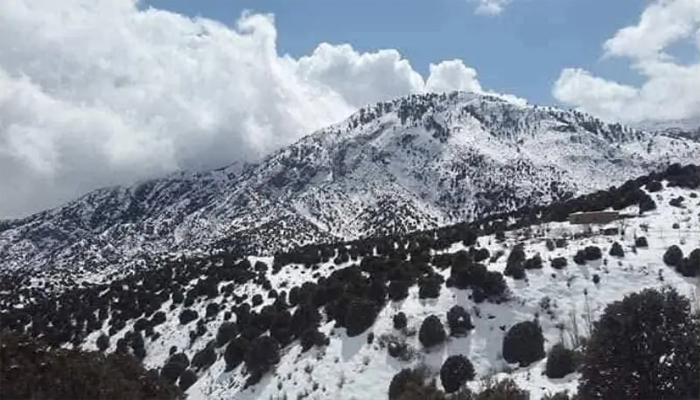
PESHAWAR: Snowfall and rain swept across the mountainous areas of South Waziristan on Tuesday, signaling the arrival of cold weather and bringing much-needed relief to residents, farmers, and environmental officials after a prolonged dry spell in the region.
According to the Pakistan Meteorological Department (PMD), the precipitation was part of a weather system forecast earlier this week, predicting rain and snowfall in the country’s northern and hilly regions. Local sources confirmed that light to moderate snowfall was recorded in high-altitude areas, including Angoor Adda, Shakai, Khamrang, Raghzai, Kaniguram, Badar and Laddha, while lower-lying areas experienced intermittent rainfall.
The snowfall transformed the mountainous terrain into a scenic winter landscape, with hill ranges blanketed in white snow. Residents described the weather change as refreshing and uplifting, with many people stepping outdoors to enjoy the views after months of dry conditions.
Local farmers welcomed the precipitation, calling it highly beneficial for agriculture at a critical time in the farming calendar. They said the rain and snowfall would significantly improve soil moisture, which is essential for wheat crops currently in their early growth stages. Orchard growers also expressed optimism, expecting positive effects on fruit-bearing trees such as pine nuts, apples, peaches and plums.
Agricultural experts explained that rain and snow act as natural irrigation systems, improving seed germination and enhancing the effectiveness of fertilizers. The gradual melting of snow is expected to provide sustained moisture over time, helping farmers achieve better yields and supporting long-term agricultural productivity.
Officials from the Irrigation and Agriculture departments also described the precipitation as encouraging, particularly given the steady decline in groundwater levels in South Waziristan over recent years. Prolonged dry conditions, reduced rainfall and heavy reliance on tube wells had caused underground water reserves to drop to alarming levels.
An official from the Irrigation Department said that snowfall plays a crucial role in recharging water resources. As snow melts slowly, it replenishes streams, springs, aquifers and natural reservoirs, helping stabilize and potentially raise groundwater levels. This, officials said, could provide relief from chronic water shortages faced by local communities.
The Agriculture Department added that improved moisture levels would also benefit vegetables, grazing lands and livestock farming, which remains a key source of income for many rural households in the region.
However, the snowfall has also led to a noticeable drop in temperatures, intensifying winter conditions in high-altitude and remote areas. Some residents reported slippery roads and reduced visibility, causing partial disruptions to movement.
The local administration has advised residents to take precautionary measures, especially in snow-prone areas, and avoid unnecessary travel during adverse weather. Relevant departments have been placed on alert to respond to any emergencies arising from harsh winter conditions.
Earlier, the National Disaster Management Authority issued a weather advisory, urging authorities to ensure preparedness ahead of an expected cold wave. Residents expressed hope that continued winter precipitation would not only boost agricultural output but also help ease South Waziristan’s long-standing water crisis.