
As artificial intelligence transforms software development, aspiring QA engineers need more than technical skills. They need a clear path to understanding quality, managing risks, and building reliable technology.
A software application can pass hundreds of tests and still fail the people who depend on it. A payment might be processed twice, a customer’s information could be exposed, or a system may collapse when thousands of users arrive simultaneously.
These failures rarely begin with a single overlooked button. They often expose deeper problems in how software is designed, tested, and delivered.
For young professionals considering a career in technology, Software Quality Assurance (SQA) offers an opportunity to prevent such problems before they reach users. Yet entering the profession can be surprisingly confusing. Online tutorials promise quick mastery of automation tools, artificial intelligence is changing traditional testing practices, and employers increasingly expect engineers to understand far more than manual testing.
The challenge is not simply learning how to test software. It is knowing what to learn, why it matters, and how different skills connect.
Understanding Quality Engineering Before the First Test
Software quality assurance is sometimes misunderstood as a profession devoted exclusively to finding defects. In reality, it encompasses the processes, practices, and engineering decisions that help organizations deliver dependable software.
A QA engineer must understand requirements, anticipate risks, design meaningful tests, evaluate results, and communicate findings that influence development decisions.
Consider an online shopping platform. Confirming that a customer can place an order is only the beginning. What happens if payment succeeds but the order is not recorded? Can two customers purchase the last available item? Does the platform remain responsive during a major sale?
These questions illustrate why effective testing requires analytical thinking, business understanding, and technical judgment.
Drawing on his professional background in software quality engineering, QA leadership, enterprise applications, and emerging technologies, Khan approaches SQA as a discipline extending across the software development lifecycle.
The book's opening chapters examine quality principles, the responsibilities of SQA engineers, risk assessment, and the consequences of inadequate assurance. Its discussion of the Ariane 5 disaster also introduces readers to the potentially serious implications of software failures.
For beginners, this provides context often missing from tool-focused training: software quality has consequences beyond the engineering team.
Building a Career in Modern Quality Engineering
There is no universal route into software quality assurance, but a structured progression can make the journey more manageable.
The first stage involves understanding the Software Development Life Cycle, testing principles, requirements analysis, and defect management. Beginners should practice converting requirements into test scenarios, identifying edge cases, and writing clear bug reports.
Next comes exposure to different testing approaches, including functional, regression, integration, system, exploratory, usability, and acceptance testing.
A beginner does not need to master every technique immediately. Understanding when and why each approach is used matters more than memorizing terminology.
Practical experience should follow early. Testing a real website, documenting unexpected behavior, and preparing a test summary can reveal gaps that remain invisible during classroom exercises.
From there, engineers can develop technical skills in databases, APIs, programming, and test automation.
Tools such as Selenium, Playwright, Postman, and JMeter support different testing needs, but no tool can substitute for understanding the system being examined.
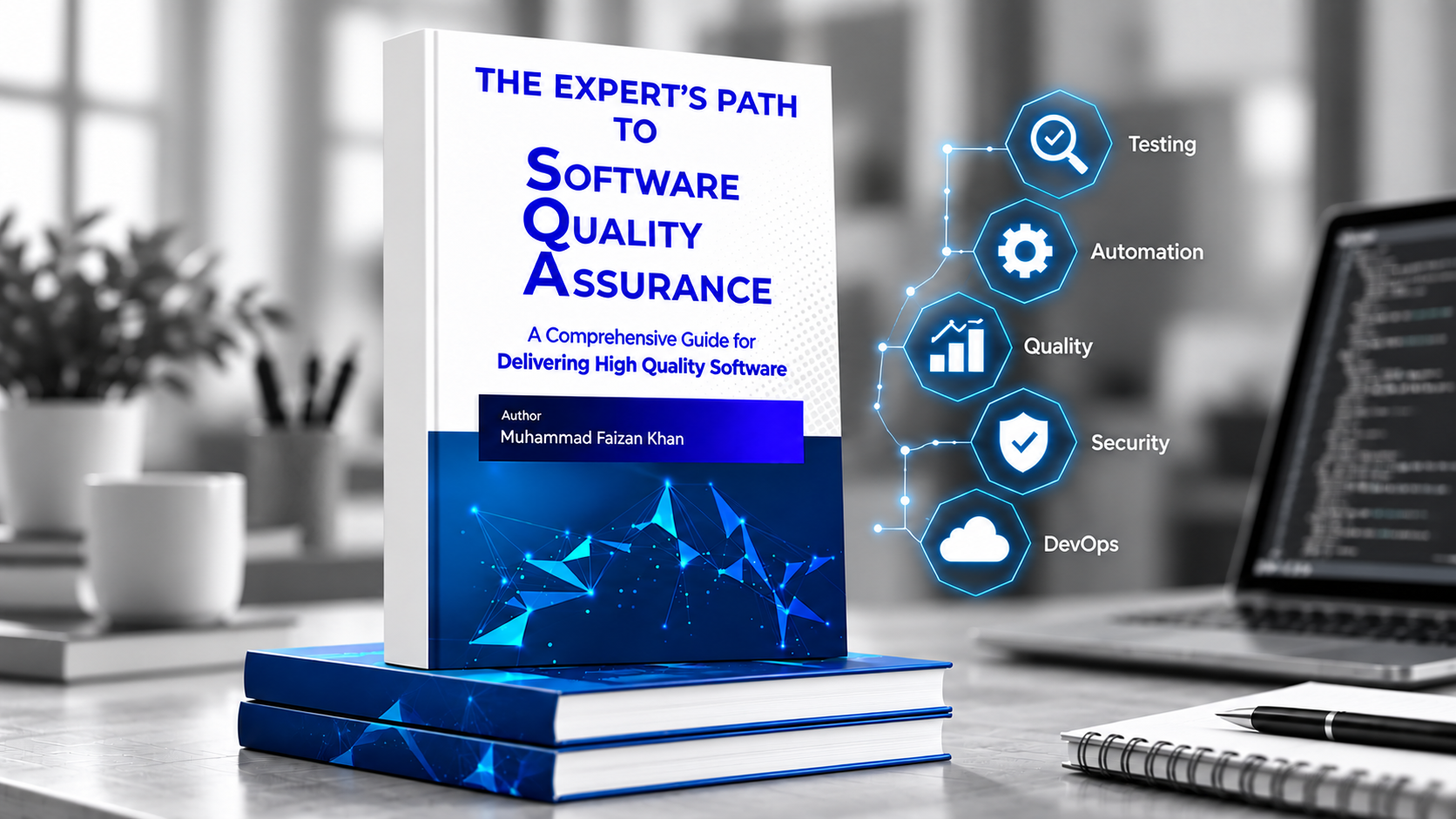
The progression also provides a way to interpret Khan's book. Its chapters move from testing methodologies and test-case design into automation, Agile practices, performance, security, and DevOps. Rather than viewing these subjects as unrelated specializations, readers can see how each contributes to broader engineering responsibilities.
Quality Cannot Be Automated Away
Automation has become an important part of software delivery, particularly as organizations release changes more frequently.
However, automating a test does not guarantee that the right behavior is being evaluated. Poorly designed scripts can produce misleading results, while unstable test suites may consume engineering time without providing useful feedback.
Modern QA engineers must understand which scenarios deserve automation, how test data should be managed, and when human exploration remains necessary.
They must also learn to collaborate.
In Agile and DevOps environments, quality cannot be delegated to one team at the end of development. Engineers contribute throughout the process, from reviewing requirements to evaluating release readiness.
As careers progress, responsibilities expand toward risk management, quality metrics, stakeholder communication, team leadership, and organizational improvement.
Khan addresses these dimensions through dedicated sections on continuous testing, quality gates, reporting, and managing SQA projects. Their inclusion is relevant to readers who eventually hope to move beyond execution-focused roles into senior engineering and management.
The AI Question Facing the Next Generation
Artificial intelligence is changing both software development and the work of quality assurance.
AI-powered tools can assist with test generation, automation, documentation, and defect analysis. At the same time, generative AI applications introduce challenges involving inaccurate responses, inconsistent behavior, privacy, and unreliable decision-making.
An AI system might produce a convincing answer without sufficient evidence. An autonomous agent could complete a task while taking an unintended action. Conventional testing alone may not adequately evaluate these behaviors.
Future QA professionals will increasingly need to understand how intelligent systems behave, how their outputs can be evaluated, and where human oversight remains essential.
The final chapter of Khan's book introduces AI, machine learning, blockchain, and the Internet of Things as emerging areas of software quality assurance. These subjects provide a starting point for further study, particularly as the profession continues to evolve.
Turning Knowledge Into Real-World Quality Engineering
For aspiring QA engineers, choosing learning resources can be almost as difficult as choosing a career direction.
The Expert’s Path to Software Quality Assurance offers a structured reference for navigating the field, connecting foundational testing knowledge with automation, engineering practices, specialized testing, and management responsibilities.
Its chapter progression makes it particularly relevant to students, newcomers, and professionals seeking to broaden their understanding of SQA. It can also serve as a reference for trainers and mentors developing structured learning programs.
However, no book or certification can replace practical experience. Readers will gain more by applying concepts to real applications, seeking professional feedback, developing technical skills, and continuously revisiting what they have learned.
As AI accelerates software development, the demand for sound engineering judgment becomes no less important. Technology may change how tests are written and executed, but determining whether a system is dependable remains a responsibility that requires understanding, evidence, and accountability.
For the next generation of QA engineers, the career path begins with a simple principle: learn the tools, understand the systems, question the assumptions, and never lose sight of the people who depend on the software.
By: Muhammad Faizan
The writer explores these foundations in his book, The Expert’s Path to Software Quality Assurance: A Comprehensive Guide for Delivering High Quality Software.