Yesterday, I took my car to the mechanic. The mechanic checked it and said, "This is the problem. Should I start the work?" I said, "Go ahead." An hour later, the car was ready, but when I started it, the check engine light came on. The mechanic said honestly, "This is not my job; it's the electrician's job."
We went to the electrician. He ran a computer diagnostic, found a faulty sensor, and replaced it. While fixing the bumper, a clip broke, so he said, "This is the dentor's job, take it to him." The dentor did his job, and before we left, the electrician added, "The lights are dirty; get them buffed."
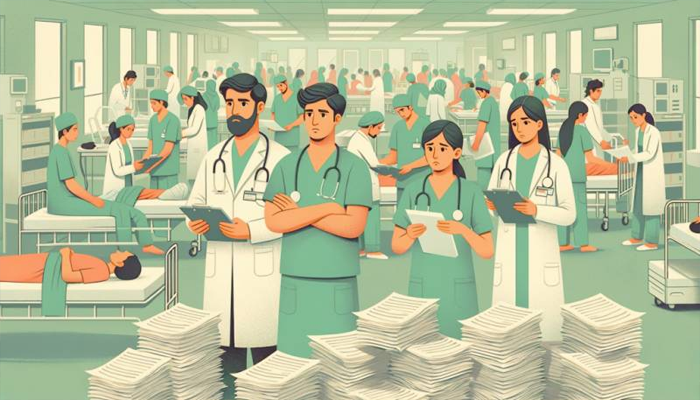
Think about it! For one car, there are so many specialists — a separate expert for the engine, for the electrical work, for the body, and for polishing. No one interferes in each other's work. And what about a human being? Ashraf-ul-Makhluqat. In our government hospitals, one doctor is everything. He is the doctor, the nurse, the pharmacist, and the nutritionist.
He does not have a diagnostic computer like the car mechanic does. He has no spare parts, and he has no time. I wish the government would think about its people the way we think about our cars. A human life is far more valuable than a car. This is a perfect example of our misplaced priorities, and this is the greatest tragedy of our health system.
We value our cars more than we value humans. The mechanic knows his limit is the engine, the electrician says wiring is his job, the dentor says the bumper is not his job — get it done by the panel beater — and the buffer is someone else entirely. No one interferes in the other's work because they know if the car is damaged, the owner will not spare them.
And what about a human? A single BHU doctor is simultaneously a physician, a surgeon, a lab technician, a pharmacist, a nutritionist, and sometimes even the nurse who stitches wounds. He has no computer to check with like the car mechanic, no medicines, and no time.
If the government thought about us the way we think about our cars, then in every Union Council there would be: 1. A family physician — only for diagnosis 2. A trained nurse — only for patient care 3. A pharmacist — only to dispense medicine 4. And a Lady Health Worker / Nutritionist — only for prevention and guidance
Then the "check engine light" — meaning disease — would not keep growing silently inside, and a patient would not have to get everything done by the same person. This note of mine is actually a question to the entire system, and I eagerly await an answer.
By Prof. Dr. Barkat Ali Khan, Pharmacist (Gomal University)