
By Tooba:
MBA M.Phil
Asia Cup 2025 will now unfold in the UAE from September 9–28, shifting from India amid rising India-Pakistan tensions. Originally set for India, the tournament moves to neutral UAE grounds after political fallout over recent Kashmir events.
It is not the first occasion when the Asia Cup has been entangled in some political knots. The last time a bilateral series was held between India and Pakistan was in 2012, owing to existing diplomatic tensions. Consequently, the intercontinental contests such as the Asia Cup and the ICC events have become the sole incidence of the two cricketing giants tussling it out. The placement in the same group notwithstanding, India declined to visit Pakistan because of security issues. This compelled the ACC to move the whole tournament to the UAE nation which has successfully managed to host non-controversial and high-profile cricket events in the past.
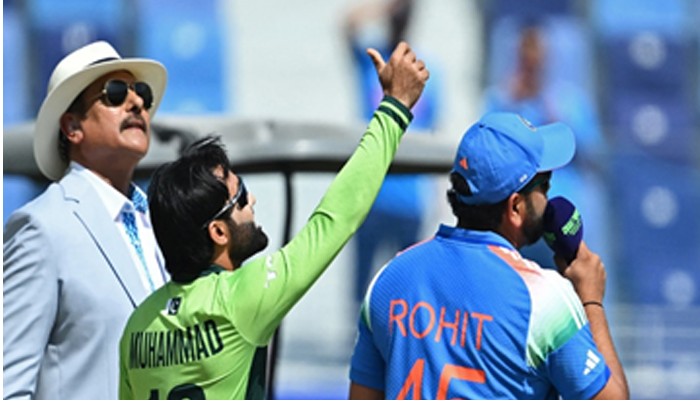
The 2025 edition will be played under the T20 format, similar to the preparation requirement of the participating teams with respect to the upcoming T20 World Cup 2026 that will be co-hosted by India and Sri Lanka. Eight teams will be taking part: five full ACC members: India, Pakistan, Sri Lanka, Bangladesh and Afghanistan, and three qualifiers: UAE, Oman, and Hong Kong, who qualified have done so by playing in the 2024 ACC Premier Cup. The tournament will start with the group stage, whereby the teams are divided into two batches. Group A consist of India, Pakistan, UAE and Oman, whereas Group B contain Sri Lanka, Afghanistan, Bangladesh and Hong Kong. The best two teams in every group will qualify for the stage of Super Four, which will culminate in the grand finale that will be held on September 28. One of the greatest aspects of the tournament is that there is a chance of three encounters between India and Pakistan. The arch-enemies are even geared to play in the group stage on September 14, and should the two teams make it, they will meet again in the Super Four and even in the final. Such games are never low-key; they attract millions of audiences worldwide and earn huge sponsorship and advertising money. The media rights of the Asia Cup are, in fact, worth around USD 170m, and India-Pakistan games bring in the majority of viewing and commercial dividends.
Nevertheless, the excitement has not gone without divided voices in the Indian political and cricketing circles. The former Indian skipper Sourav Ganguly has recently said that Sport has to move on, it should not be politics, and the cricketing boards must part ways. Former skipper Mohammad Azharuddin, on the other hand, said such an inconsistent policy cannot be ignored, and the argument that they will not tour Pakistan cannot be applied to not playing them in the tournaments too. In the meantime, political opposition to the tournament is also increasing. An example is witnessed when political leaders of the Chandigarh Congress have openly declared against any India-Pakistan matches, terming them a diplomatic contradiction.
Amidst this challenge, the UAE is the best host. It has already conducted various successful Indian Premier League (IPL), 2021 ICC T20 World Cup and 2018 Asia Cup, in which India won the final against Bangladesh, which was quite a thrilling match. The main venue where the matches are held is the Dubai International Cricket Stadium, which has a capacity of about 25,000 seats, with the other notable venues being the Sharjah and Abu Dhabi venues. The nation has excellent world-class facilities and the capacity of hotels, coupled with the security arrangements, which make it a favourite location site of emergency or neutral venue. It is a history maker for the national team of the UAE. It is their debut in the Asia Cup since 2016. The side is spearheaded by Muhammad Waseem and boasts of bright plays such as Aayan Afzal Khan, who is a budding spinner who has taken 10 wickets in the 2024 ACC Premier Cup and Junaid Siddique, who is a budding pacer. A good part of them can understand the game well since they have performed in the International League T20 (ILT20) and even got to share dressing rooms with world-renowned athletes such as Chris Woakes and David Warner. These are supposed to make them gain confidence in fighting against the more established Asian teams.
The competition is of great significance, too, as a prelude to the ICC Champions Trophy 2025 in early next year in Pakistan. The Asia Cup will be used by the teams to settle on the combinations, gauge the form of the players and get used to the Asian conditions. Superstars such as Virat Kohli, Babar Azam, Shakib Al Hasan, and Rashid Khan are supposed to not only bring their experience on the field but also clinch the matches with their style. To the younger teams, such as Afghanistan and the UAE, the tournament is priceless because it gives them a chance to play on the international level. It is also suggested that India has a chance to participate in the UAE, which can be used by this country in the long-term perspective in fighting to host the 2036 Olympics, since some sources suggest that sporting diplomacy is sometimes used in global decision-making. Should this be the case, this would further provide another political and strategic interest to the tournament.
Asia Cup 2025 is more than a tournament—it’s a collision of cricket, diplomacy, and South Asian pride. With passion, rivalry, and unity at its heart, the countdown to September 9 has already begun.