The mountainous terrain between Pakistan and Afghanistan has always been characterised by the clamour of fighting; however, the last few days have experienced a steep increase.
Border frictions between the two countries have escalated, killing individuals and even halting some of the major border crossings that form the lifelines of commerce as well as daily commuting. What were once a few skirmishes have now turned out to be a big issue on security matters that has become a source of concern that there may be a long-term battle in a region that is already full of instability? At the beginning of October 2025, multiple gunfire and mortar strikes were reported along the Torkham and Chaman border crossings, among the most sensitive trade routes between the two countries. At least seven civilians were killed and more than a dozen were injured on either side, according to local sources. According to the authorities of Pakistan, Afghanistan fired first, with the Taliban-led government accusing the Pakistani troops of breaking the frontier. These suspicions of each other have led to an increasing mistrust and demonstrations among traders and transport workers who have lost their jobs due to the closing of the borders.
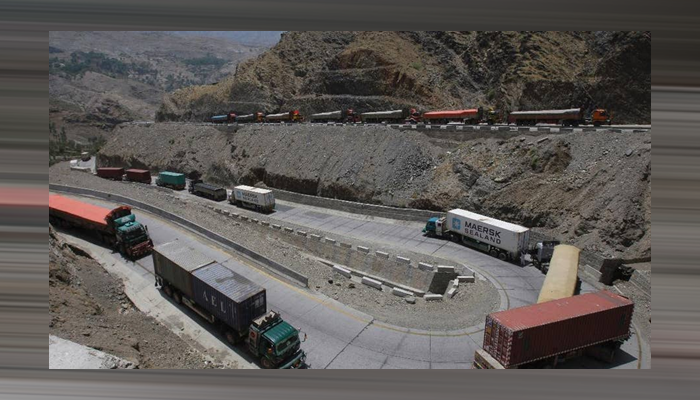
The Torkham and Chaman crossings are not just security crossing points; they are arteries of trade. An average of 10,000 individuals and over one thousand five hundred cargo trucks go through these gates every day, transporting foodstuffs, and petrol and construction materials. These crossings have been closed, and this has resulted in queues of trucks km long, which have made the two sides lose money in millions of dollars. The Pakistan-Afghanistan Joint Chamber of Commerce and Industry estimates that the bilateral trade could be reduced by a quarter by the close of the year should the standoff persist at an annual rate of close to 1.8 billion dollars. The history of the existing conflict is intricate. The tensions in the Durand Line, which is a 2,640 km boundary that was created in the year 1893 during British colonial rule, have been experienced over the decades. Afghanistan has never formally accepted the border as a boundary of the two nations, whereas Pakistan considers it a demarcated boundary. The border control has been made even more complex after the Taliban came back to power in August 2021. Islamabad accuses the Taliban government of giving shelter to militants of Tehreek-e-Taliban Pakistan (TTP), a group that has been engaging in fatal bombings in Pakistan. On the contrary, the Taliban commanders assert that cross-border shelling by Pakistan is a way of infringing on the sovereignty of Afghanistan and killing innocent citizens.
Security analysts recently reported that over 60 incidents of cross-border have already taken place in 2024 alone, which is a 40% increment on the number of the same in 2023. It has been particularly high in the provinces of Khyber Pakhtunkhwa and Balochistan, where the Pakistan military has been on targeted attacks against the hiding places of militants. In the meantime, Taliban officials assert that drone attacks and artillery by the Pakistani forces have displaced several hundred villagers in the area around Nangarhar and Khost provinces. According to humanitarian organisations, the situation might deteriorate further because of further violence against the population, as more families will be leaving the conflict zones and seeking protection on both sides of the border. Regional analysts look at these confrontations as being linked to a greater power and control battle. The increasing level of the Taliban in border matters has shown that the group wishes to be a fully sovereign government, whereas Pakistan wants to know that the militant groups will not use the Afghan territory as a platform to attack. International efforts to defuse tension have not yet produced much. The recent discussions between the top officials of the two countries in Kabul last month failed to reach any obvious conclusion, yet both parties were ready to avoid any further incidents.
The economic situation is also very disturbing. Traders are losing up to 5 million dollars daily because the cross-border trade is suspended. Fruits and vegetables, as well as milk products, are going bad in trucks that are awaiting clearance. Cross-border transport has rendered thousands of labourers jobless because of their daily earnings. The small business owners in Quetta and Peshawar have gone on a protest calling on the government to reopen the trade routes immediately. Even the Afghan traders are urging the two governments to focus on economic cooperation at the expense of political wrangles, as prolonged hostilities may ruin the already ill local economies. The international society has been increasingly worried. The United Nations and the Organisation of Islamic Cooperation (OIC) have both recommended restraint and dialogue, noting how peace between Pakistan and Afghanistan is the key to the stability of the region. China, which has a huge economic interest in the region in the Belt and Road Initiative, has privately called on both parties to uphold border security and guard trade routes linking Central and South Asia. Nobody knows the future, but analysts have opined that diplomacy should be employed ahead of force. Lack of trust and a clear way to deal with border disputes, the infrequent incidences of violence would easily escalate into an expanded conflict. Such steps as joint patrols of the boundaries, the exchange of intelligence data and cooperation in the economic sphere could help stabilise the situation, assuming their genuine intentions.
The Pakistan-Afghanistan border has been a bloodshed in the past, but the current wave of tension is very opportune when both countries are weighed down economically and politically. To normal citizens residing on the borderline, peace is not some far-off destination, but what is between living and dying, nourishing their families or losing it all. When the guns are silent, said one of the local inhabitants who lived close to Chaman, the trade will come back, and hope will come back.
In the shadows of the mountains that divide two nations, only dialogue, not bullets, can build the bridge of peace that both Pakistan and Afghanistan desperately need.