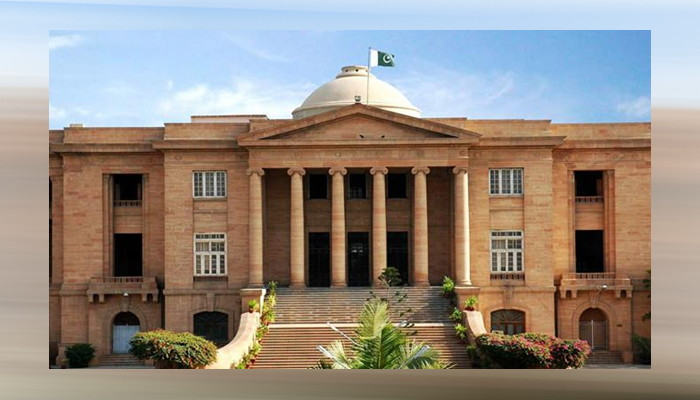
On 1 November 2025, the Sindh High Court (SHC) in Karachi served the Federal Board of Revenue (FBR) and other concerned officials in response to a case pitting the taxation of sanitary napkins, popularly known as the period tax.
The petition was submitted by Karachi citizen and activist Alisha Shabbir, who is challenging the legality and fairness of the high taxation levied on hygiene products for women. Her lawyer pointed out that the existing taxation system is excessively demanding to women and girls, and that a fundamental hygiene item is now unaffordable to a significant portion of the population. The petition emphasises the fact that taxes and duties contribute about 40 per cent of the retail price of a sanitary napkin in Pakistan, but not the production costs. This implies that much of the price that consumers pay is because of government levies, and thus, the sanitary napkins are too costly to the low-income earners. The counsel of the petitioner emphasised that since these products are women's necessities, hygienic and even dignified, they need to be seen as necessities and should be exempt from the normal sales tax.
The case is aimed at having the sanitary napkins included in the Sixth Schedule of the Sales Tax Act, 1990, which provides tax exemptions on essential commodities and inclusion of raw materials used in preparing the napkins in the Eighth Schedule, to see that any tax exemption is directly passed on to the consumers. Another point that the petitioner made in the case is that the existing classification of sanitary napkins as a non-essential good liable to regular sales tax is discriminatory and unjustified by the basic rights given under the Constitution of Pakistan. In particular, the right to life and dignity guaranteed by Articles 9 and 14 of the Constitution is influenced as women cannot obtain the hygiene items they need because of financial reasons. With Justice Adnan Iqbal Chaudhry as the head of SHC, the petition was taken into consideration, and the respondents, the FBR, the Ministry of Law and Justice, the Sindh Excise and Taxation Department, the provincial health secretary, and the Attorney General of Pakistan, were given a notice. The court ordered such sides to provide their responses within two weeks, which is indicative of the significance of the matter and the willingness of the court to take it seriously.
There are a number of issues that have been raised in this petition. The former is the high tax rate, which adds to the high retail price of sanitary napkins. When the argument that taxes comprise about 40 per cent of the price of the product is true, then this illustrates how government policies can unfairly target women. This taxation not only restricts the accessibility to the basic health products, but also enhances gender inequality as it does not address the needs of women, specifically. The second problem is related to the health equity issue and gender. Menstrual hygiene products do not qualify as luxury products; they are health and well-being necessities to women. Taxation of such products at the same rate as that of non-essential products sends a signal that the needs of women are not included in the priority list of the policy. The price of sanitary products may be a considerable impediment to millions of women in Pakistan and particularly those in the lower-income groups. Most people have no other choice but to use the unsafe alternatives with devastating health effects.
The third problem is associated with the legal and constitutional categorisation of goods. The Sales Tax Act also differentiates between the essential and non-essential goods, in that the essential goods are tax-free or have a reduced tax rate. The petition claims that sanitary napkins definitely belong to the category of essential goods, and the inability to consider them as such is an indication of in-progress policy thinking. Inclusion of these products in the Sixth and the Eighth Schedules of the Sales Tax Act would mean that women are not being discriminated against, and the tax system is in line with the protection of human dignity under the Constitution.
There are also some wider concerns regarding fiscal priorities and the policy of the population in this case. Although the FBR can produce the cause that the sales tax is a compelling government revenue, the petitioner still holds that it should not be done at the expense of basic health and gender equity. Cutting or eliminating tax on sanitary napkins would not make a great difference in the overall tax collections, but would go a long way in making them more accessible to millions of women. It might also have a greater public health impact by decreasing incidences of infection and increasing menstrual hygiene knowledge.
The ruling by SHC is going to have a wide-ranging effect as the case is unfolding. In case the court decides to uphold the petitioner, it might create a precedent for other indispensable hygiene or health-related products to also be given the same treatment under the taxation law. It would not just be a stride to gender-sensitive fiscal policy but may also encourage changes to other consumer tax policies. On the other hand, in case the FBR manages to protect its existing policy, the controversy on the affordability and accessibility of menstrual hygiene products is bound to prolong in both the popular and legislative arenas. The problem is particularly relevant in Karachi and in Sindh. The financial demands in the cities, together with the escalating cost of living, have rendered even the simplest things very costly. Such taxes tend to affect women in the low-income community the most. In the event that the SHC makes a decision in favour of the exemption of taxes, it would alleviate the burden of finances on women as well as enhance the overall health outcomes of the people in the province.
Finally, it is not only a policy concerning taxation that is questioned in the petition, but also the attitudes of society to the health of women. It emphasises the importance of gender responsive policymaking in Pakistan, whereby laws and fiscal policies are informed by the realities that are experienced by all citizens. The case has already been successful in raising public conversation on the issue of menstrual equity and the economic challenges women face by making the period tax a national issue. The move of the SHC to send notices is a major step toward approaching these issues. In the following weeks, when the FBR and the other respondents compose their responses, the hearings conducted by the court will most probably delve into the legal, economic, and social aspects of the matter. Provided that the end result decision causes a redefinition of sanitary napkins as essential items and the elimination of sales tax, it may become a historic event in defending women in Pakistan and their health.