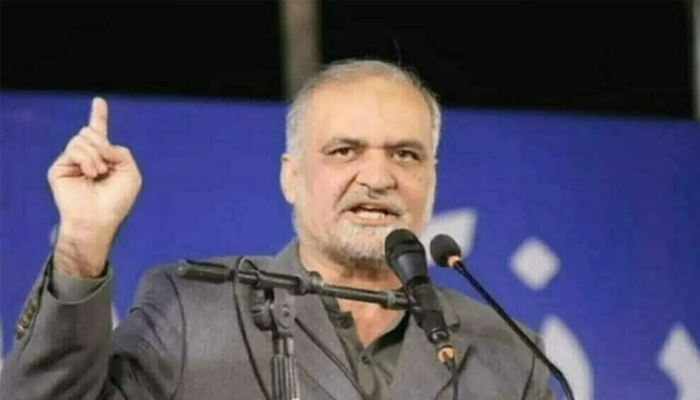
KARACHI: Emir Jamaat-e-Islami Hafiz Naeem ur Rehman has stated that Jamaat-e-Islami was established not for personal gain or the quest for power, but to bring about a comprehensive transformation of the country’s system. He emphasized that the party itself is not the ultimate objective; rather, its mission is to change the system that has failed to deliver relief to the public despite decades of changing leadership and political symbols.
He said Jamaat-e-Islami functions as both a religious and political movement, representing the true spirit of Islam. Criticizing the Punjab Local Government Act, Hafiz Naeem termed it undemocratic, stating that it deprives people of authority and further weakens public participation.
Highlighting economic injustices, he said corruption and looting are carried out in a collective manner, pointing out the stark contrast between assets declared to tax authorities and the lavish lifestyles of influential individuals. He added that citizens are burdened with nearly Rs 2,200 billion annually in the name of capacity charges, while the IPPs mafia is embedded across major political parties. He questioned who would be held accountable for the unjust agreements made with independent power producers.
The JI chief criticized the practice of naming bridges and development projects after individuals, saying it reflects a monarch-like culture, while in reality the country’s entire system remains under the control of a small elite. He stressed that striving to replace this unjust system is a religious duty.
He further remarked that inequality is deeply rooted in society, where privilege is inherited while hardworking individuals remain marginalized even after decades of struggle. He added that the colonial-era bureaucratic structure continues to dominate the country, shaping public thinking to maintain control.
Hafiz Naeem also criticized mainstream political parties, stating that they are dominated by feudal lords and tribal leaders, and that merely changing political faces will not resolve national issues. He emphasized the need to organize the public, especially the youth, and involve them in constructive and positive activities.
He concluded by reaffirming that Jamaat-e-Islami will pursue its goals through peaceful political struggle, warning that attempts to achieve change through mobs and shortcuts only lead to chaos and instability rather than genuine reform.