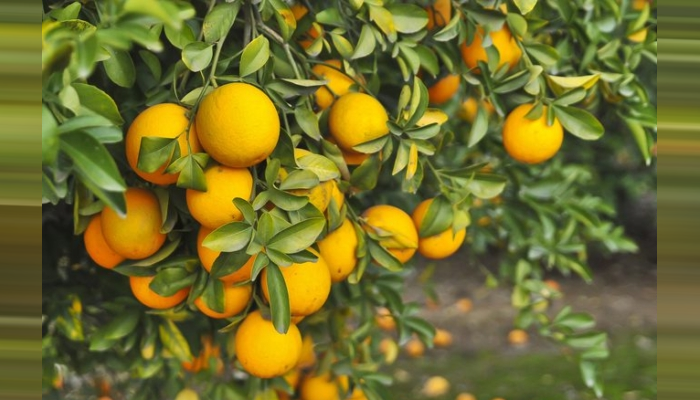
Pakistan has officially launched kinnow exports for the new season, with the Pakistan Fruit and Vegetable Exporters, Importers and Merchants Association (PFVA) setting an ambitious export target of 300,000 tonnes.
This volume is expected to generate around 110 million dollars in foreign exchange, offering a much-needed boost to the country’s agricultural export sector. Since December 1, nearly 6,000 tonnes have already been shipped to key markets including the Middle East, Sri Lanka and the Philippines, indicating a strong start to the season.
In the previous year, Pakistan exported 250,000 tonnes of kinnow, earning 95 million dollars. Despite this year’s bumper production — estimated at 2.7 million tonnes compared to 1.7 million tonnes last season — export volumes remain significantly lower than the 550,000 tonnes recorded five years ago. PFVA Patron-in-Chief Waheed Ahmed attributed this decline to the lack of research and development, along with the failure to introduce new citrus varieties capable of withstanding climate challenges.
The PFVA has submitted comprehensive plans to the government spanning short-, medium- and long-term strategies. According to Ahmed, proper implementation of these proposals could elevate citrus export revenues to 400 million dollars within the next five years. He stressed that Pakistan must diversify its citrus output by cultivating new varieties sourced from countries such as Egypt, the United States, Morocco and China. There is also growing global demand for low-water citrus types including lemon, grapefruit, orange and mandarin, which Pakistan could tap into with timely investment.
The challenges affecting the kinnow sector reflect broader issues within Pakistan’s citrus industry. In regions like Dir Upper and Lower, once renowned for their honey-flavoured oranges, orchards have rapidly declined as commercial development replaces farmland. The famous Dir oranges now survive on roughly 300 acres, with traders often relying on Punjab-grown produce marketed under the Rabat label to meet consumer demand. Agricultural experts say these organically grown oranges highlight the country’s potential, while simultaneously exposing the consequences of limited scientific farming practices.
Logistical barriers also threaten export growth. With trade through Afghanistan currently suspended, Pakistan has lost direct overland access to Central Asia and Russia. Exporters are now forced to use longer, more expensive routes via Iran, where freight charges have doubled. Waheed Ahmed urged the government to adopt a national citrus strategy, increase R&D spending and push for modern irrigation systems as water scarcity worsens. He warned that without these measures, Pakistan’s kinnow export potential will remain far below its true capacity.