By Tooba Sikandar
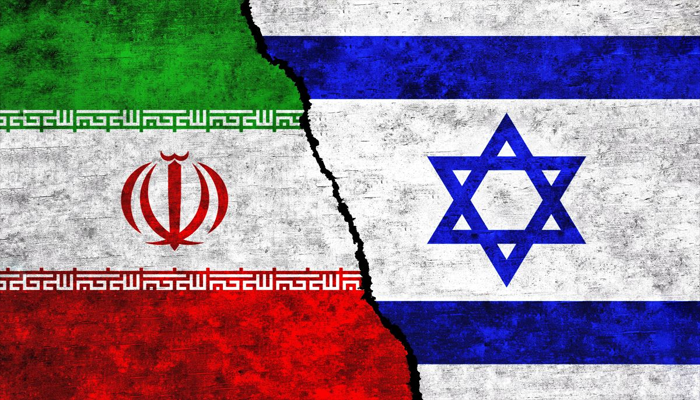
The world is holding its breath as, again, the Middle East is on the brink of war. With Iran and Israel edging toward the verge of direct conflict, the ripples are already being felt far beyond their shores, where dislocation is already being experienced--even in Pakistan.
An escalation of tensions between Iran and Israel came in April 2024, when Israel allegedly struck an Iranian consulate in Syria, killing high-ranking Iranians. In response, Iran fired over 300 missiles and drones at Israel-one of the largest direct attacks in history. Although the majority of them were intercepted, this dialogue indicated how rapidly a much larger war could erupt. This phenomenon has sparked considerable concern in Pakistan, where citizens are already grappling with high inflation, rising fuel prices, and heightened insecurity.
Decades ago, Iran and Israel were hostile. Iran views Israel as an aggressor occupying Palestine and backs groups such as Hamas and Hezbollah. Israel perceives the nuclear program and the increasing regional power of Iran as a significant threat. Up to this point, a lot of their contention came via proxy groups in nations such as Syria and Lebanon. But the two are now more than ever closer to open warfare, and the impact is felt well beyond their boundary.
The country of Pakistan is exceptionally exposed to this crisis. More than 85 per cent of oil imports in the country depend on the Middle East. With already increasing world oil prices (prices shot up to $96 per barrel upon the April attack), a continuation of any conflict may cause the prices to climb over one hundred dollars. Petrol already costs almost PKR 290/litre, and a price increase in petrol would drive up the cost of electricity, transport fares, and the cost of daily commodities. The inflation has already exceeded 30 per cent, and foreign reserves amount to slightly more than 9 billion dollars, which can worsen the condition of the average Pakistani.
It is economically hazardous. Iran is an Islamic and more confirmation country, and Pakistan has a big group of Shia population estimated between 15 and 20 per cent. During periods of religious conflict in the Muslim world, sectarian tensions in Pakistan are likely to rise. It has already led to rallies and processions in cities such as Karachi and Gilgit in aid of Iran and Palestine. Without proper management, such assemblies may degenerate into violence or be manipulated by radical groups. Hate speech and misinformation have already taken root online, as there are emotional posts that make it easy for the misinformation and hate speech to spread.
Pakistan, too, has a tricky diplomatic situation. The neighbouring country is Iran, which is historically and culturally close to Pakistan. Meanwhile, Pakistan's relations with Gulf States such as Saudi Arabia and the UAE are close, which means that these States are primary investors and employers of millions of Pakistani labourers. These Gulf States are slowly getting warmer on Israel, making things even more complicated. Pakistan also has to be on friendly terms with the United States, which is a strong ally of Israel. Such a scenario may hurt the foreign relations of Pakistan by making it take sides. To date, Pakistan has prudently remained neutral, appealing to both sides to make peace.
Regional development projects run the risk of being destroyed as a result of this conflict. The proposed Iran-Pakistan gas pipeline (also referred to as the Peace Pipeline) has been stalled by American sanctions over the years. With the current tension, however, its probability of completion has become even slimmer. The regional peace also relies on big projects facilitating economic growth, such as the China-Pakistan Economic Corridor (CPEC). The investors might walk out of the situation, which will halt projects that are important to the economy and employment in Pakistan.
Another key issue is security. Iran has a 900km shared boundary with Pakistan. In case of war, refugees or armed forces could attempt to enter Pakistan, particularly via Baluchistan, an area already plagued by civil unrest and militancy. When Iran had unrest in June 2019, demonstrations that were along the border resulted in significant tension. The security organs in Pakistan are already overstretched, and the fresh instability wave may compound the situation.
Pakistan needs to be intelligent and composed to fight this crisis. It must not interfere in the war but rather assist in the peace process by becoming involved in the Organisation of Islamic Cooperation (OIC) and the United Nations. It is also important that religious unity in the country is encouraged. Media, religious leaders, and civil society need to ensure that communities are not divided and that sectarian intolerance is discouraged.
Economically, Pakistan must consider alternatives such as LNG with Qatar and invest more in solar and wind energy in order to decrease its dependence on imported oil. The effect of increasing global prices can also be lessened by accumulating oil stock and energy saving.
It might not appear as though the Iran-Israel conflict is so close, yet it is being experienced in markets and homes of Pakistan as well as politically. It is a lesson that no nation can be immune to what is happening in the world today. Wise diplomacy, internal unity, as well as powerful planning, are needed to protect the people of Pakistan. The current actions or inactions will define the future steps that the country takes during these unpredictable moments.