
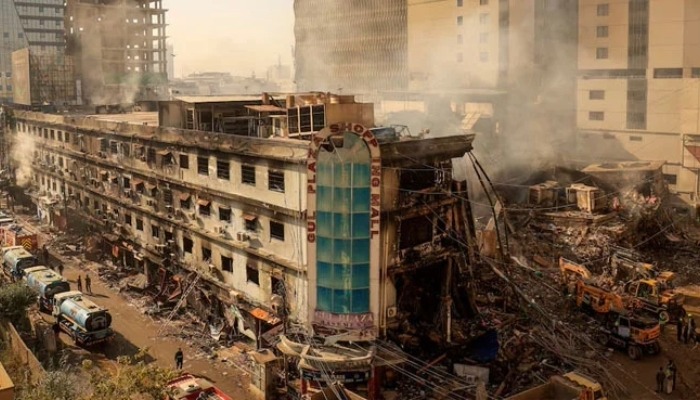
KARACHI: Karachi continues to mourn one of the deadliest fire incidents in its history as serious questions emerge over safety measures, emergency preparedness, and evacuation protocols following the devastating blaze at Gul Plaza on M.A. Jinnah Road. The tragic Karachi fire has claimed at least 28 lives, while dozens of people are still reported missing, prompting ongoing search and rescue operations.
According to the President of the Gul Plaza Market Association, Tanveer Pasta, the fire erupted at an artificial flower shop on the ground floor. He stated that initial firefighting efforts were made immediately, after which he contacted K-Electric to request an urgent shutdown of electricity to prevent the fire from spreading. Pasta claimed that power was disconnected within five to seven minutes of the call.
However, reports and eyewitness accounts suggest that the sudden power outage plunged the building into complete darkness, causing panic and severely hampering evacuation efforts. The situation was worsened by narrow stairways connecting the mezzanine floor to the ground level, making escape extremely difficult for those trapped inside.
Speaking on a television programme, Pasta defended the electricity shutdown, calling it a standard operating procedure during fire emergencies to stop flames from spreading through electrical wiring. He argued that had power not been cut, the blaze could have intensified, potentially resulting in even more casualties.
Pasta acknowledged that while small 12-volt emergency lights were installed in passages to activate during power outages, Gul Plaza lacked proper fire safety systems and dedicated emergency exit lighting. He admitted that the absence of adequate guidance lights contributed to confusion, panic, and delays in rescue operations.
Videos circulating on social media show people trapped inside the building amid thick smoke and darkness, further intensifying public concern over building safety standards in Karachi. The incident has sparked renewed debate on regulatory enforcement and fire safety compliance in commercial structures.
Addressing claims that the plaza housed around 1,200 shops, Pasta disputed the number, stating that the approved building plan allowed 1,071 shops. He admitted that some shop owners later subdivided their units, increasing congestion inside the plaza and raising concerns about structural and safety violations.
Pasta said the ground floor and basement were evacuated within 10 to 15 minutes, but confirmed that around 55 to 60 people remained trapped on the mezzanine floor. He did not provide a clear explanation as to why evacuation from the mezzanine failed, leaving many unanswered questions as investigations into the Gul Plaza fire continue.