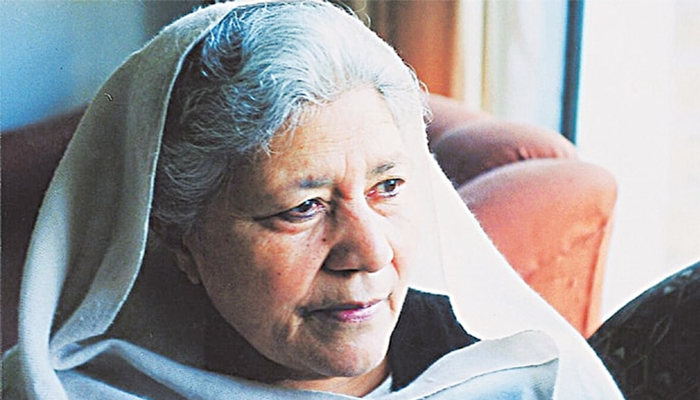
Nine years have passed since the demise of renowned Pakistani writer and intellectual Bano Qudsia, whose literary legacy continues to inspire readers across generations. Literary circles and admirers across the country are observing her 9th death anniversary on Wednesday.
Bano Qudsia remains one of Pakistan’s most influential and celebrated literary figures, with her writings enjoying immense popularity both at home and abroad. Her work left a lasting imprint on Urdu literature, drama, and intellectual thought.
She was born on November 28, 1928, in Ferozepur, India, and migrated to Pakistan following the partition of the subcontinent. Her father held a bachelor’s degree in agriculture, while her only brother, Pervaiz Chattah, was a painter.
Qudsia developed a passion for writing at an early age and began penning short stories while still in class five. She later graduated from Kinnaird College, Lahore, and earned her master’s degree in Urdu from Government College, Lahore, in 1951.
She was married to distinguished writer and intellectual Ashfaq Ahmed, whom she met during her student years at Government College University. Together, they became one of the most respected literary couples in Pakistan’s cultural history.
Among her most celebrated works are Na Qabil-e-Zikar, Bazgasht, Amar Bail, and Dast Basta. Although she gained widespread recognition for her radio and television plays, her novel Raja Gidh (The Vulture King) brought her international acclaim.
One of her plays, Aadhi Baat, is regarded as a classic of Pakistani drama. Her other notable writings include Aatish-i-Zer-i-Paa, Aik Din, Asay Pasay, Chahar Chaman, Chhota Sheher Baray Log, Footpath Ki Ghaas, Hasil Ghaat, and Hawa Kay Naam, among many others.
In recognition of her outstanding literary contributions, Bano Qudsia was awarded the Sitara-i-Imtiaz in 2003 and the Hilal-i-Imtiaz in 2010.
Bano Qudsia passed away on February 4, 2017, in Lahore at the age of 88, leaving behind a rich and enduring literary legacy.