
By Tooba:
MBA M.Phil
The collapse of the Kabul government in August 2021, and the restoration of the rule of Taliban is a game-changer in South-Central Asian geopolitics. The development introduced strategic prospects in addition to increased security fears to Pakistan.
Although Islamabad initially embraced Taliban-led government with expectation of stability in the region and improvement in bilateral relations, these expectations have been complicated by the expanding nature of security dynamics. As recently as May 2024, when Russia formally acknowledged the Taliban government, the alignment of regional forces once again shifted, leaving Pakistan to reconsider its own position on the issue.
Historical background: Intricate relations of Pakistan and Afghanistan
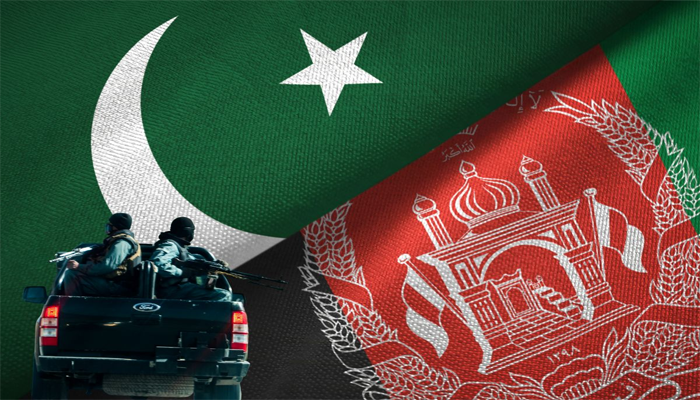
The border between Pakistan and Afghanistan is the Durand Line, a porous border, almost 2, 640 km long, and a major source of tension as a result of cross-border militancy and unresolved border disputes. Their relations have since 1947 have been going back and forth between friendliness and confrontation.
Historically, Pakistan has provided support to the Afghan Mujahideen in Soviet invasion (1979-1989) and in subsequent years one of the few nations to recognize the first Taliban regime (1996-2001). Nevertheless, with the Taliban expelled via the invasion of the U.S and their repositioning with NATO armies, Pakistan retrospectively placed themselves with the coalition again and this generated a vicious circle of suspicion amid Islamabad and Kabul.
After the Taliban Takeover of 2021: Strategic Opening as Security Issue
Originally, Pakistan was optimistic that cross-border terrorism would be reduced and trade enhanced when the Taliban regained power. However, by the middle of 2023, the honeymoon ended as Islamabad accused the Taliban regime of harboring Tehrik-i-Taliban Pakistan (TTP) militants that launched several fatal attacks.
Pakistan Ministry of Interior advanced the number of TTP attacks in 2023 by more than 70 percent than 2021, with more than 500 Pakistani security officers being killed in cross-border antagonisms and explosive device attacks. Failing to attack the TTP even after several diplomatic meetings, the Taliban have seriously damaged relations.
The Taliban is recognized by Russia: A changing strategy reality
Russia formally recognized the Taliban government in May 2024, being the first major power to do so since well before three years of the unofficial interaction. Russian Foreign Minister Sergey Lavrov expressed the decision as pragmatic, noting the Taliban practical control and necessity of regional counterterrorism cooperation.
This acknowledgment is a significant diplomatic victory of the Taliban as it strengthens their legitimacy at the expense of revealing fragmentation within the international community. UN and Western allies have not been keen to recognize them, alleging violations of human rights and non-inclusive governance.
In the case of Pakistan, it would represent a serious change in the geopolitics of the region that could place it, in either case, in isolation in the region or provide an entirely new situation of alignment with Moscow and Beijing, particularly within such frameworks as the Shanghai Cooperation Organisation (SCO).
Economic and Trade Dynamics
Pakistan-Afghan trade has not been nondescript even in the face of political tensions:
- Bilateral trade volume In 2022-2023, bilateral trade volume rose to USD 1.7 billion in 2022-2023 compared to USD 1.2 billion in 2020.
- Pakistan shipped wheat, cement, medicines as well as textiles, however, imported coal, fruits and herbs.
- Torkham border is the busiest commercial crossing with the average amount of truck movement being 700-900 daily in 2023.
Nonetheless, trade is frequently disrupted by issues such as border closures, tariffs and varying visa policies. In April, 2024, Pakistan temporarily clamped down on the Chaman border after a skirmish, which was estimated to lose traders USD 6 million daily.
Security Tensions and the TTP Factor
The TTP insurgency is the irritant at the center of Pak-Afghan relations. The TTP has targeted the Pakistani forces and infrastructure, even though ideologically, the TTP sympathizes with the Afghan Taliban. The Taliban government, despite Pakistani requests, has denied taking military actions against them, saying that they need an internal dialogue.
In reaction to this, Pakistan has:
- Built more than 90 percent of a fence along Durand Line.
- Conducted precision airstrikes against TTP sanctuaries within Afghan border in Kunar and Nangarhar provinces.
- Sought intelligence-sharing models with China, Russia and Iran in order to combat terrorism.
Humanitarian and Refugee Concerns
There are about 3.7 million Afghan refugees in Pakistan, and some 600,000 since the Taliban took power in Afghanistan in 2021. The impact on the Pakistani economy, notably in urban areas, such as Peshawar and Quetta, has resulted in the increase in the domestic debate to repatriate refugees. Pakistan gave undocumented Afghans a repatriation deadline in October 2023, which was criticized by the Taliban and human rights organizations. Nonetheless, Islamabad argues that the policy was a necessary measure to ensure national security.
Geopolitics of Implication: Isolated Isolation or Opportunity
Pakistan can adjust its policy because of the recognition of the Taliban by Russia. Although the West has mostly pulled out of Kabul, other nations such as China, Iran, Russia, and Turkmenistan remain active due to economic and strategic interests. Such programs as CASA-1000, TAPI pipeline, and CPEC to Afghanistan have a long-term prospect with political stability settings.
Pakistan has a choice to make:
- Fall in line with new Eurasian blocs interested in Taliban integration, or
- Insist on conditional integration insisting on action against terror networks first before complete diplomatic integration.
The Pakistani relation with the Taliban controlled Afghanistan continues to be painful and vital. Although the Taliban recognition is a game changer in the Russian region, the strategic calculus of Islamabad should also be able to take into account both the security demands and economic opportunities. In the future, it is important to take a balanced and multilaterational approach that combines the effects of regional cooperation and considers the interests of nations. Pakistan has a chance of harvesting strategic dividends out of the current problems, providing it treads carefully in such a complex terrain by pressuring Taliban on terrorism, engaging on trade, and aligning with pragmatic players in the global arena.