By: Tooba
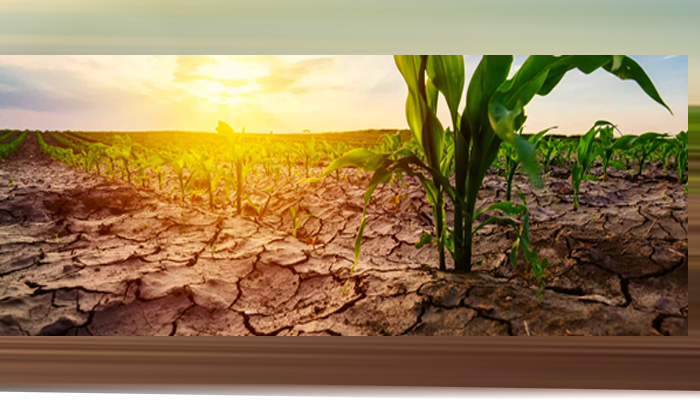
The question is, when the rains fail, when the sun beats hotter than ever, what will the farmer plant, hope or despair? This is not a poetic dream to millions of farmers in Pakistan; it is their daily regimen. The climate crisis is no longer a whispered warning but a daily reality buried in soil and embedded in the rivers and the skies of this great agricultural country.
Emitting little more than one per cent of the global greenhouse gases, Pakistan is currently ranked in the top five most climate-vulnerable countries in the world, which has the unfortunate dynamics of the less fortunate countries blessed with fertile lands and rich agricultural culture. The vulnerability is especially touching on the core of the economy, food security and livelihoods, as about 38 per cent of the labour force is involved in agriculture and as such, it contributed 23 per cent to the GDP of the country.
In 2022, the country experienced one of the worst floods since its independence. Relentless monsoon rains caused floods that covered a third of the nation and left 33 million people homeless. These floods wiped out 3.6 million acres of farmland and removed over 800,000 livestock. Its economic loss was greater than 30 billion. Such a disaster was not an exception. It announced a new reality of climate where weather conditions do not provide periods of seasons anymore, but farming communities are left to speculate on sowing and harvesting times.
Climate events have worsened further in the years since the flood. In early 2024, the wheat harvest was dealt a devastating blow by an unprecedented heatwave in March. Wheat plants matured too late, and grains did not grow well, cutting production. The Pakistan Agricultural Research Council suggests that with the increase in temperature, wheat yield will decline between 6 and 9 per cent towards 2050. Considering that most Pakistani households use wheat as the primary food source, this would result in a direct impact on food supply and costs in the country.
Even more terrifying is the case of cotton, also referred to as the white gold of Pakistan. Pakistan used to produce more than 14 million bales of cotton, and by the year 2023, the yield was only 4.9 million. Among the key factors that have led to the deterioration, farmers cite increasing, unpredictable rains, pests that multiply in the warm and humid environment, and the shortage of water. Some of the smallholders have given up on cotton, arguing that it is no longer sustainable.
Rice and sugarcane, some of the water-intensive crops grown in the country, have also not been spared. In early 2025, the Indus River System Authority announced that there was a 15% scarcity of irrigation water. Without sufficient water, the farmers in Punjab and Sindh could not plant in time, and some farmers have had to cut acreage, or even convert to crops that are less lucrative. This has resulted in supply chain disruptions, rising local market prices, and more strain on the average household.
In the meantime, the northern glaciers in Pakistan are melting faster than ever because of the increasing temperature. The result has been the more common occurrences of glacial lake outburst floods (GLOFs) in Gilgit-Baltistan, which carry away downstream agricultural fields and installations. In the south, the drought in parts of Balochistan and Tharparkar is gradually rendering fertile land once farmed to unproductive soil. The crops do not grow anymore, and the livestock are dying due to thirst and illness. There are developments of whole communities moving to towns in search of survival, further congesting towns which were already crowded.
The personal cost of this disaster is immense. Poverty in rural areas is becoming more intense. There is a decline in incomes and a constant increase in seeds, fertiliser, and fuel prices. Farmers are getting into debt, and crises of mental health in agricultural communities remain unaddressed. By the beginning of 2025, food inflation had reached almost 19 per cent. In heat-hit regions, milk output was lowered by 20 per cent. The increasing problem is malnutrition, particularly in flood and drought-hit districts, whose health and education service provision is still under disruption. Seasonal crises are becoming a permanent part of a farming calendar.
Nevertheless, despite the gloomy prospects, they are trying to adjust. Climate-Smart Agriculture in Punjab is one such project that educates farmers to plant drought-resistant crop breeds, have drip irrigation systems and depend on mobile-based weather notifications. The GLOF-II (Glacial Lake Outburst Flood – Phase II), which is the project supported by the Green Climate Fund, is currently contributing to saving the lives of populations in the north against floods caused by glaciers. Partial success has been encountered in localised regions, but the extent of intervention is way shorter than the magnitude of the required needs.
Pakistan needs an all-inclusive emergency-based climate-resilient agricultural policy. Solutions should involve better irrigation infrastructure, soil conservation, reforestation and access to cheap technology by the smallholders. Better public-private collaborations are required to finance climate studies, subsidise tools that are sustainable in farming and broaden insurance augmentations in the rural areas. Most importantly, any policies should be centred on the most vulnerable farming communities, particularly in the remote and disaster-prone areas.
This is not a future crisis. It is occurring in the present. Each year, the farmers in Pakistan are engaged in another struggle - less certainty, fewer resources and maximum risk. They are not only fighting to live, but also to secure food, economy and stability of the entire country.
The future of Pakistan lies in its farmers, and if Pakistan fails to be protective towards its farmers, then it will fail to protect itself in the future. The land which once nurtured empires is begging to be shielded. And the day to fight is not another, but today.