
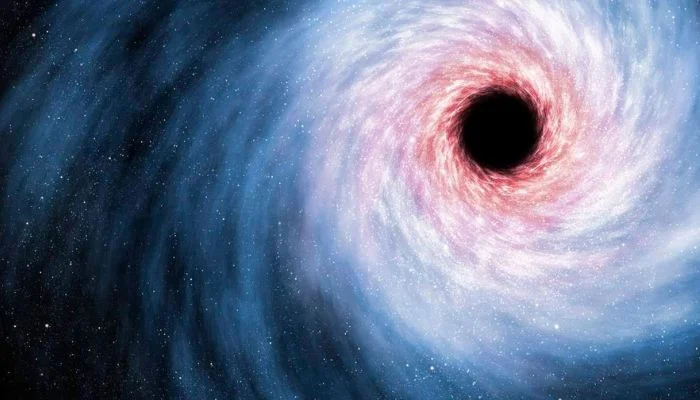
Black holes are among the most mysterious and fascinating objects in the universe. Many people imagine them as cosmic vacuum cleaners that swallow everything in space, but the reality is far more complex and scientifically intriguing. According to NASA, a black hole is a region in space where gravity is so strong that nothing, not even light, can escape its pull. This extreme gravitational force is what makes black holes invisible and difficult to study directly.
Black holes are not solid objects like planets or stars. Instead, they are formed when massive stars collapse under their own gravity at the end of their life cycle. When a star runs out of fuel, it can no longer support itself against gravitational collapse. If the remaining mass is large enough, it compresses into an incredibly small point known as a singularity. Around this singularity is a boundary called the event horizon, which marks the point of no return. Anything that crosses this boundary is pulled inward and cannot escape.
One common misconception is that black holes actively roam the universe consuming everything in their path. In reality, black holes behave according to the same gravitational laws as other objects. If our Sun were replaced by a black hole of the same mass, Earth would continue to orbit it in the same way. The difference would be the absence of sunlight, not a sudden destruction of the solar system.
Another important concept is that black holes do not “suck” objects in like a vacuum. Instead, objects fall into them due to gravitational attraction, just as they would with any massive body. However, the strength of gravity near a black hole is extreme, leading to a phenomenon called spaghettification, where objects are stretched and compressed as they approach the event horizon.
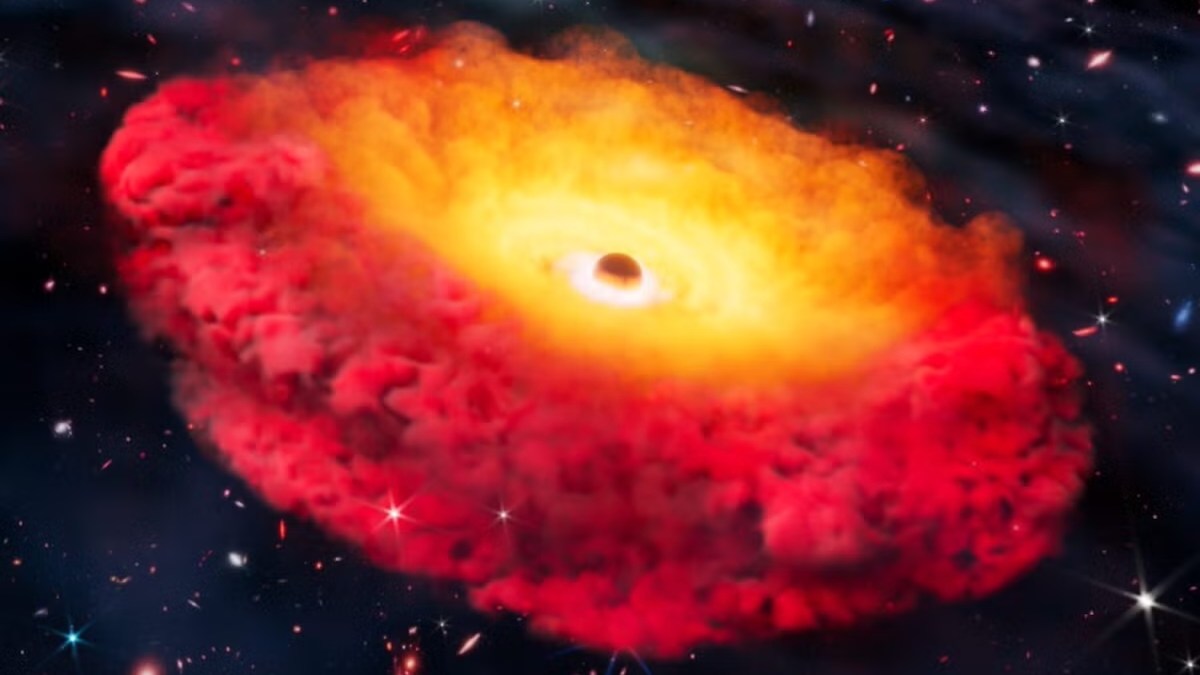
Black holes also play a key role in the structure of galaxies. Scientists believe that supermassive black holes exist at the center of most galaxies, including the Milky Way. These massive entities can have millions or even billions of times the mass of the Sun and influence the motion of stars and gas around them. Despite their destructive reputation, black holes are essential to understanding the evolution of the universe.

Recent discoveries have also shown that black holes are not entirely black. Due to quantum effects near the event horizon, they can emit a faint radiation known as Hawking radiation. This suggests that black holes can slowly lose mass over time, although the process takes billions of years.

In conclusion, black holes are not just mysterious voids but are complex cosmic phenomena that challenge our understanding of physics. They are a direct prediction of Einstein’s theory of general relativity and continue to be a major focus of scientific research. By studying black holes, scientists gain deeper insights into gravity, space, and the fundamental laws of the universe.