“The ballot is stronger than the bullet.” (Abraham Lincoln)
President General Ayub Khan's introduction of the Basic Democracies system in Pakistan in 1959 was an important event. It was introduced as a means for the government to be more responsive and engaging to people at large and to be more involved in local governance. It also became a part of Ayub Khan's political set-up, however, where he was able to keep the country under his control while putting a check on direct national elections.
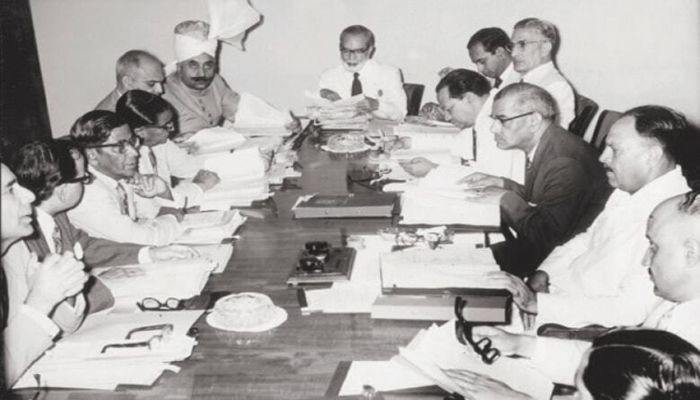
Ayub Khan came to power in October 1958 and claimed that the country required a stable political system to promote economic growth and better administration. The years that had passed had seen numerous changes in government and tensions between the political leaders and troubles in forming lasting democratic institutions. Ayub did not immediately restore the parliamentary system, but his government put in place a local-government structure designed to structure political participation from the village and neighbourhood to the top. In October 1959, the Basic Democracies Order was promulgated. In this system, local representatives were chosen to the councils that addressed issues of local development, provision of public services, community administration, etc. The system was established at various local government levels, such as union councils, tehsil, district and divisional higher councils. It was believed that these bodies would assist in solving local issues, promote community engagement and engage citizens in the government administration.
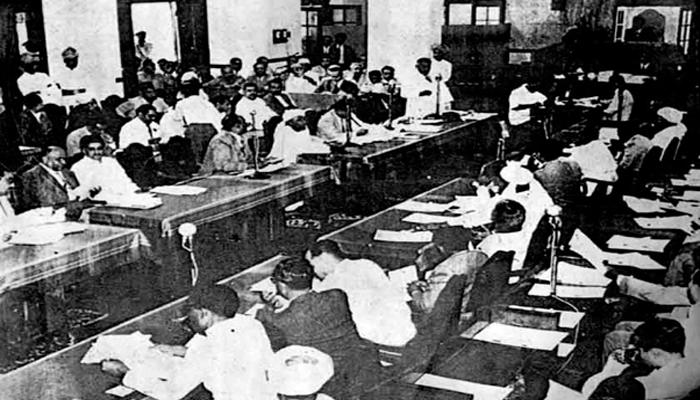
The significance of the system was the presence of the so-called Basic Democrats in national politics. In 1959-60, about 80,000 Basic Democrats were elected in the first round of local elections, both from East and West Pakistan. These elected members were a presidential electorate and served for other political duties. The government did not use all of the adult citizens to vote directly for the president. Ayub Khan requested a Basic Democratic endorsement of his presidency in a referendum in February 1960. He was overwhelmingly endorsed in the official result. The deal had the effect of enhancing his political standing and creating an electoral foundation for his administration. Critics, however, said that the system did not give the public the same level of participation that direct elections would. They also asked themselves how they would be able to work effectively without the central government having a lot of power.
The Basic Democracies system was both good and bad administratively as well as politically. Councils provided a formal avenue at the local level for communities to express their issues on roads and sanitation, as well as water supplies and other public services. Local representatives had the possibility to speak to government officials about issues and engage in development initiatives. This arrangement formed an institutional connection between the villages and the state, in particular for rural communities.
Overall, it did not address the broader political divisions in Pakistan. Critics reasoned that no system of local representation would be a substitute for a truly competitive national parliamentary structure. Political parties were limited, and the president had broad powers. A sense of regional imbalance and centralisation of power in West Pakistan grew in East Pakistan. These underlying tensions were not resolved in the Basic Democracies system.
In 1962, Ayub Khan promulgated a new Constitution which was a presidential system of government. The Basic Democrats remained powerful in the political system, including as the representatives of the legislature and in the indirect election of the President. Consequently, the measures put in place in 1959 had an impact on Pakistan's government for a number of years after they were adopted. It was facing increasing opposition as demands for democratic freedoms and direct political representation increased. The government of Ayub Khan found it difficult to suppress public discontent, especially in the face of the large protest movement in 1968 and early 1969. He resigned in March 1969, and General Yahya Khan took over power, ushering an end to Ayub's rule and general martial law.
عوام کی آواز سے جمہوریت بنتی ہے
ہر فرد کی رائے سے قوم سنورتی ہے
Basic Democracies system is part of the political history of Pakistan, which provides a useful example of the relationship between local-level participation and national democratic accountability. It created provincial authorities called councils, and it allowed for the administration of the community, but it also allowed for providing political representation at a local level through an indirect electoral system organised by the military government. Its enduring influence demands that elections be free, local government be efficient and that the constitution provide citizens with an effective way of engaging in decision-making that affects their nation.